

Key Points:
- Family coaching ABA helps caregivers practice therapy goals in short, everyday routines between sessions.
- A BCBA or technician models one skill, watches the caregiver practice, and gives feedback.
- Small notes about timing, support, and responses help the care team adjust the plan.
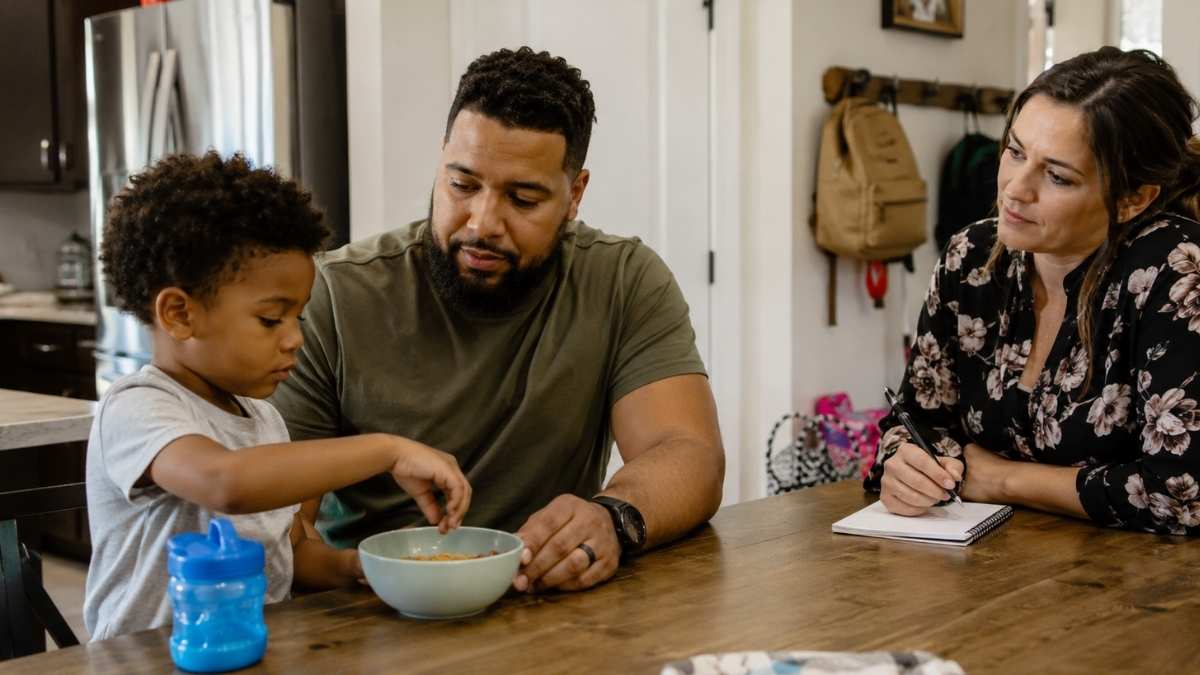
How do you help your child build new habits without turning your home into a clinic? A family coaching ABA session provides caregivers of children with autism with a clear way to practice therapy goals in everyday routines.
This structured approach does not require a second therapy block at home. Instead, the process includes direct guidance from your Board Certified Behavior Analyst (BCBA), modeling from a behavioral technician, and short practice windows with live feedback.
This format supports consistency across environments. You can easily track progress and bring your questions back to your BCBA during regular coaching sessions.
How Family Coaching ABA Connects Sessions to Home Practice
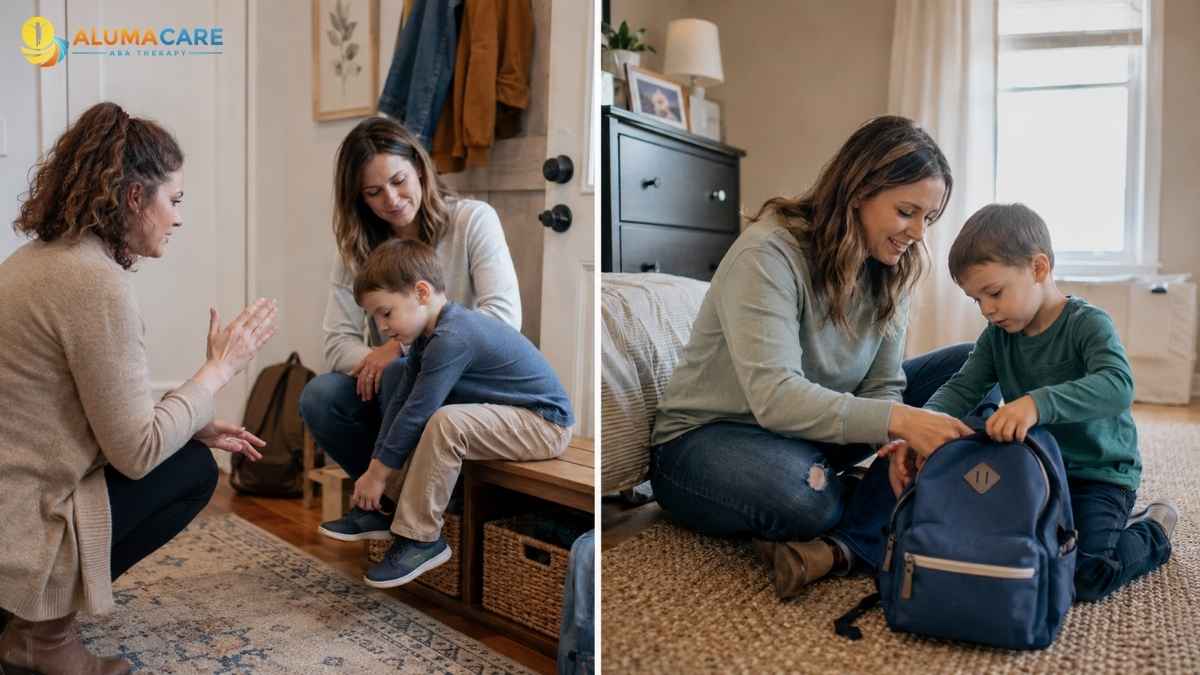
Effective family coaching ABA involves a sequence of support. This includes direct teaching, modeling, caregiver practice, feedback, and regular review. Sitting in the room while a behavioral technician works with your child is different from active coaching. You need to understand the specific skill. You should know why the team selected it and how it connects to milestones.
Active participation in coaching sessions is an insurance requirement. This joint effort helps your BCBA learn what works during your actual routines, allowing them to modify the plan based on home dynamics. The Council of Autism Service Providers (CASP) emphasizes that this individualized curriculum and ongoing caregiver support are vital for meaningful progress.
Start With One Skill That Fits the Caregiver’s Daily Routine
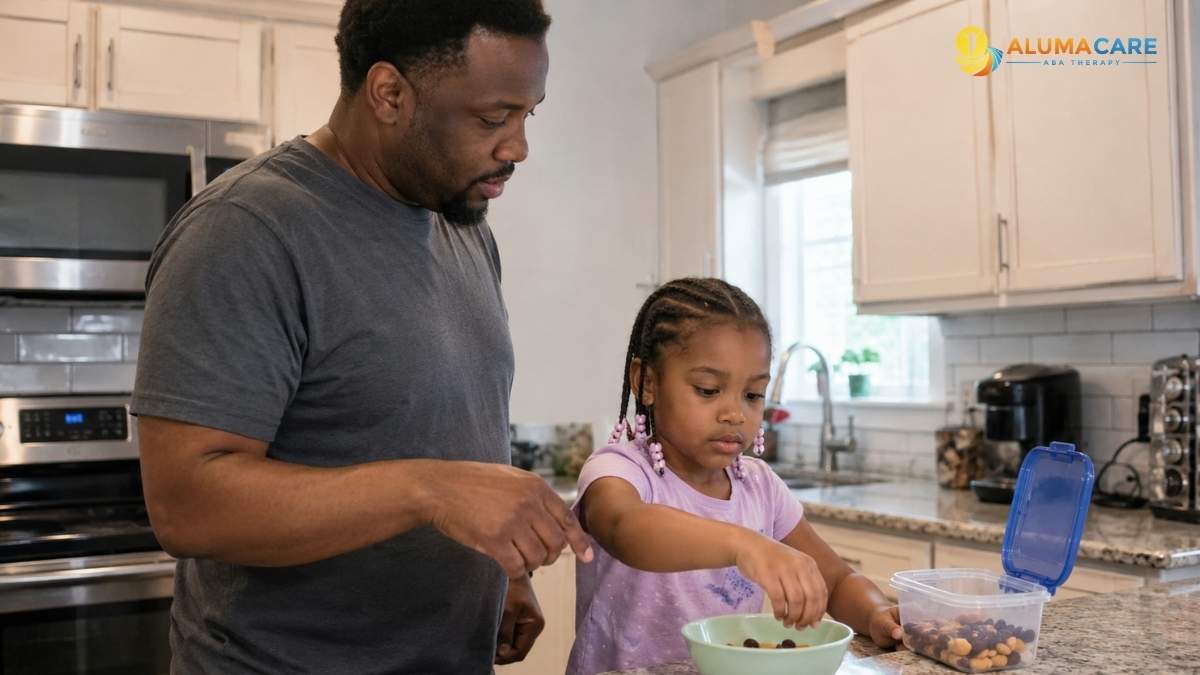
Collaborative ABA session planning should focus on selecting just one skill that fits naturally into an existing daily routine. You should never be asked to practice every goal all at once. Instead, early ABA skill development focuses on narrow, manageable targets.
These goals may look like any of the following:
- Communication skills
- Daily living habits
- Waiting
- Following an instruction
- Asking for help
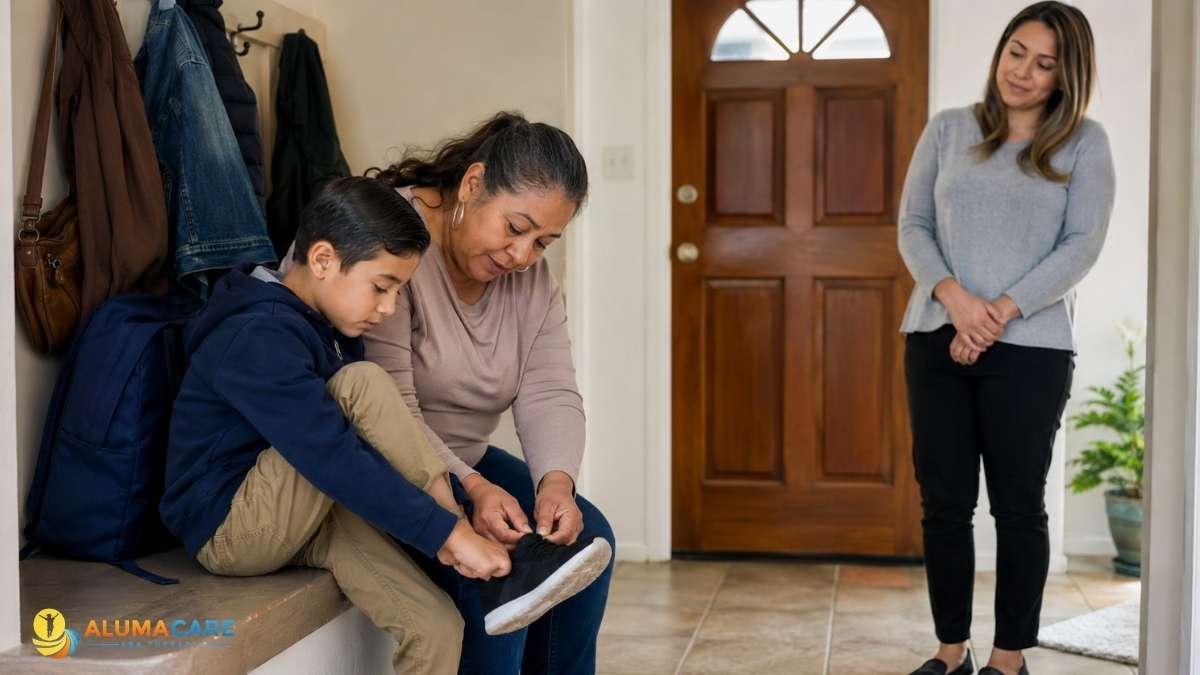
For instance, if your child needs help getting dressed for a cold New Hampshire morning or packing a bag for a Kansas park, that routine becomes the focus. Your BCBA defines exactly what home practice looks like. This approach builds confidence. Focusing on one routine prevents your schedule from feeling crowded.
What Family Coaching ABA Should Clarify Before Practice Starts
Clear expectations prevent confusion at home. Before you try a strategy on your own, your family coaching ABA sessions should clear up a few specific details:
- What skill is being practiced
- When the caregiver should practice it
- What the behavioral technician may model first
- What kind of response the caregiver should watch for
- What notes the caregiver should bring back
Use Modeling and Feedback Before Practicing Alone
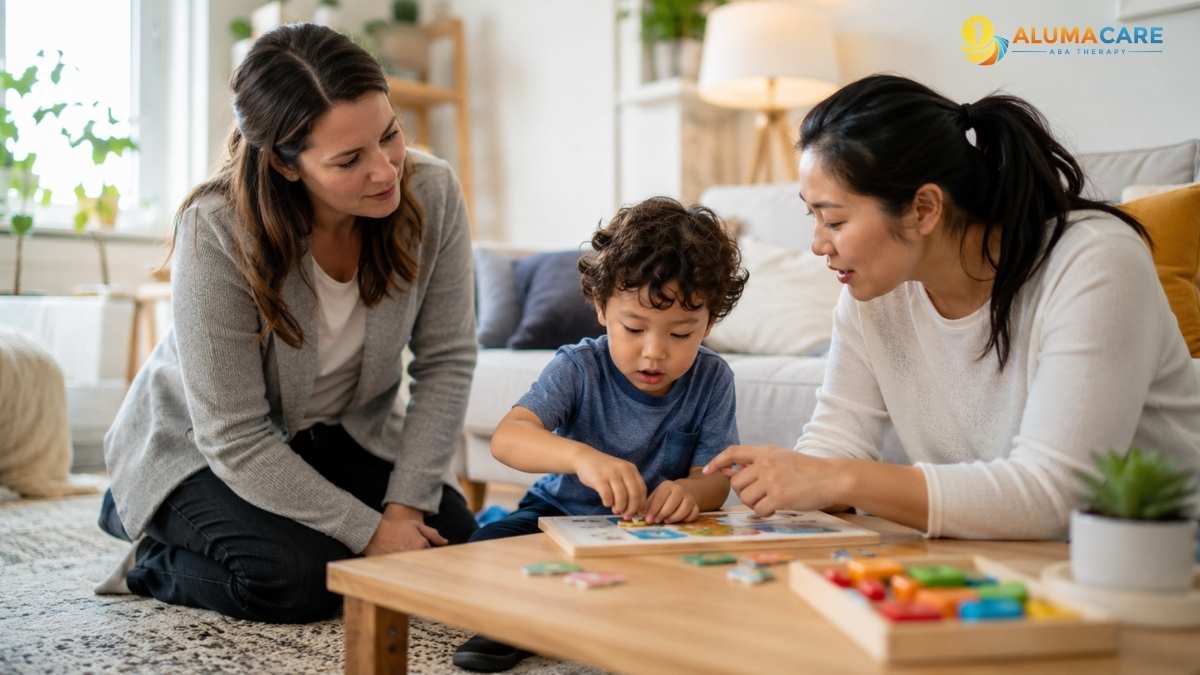
Providing pediatric ABA support works best when caregivers observe the skill in action before attempting it independently. Your behavioral technician may model the routine during a standard session. After watching, you can practice a small portion while your BCBA or behavioral technician observes and offers immediate behavior therapy support.
Research shows that real-time feedback and behavioral skills training help caregivers master and maintain these teaching procedures accurately. This feedback should be specific and usable. Ask your team what to do when your child responds differently at home.
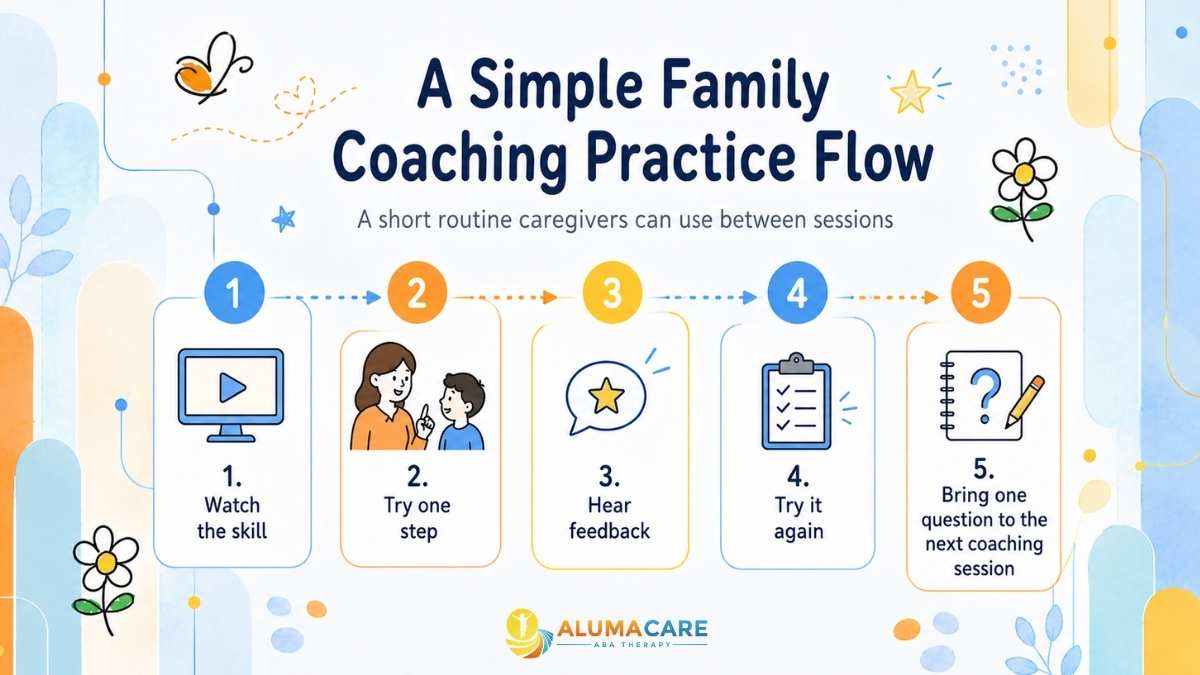
You can use this simple sequence during your coaching sessions:
- Watch the skill.
- Try one step.
- Hear feedback.
- Try it again.
- Bring one question to the next coaching session.
At Aluma Care, we help caregivers understand what to practice, when to practice it, and how to bring useful updates back to the BCBA. Reach out to us. Our team keeps coaching practical, so between-session practice can fit real home routines instead of adding more pressure to the day.
Practice the Skill in One Real Routine Between Sessions
If your child receives in home ABA therapy, practicing between sessions might feel easier. This happens because routines occur naturally in your living space. However, these steps apply equally well if your child attends clinic based programs.
Consistent home ABA reinforcement should always follow the exact plan outlined by your BCBA. Practicing the same skill with different people, materials, or routines is how child skill generalization occurs. A study in Behavior Analysis in Practice highlights that generalization is often missed unless it is actively planned across home routines and family members.
For example, families living near the Seacoast of New Hampshire or in suburban Kansas City can use their natural home environments to practice these routines. To make this manageable, choose one highly predictable routine each day, such as snack, cleanup, dressing, or play. Follow the structured protocol provided by your team to keep practice consistent.

Bring Short Notes Back to the BCBA
Caregivers do not need long data sheets unless the BCBA asks for them. Short notes can still make coaching more useful. Notes may include when practice happened, what helped, what felt hard, and what changed.
ABA therapy outcomes become easier to discuss through caregiver coaching in ABA when families bring real examples. A caregiver can say, “We tried it during snack twice. My child asked once with a prompt and once without.” That gives the BCBA something concrete to review.
Regular caregiver coaching sessions, often weekly or biweekly, are the best place for progress updates. You should communicate directly with the BCBA during those sessions to share your observations. Useful notes become easier to discuss when you bring real examples to your meetings.
Consider addressing these four simple questions:
- “When did we practice?”
- “What did my child do?”
- “What support did my child need?”
- “What should we adjust next?”
Keep Practice Small Enough to Repeat
Caregivers do not need to recreate a full ABA session. Practice can be short when it is tied to something that already happens at home.
Early intervention ABA may use many small chances across the day. A short practice moment during snack, play, or dressing can still give the child another chance to use the skill. The key is that the practice can be repeated.
When practice feels too hard to repeat, the BCBA can help adjust the plan. That may mean fewer steps, a shorter routine, or a different time of day. A practice plan that caregivers can repeat is more useful than a plan that looks good on paper.
FAQs About Family Coaching ABA Sessions
Do caregivers need to join every ABA session?
No. Caregivers usually do not need to sit through every minute of therapy. However, active participation in scheduled caregiver coaching is an expected requirement. The BCBA should explain when to observe, when to practice, and when to step back.
Can more than one caregiver join coaching sessions?
Yes. More than one caregiver may join when the care team allows it. Shared coaching can help the child hear similar prompts, routines, and responses from different adults at home.
What should caregivers do when practice feels hard to fit in?
Caregivers should tell the BCBA during the next coaching session. The plan can easily be adjusted to a shorter routine, fewer steps, or a different time of day that fits the daily home routine better.
Start Practicing Skills With Clear ABA Support
Between-session practice works best when caregivers know the specific skill. It works when you understand the routine. You also need a clear feedback loop. Family coaching gives that structure and allows caregivers to support progress without trying to run therapy alone.
At Aluma Care, we provide ABA therapy and caregiver coaching for families in Kansas and New Hampshire. Contact our team at +1 913-232-2003 for Kansas or +1 603-903-1003 for New Hampshire, send a contact form, or ask about services during your first consultation. We’ll review your child’s needs, explain next steps, and help you understand how caregiver coaching fits into the plan.
────────
EDITOR’S NOTE: Content was written by an outsourced marketing team and reviewed by Aluma Care’s clinical leadership for accuracy and service alignment. It is for educational purposes and does not replace individualized medical or clinical advice.
















.png)


.png)