


Key Points:
- Functional communication helps children express needs through words, gestures, signs, pictures, or AAC devices during therapy sessions and daily routines.
- It includes requesting help, making choices, or signaling breaks in natural moments like meals and play.
- It helps build skills that carry over throughout the day.
A kid might want more juice, help zipping their coat, or a break when something's too difficult. The need is real. They just might show it by pointing, handing you something, tapping a picture, pressing a button on a device, or saying one word.
Functional communication is about making sure that the message gets across so someone can actually help. In ABA therapy, this happens during play, snack time, transitions, and everyday tasks. At home, it pops up in tons of little moments throughout the day.

What Functional Communication Means in Everyday Life
Functional communication is about getting your point across in the moment, whatever works. A child uses it to say what they need, want, or think in a way someone else actually gets.
That can include things like:
- Asking for help
- Asking for more
- Requesting a break
- Saying no
- Making a choice
- Greeting someone
- Getting attention
Spoken words are one form of communication, but they’re not the only way. Gestures, signs, pictures, written words, and augmentative and alternative communication (AAC) can all support strong communication when they help a child be understood.
That broader view can be a relief for many caregivers. Some children communicate clearly without using many spoken words. About 25% to 30% of children with autism may remain minimally verbal beyond age 5, which is one reason communication support cannot focus on speech alone.
What Functional Communication May Look Like During ABA Therapy
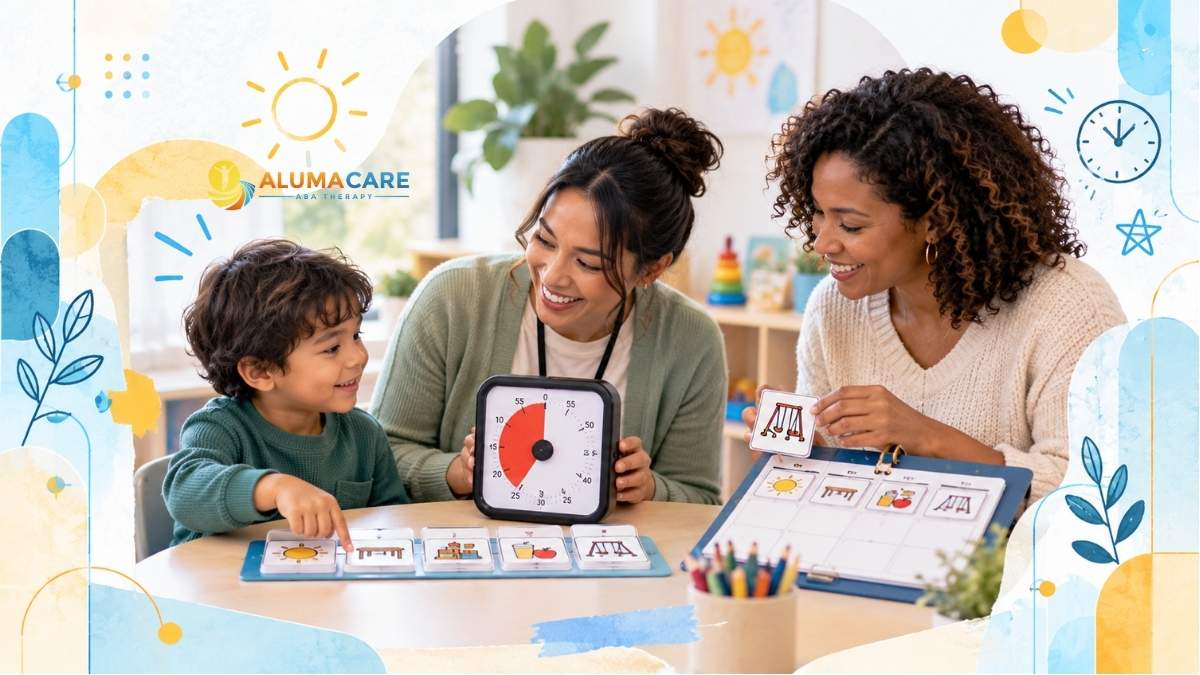
During home-based ABA therapy, communication goals often grow out of small, everyday moments. A child may use manding in ABA to ask for a toy, show they want more of an activity, or let a behavioral technician know they are done.
Some days, that may sound like a spoken word. On other days, it may look like a gesture, a picture, a sign, or a device. The goal is the same: helping the child get the message across in a way that works.
Often, this may look like a child learning how to:
- Ask for a favorite item
- Ask for help with a hard step
- Request a break
- Choose between two options
- Say "all done"
- Show "not that" or "I don't want that"
A 2025 meta-analysis on functional communication training for young children with autism reviewed 34 studies involving 79 children ages 2 to 8. That gives caregivers a helpful reminder that communication support is a major focus in early ABA research.
Simple Functional Communication Examples You May Notice in a Session
You may notice signals like:
- “Help”
- “Break”
- “More”
- “All Done”
- Pointing To A Picture
- Handing Over A Card
- Looking At An Item And Then At An Adult
The response can be spoken or nonspoken. What counts is that the message is clear and useful.
What Naturalistic Communication May Look Like During Everyday Routines at Home
Home routines give children many chances to practice communication in real life. Those moments may seem small, but they often mean a lot because a child is trying to say something important right then.
Common examples may come up during:
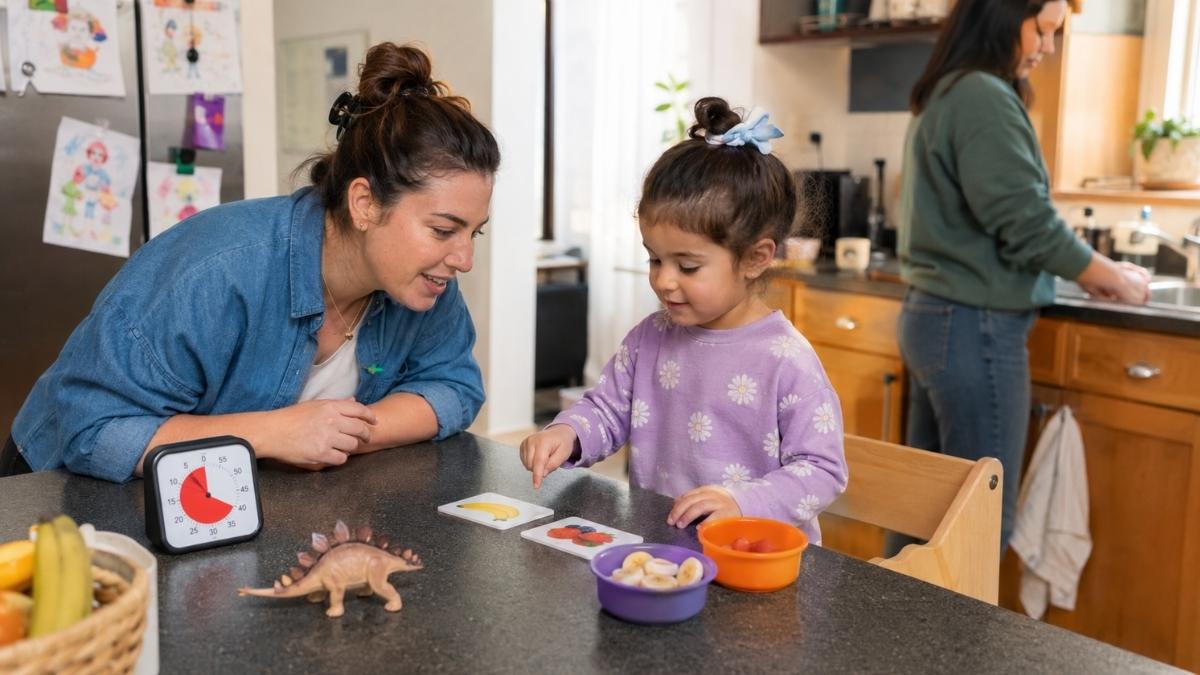
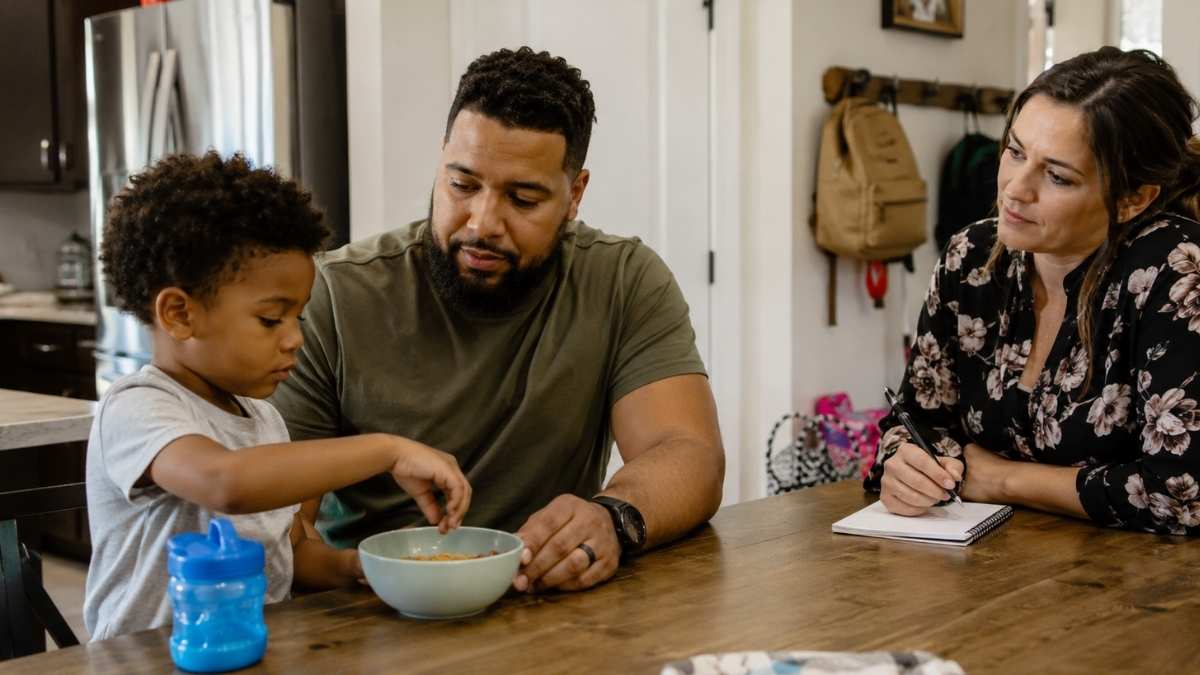
- Breakfast: Asking for more cereal, a different spoon, or a drink
- Getting dressed: Asking for help with socks, showing that a shirt feels uncomfortable, or choosing between two outfits
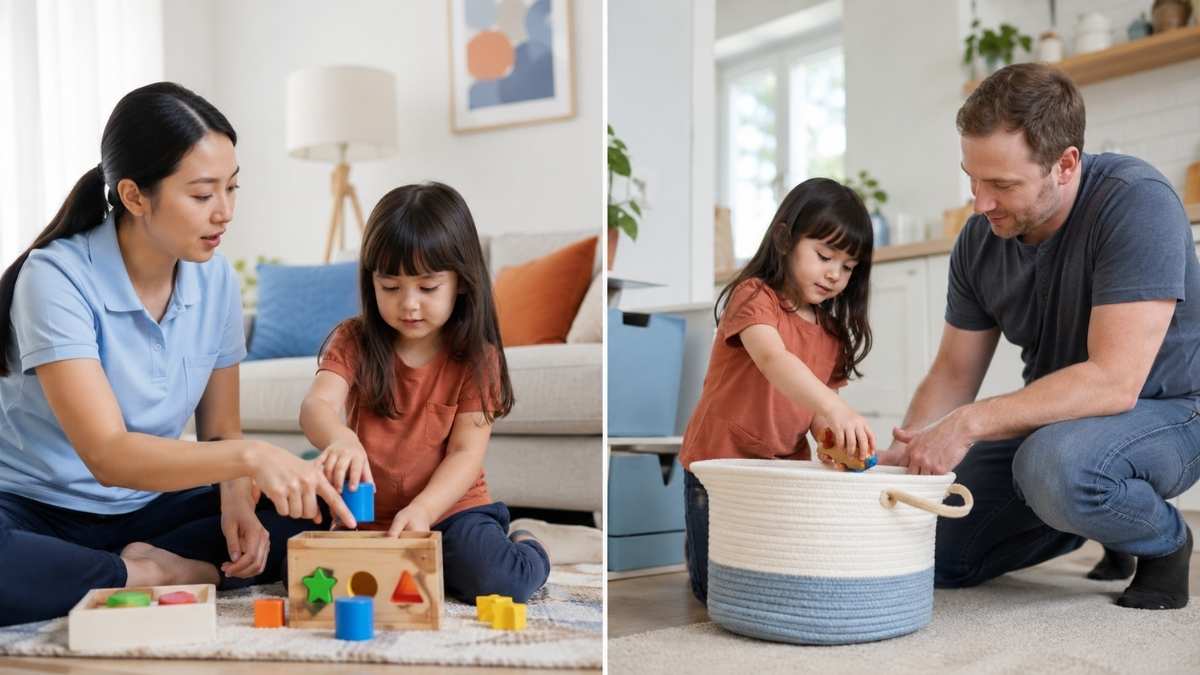
- Play: Asking for a turn, asking to keep going, or showing they want to stop
- Family activities: Asking to join, move away, wait, or change the activity
- Bath time or bedtime: Asking for a towel, a toy, a pause, or a different order in the routine
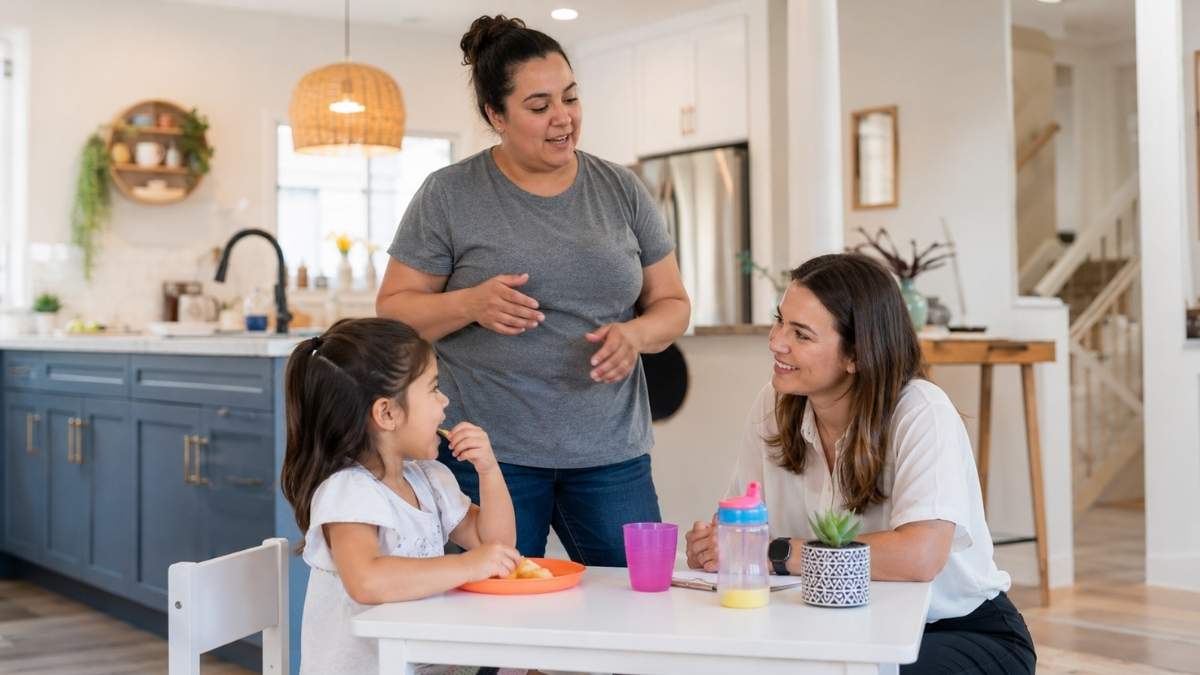
These moments help because they are real. The child has a clear reason to communicate, and the message gets used right away. Over time, that kind of everyday practice can help communication feel more natural and easier to use again later.
Why Everyday Routines Can Help Communication Carry Over
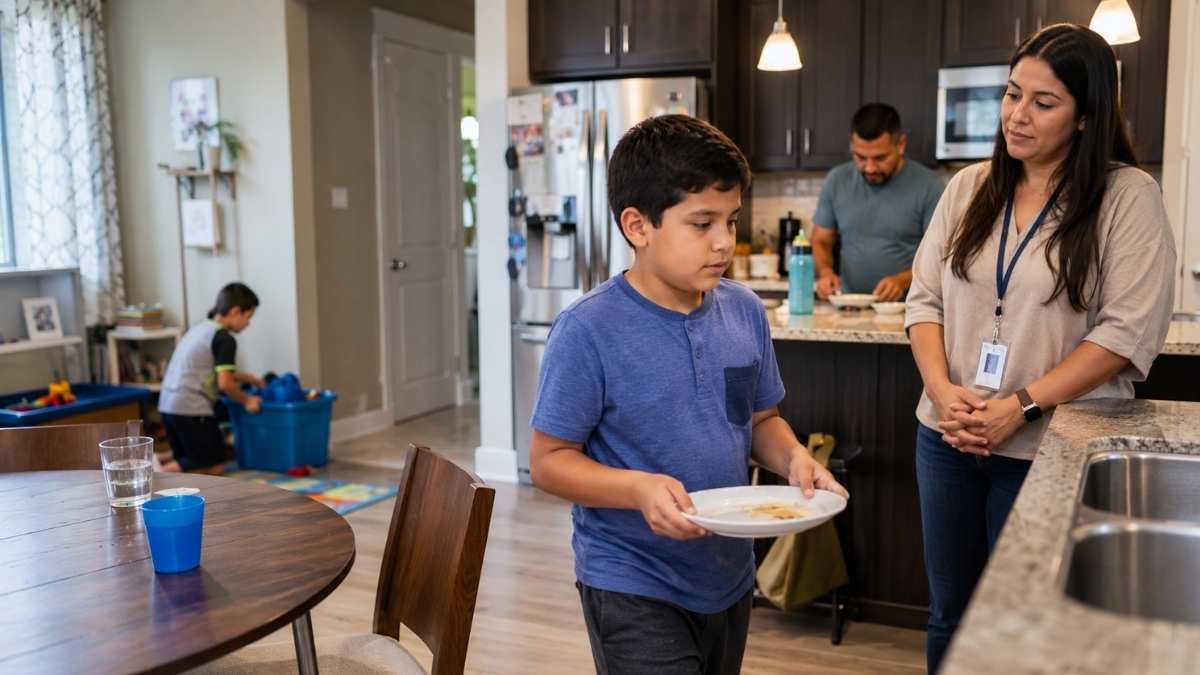
A skill often improves when it is used in real moments, not only during a teaching task. Meals, play, getting dressed, and transitions happen every day, so they can create natural chances to practice without making the day feel too full.
When a child sees that asking for help works at the table, during play, and while getting ready, communication can start to feel useful in more than one setting. That is a big part of learning. The child is not only practicing one response in one place. The child is learning that communication can help throughout the day.
A 2025 scoping review found 103 eligible studies on digital communication interventions, with gains often reported in requesting, commenting, intraverbal skills, and listener responses. Requesting gains appeared in 41 studies.
That does not mean every child will respond in the same way. It does show that communication can grow through repeated use in meaningful moments.

What Progress May Look Like Even When It Seems Small
Progress does not always begin with long phrases or big changes. Sometimes it starts with small signs of progress.
It might look like:
- Asking sooner instead of waiting until frustration builds
- Using the same signal at home and in session
- Needing fewer prompts
- Making clearer choices
Day-to-day changes are normal. Some days may feel easier than others, and that does not always mean progress has stopped. Communication growth is often uneven, especially when routines, sleep, hunger, or stress shift from one day to the next.
How Caregivers and the ABA Team Can Stay on the Same Page
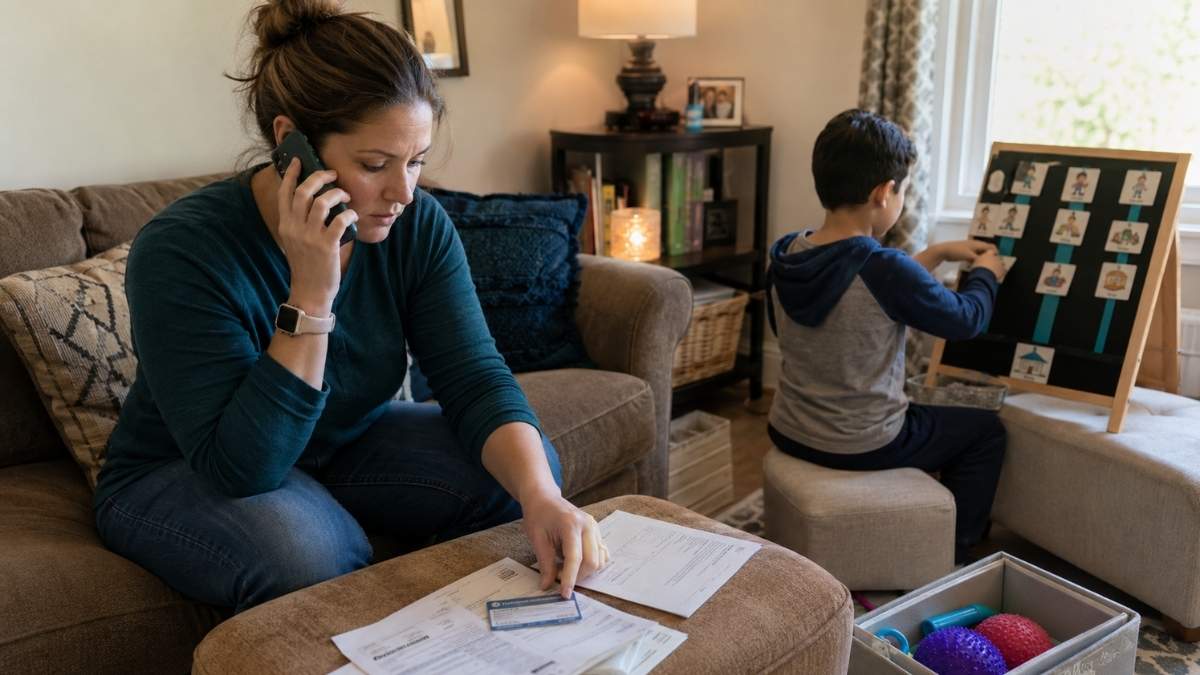
Caregivers often notice communication patterns first, especially in daily routines. That makes home input very useful. When families share how a child already asks for help, food, play, breaks, or comfort, the ABA team can start with what is already working.
It may help to bring up:
- Which signals the child already uses
- Which routines tend to go smoothly
- Which times of day feel harder
- What seems to help the child get a message across
Caregiver training with the BCBA is often a good time to ask how communication goals are being practiced and how they may carry into home routines. Behavioral technicians may support day-to-day practice during sessions, while the BCBA helps guide the larger plan and caregiver coaching.
When It Helps to Bring Up a New Concern
Sometimes, a change in communication needs more attention. If a child suddenly stops using a skill, has a harder time with eating or sleeping, or shows changes that feel unusual for that child, it helps to bring it up.
A good first step is to talk with the BCBA during caregiver training or another scheduled check-in. If the change may be linked to pain, illness, sleep problems, feeding issues, or another health concern, it also helps to talk with the child’s physician.

FAQs About Functional Communication in Everyday Routines
Does functional communication only mean talking?
No. Functional communication does not only mean talking. It can include gestures, signs, pictures, AAC, short spoken words, or other clear signals that help a child express a need, make a choice, or share an idea in the moment.
Can AAC slow down speech development?
No. AAC does not slow down speech development for most children. Current guidance shows that it can support communication and may also help speech and language grow, while giving a child another way to express needs and ideas. Your BCBA can help guide your child & family on a recommended communication modality (e.g., sign language, vocal communication, AAC) that fits your child’s needs most effectively.
How can caregivers support functional communication at home?
Caregivers can support functional communication at home through small, everyday moments:
- Notice how your child already tries to communicate
- Pause briefly to give time to respond
- Keep choices simple and clear
- Use the same supports across routines when possible
- Bring questions to caregiver training with the BCBA
Encourage Clearer Communication In Everyday Life
Clear communication often starts with small, everyday moments, like asking for help, making a choice, or showing that something does not feel right. Those simple exchanges can make routines smoother and help a child feel heard and understood.
At Aluma Care, we support children and caregivers with ABA therapy in Kansas and New Hampshire. We work with families to build goals that connect to real routines, and we offer regular caregiver guidance so you can ask questions and learn ways to support communication at home.
Reach out to our team to talk about your child, learn more about our services, and see how we may help.
────────
EDITOR’S NOTE: Content written by an outsourced marketing team. Information is for educational purposes only and does not replace professional clinical or medical advice.










.png)


.png)