


Key Points:
- Home-based ABA supports life skills in real environments like bathrooms and kitchens, while clinic-based ABA offers structured practice with fewer distractions.
- A hybrid approach blends both, helping autistic children build independence across settings.
- Choosing the best fit depends on the child’s needs, family routines, and where skills are most likely to generalize.
Choosing where ABA happens can feel like a big decision when your child needs help with dressing, hygiene, chores, and other daily tasks. You may see progress in sessions, yet still feel stuck when it is time to use those skills in real life.
This article looks at how home-based and clinic-based ABA therapy services each support life skills autism goals, how they differ, and what to consider if you want a mix of both.

Why Life Skills Autism Goals Guide ABA Choices
Life skills include everyday health and safety skills children use to care for themselves and move through the community, such as washing hands, getting dressed, packing a backpack, preparing simple meals, managing money, and staying safe.
Daily living skills autism abilities often lag behind thinking skills. One study found that autistic adolescents without intellectual disability were often 6–8 years behind peers in daily living skills, and the gap tended to widen over time. These gaps affect college, work, friendships, and living arrangements in adulthood.
Adaptive functioning in emerging adults shows the same pattern. In one 10-year study of emerging adults who had been diagnosed with autism, 46% were living on their own, 71% were either working or enrolled in school, and 75% said they had at least one friend, yet overall adaptive functioning still trailed non-autistic peers.
Because of this, many ABA individualized programs center their goals around:
- Personal care – bathing, toileting, dental care, dressing
- Home routines – cleaning, laundry, simple cooking, organizing materials
- Community use – shopping, using money, crossing streets safely, using public spaces
The question then becomes: where should these skills be taught first so they are easiest to use later?
What Does In-Home ABA Practice Look Like?
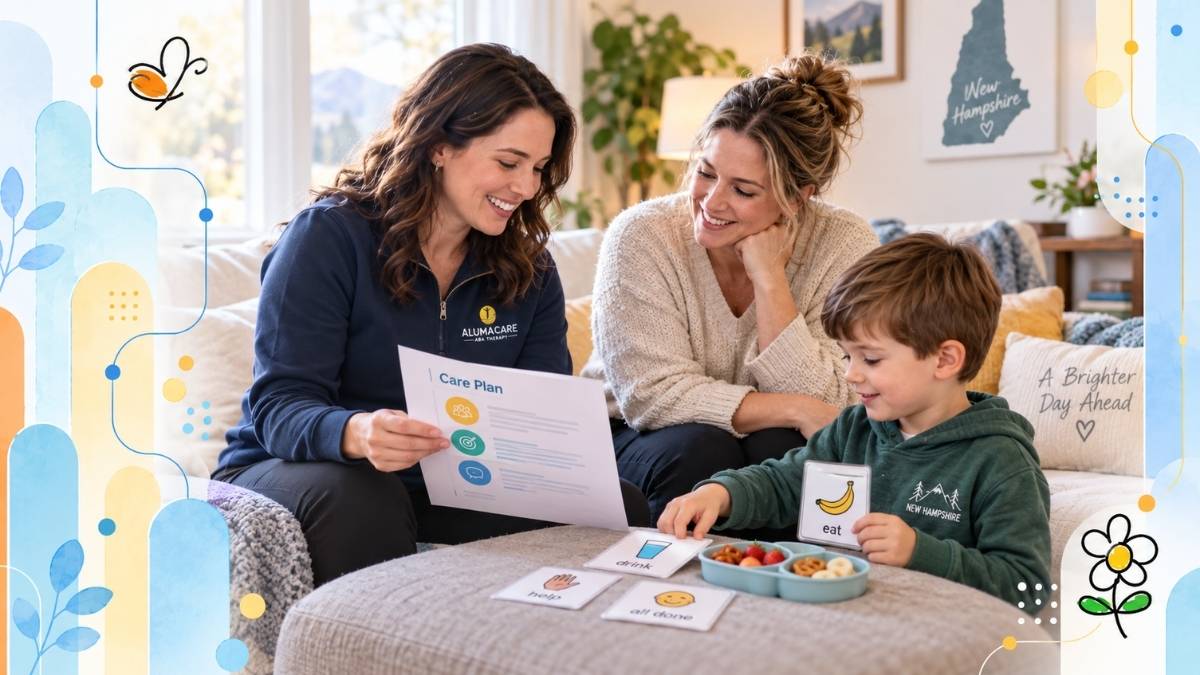
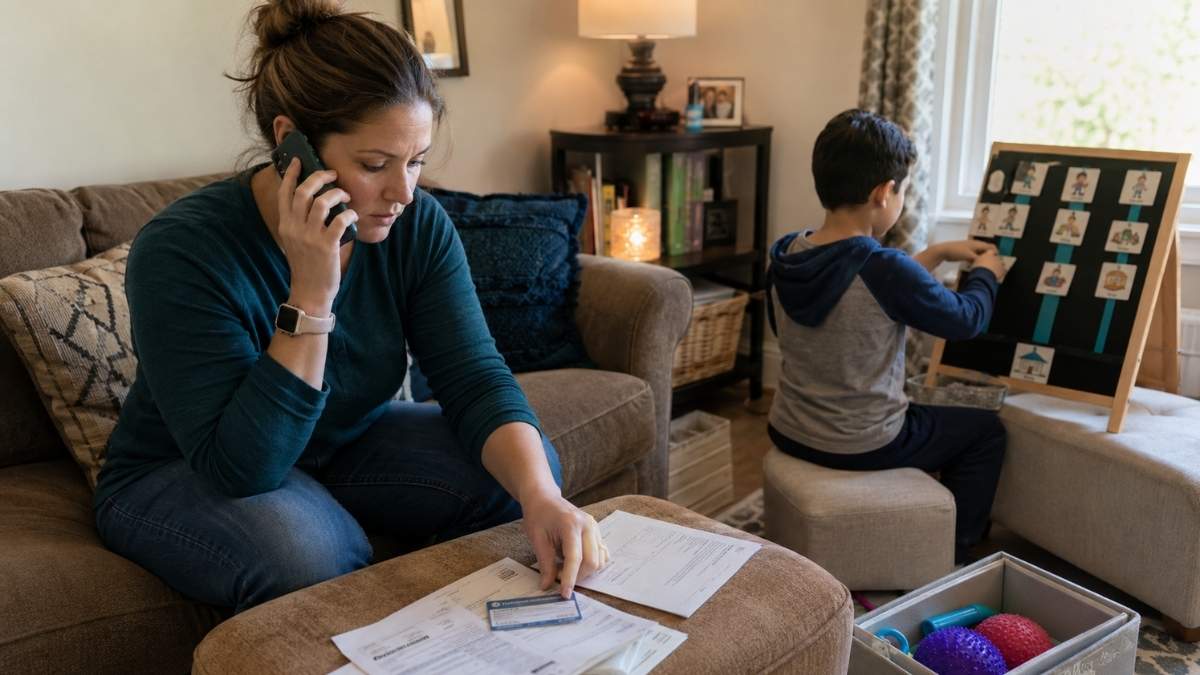
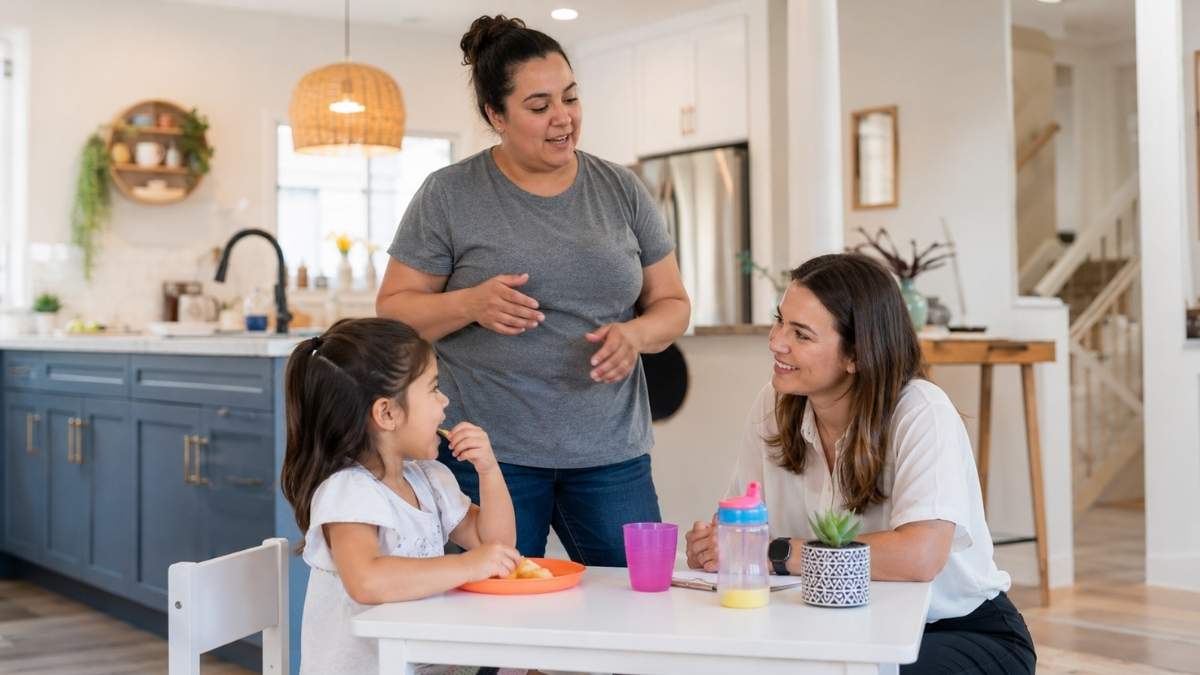
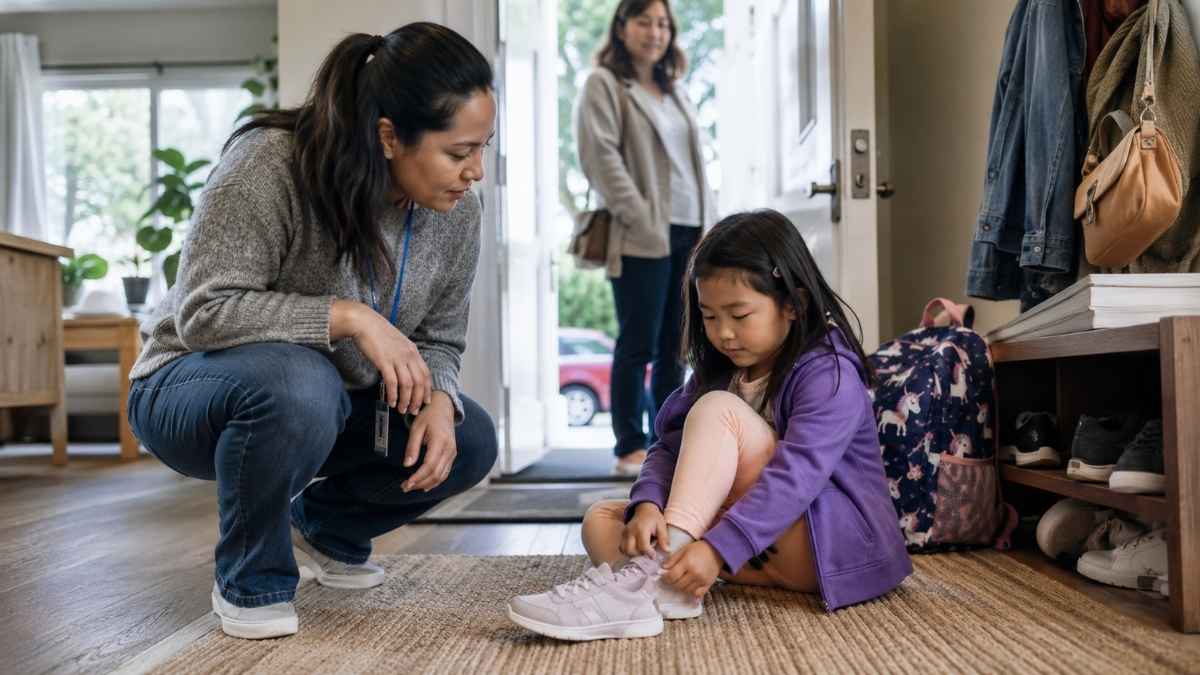
In-home ABA therapy takes place in the same rooms, routines, and triggers your child already knows. A behavioral technician can see what mornings, meals, and evenings really look like and shape skills within that natural flow.
In many programs, home sessions focus on:
- Morning and bedtime routines – breaking tasks into steps, using visual schedules, and fading prompts
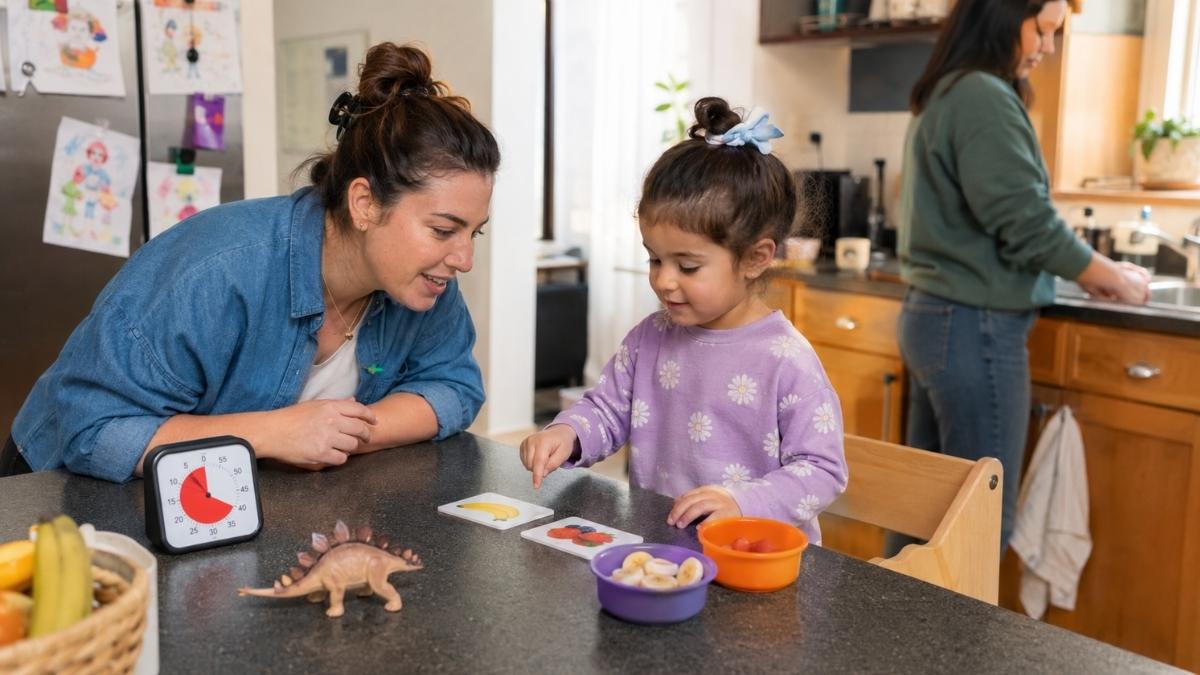
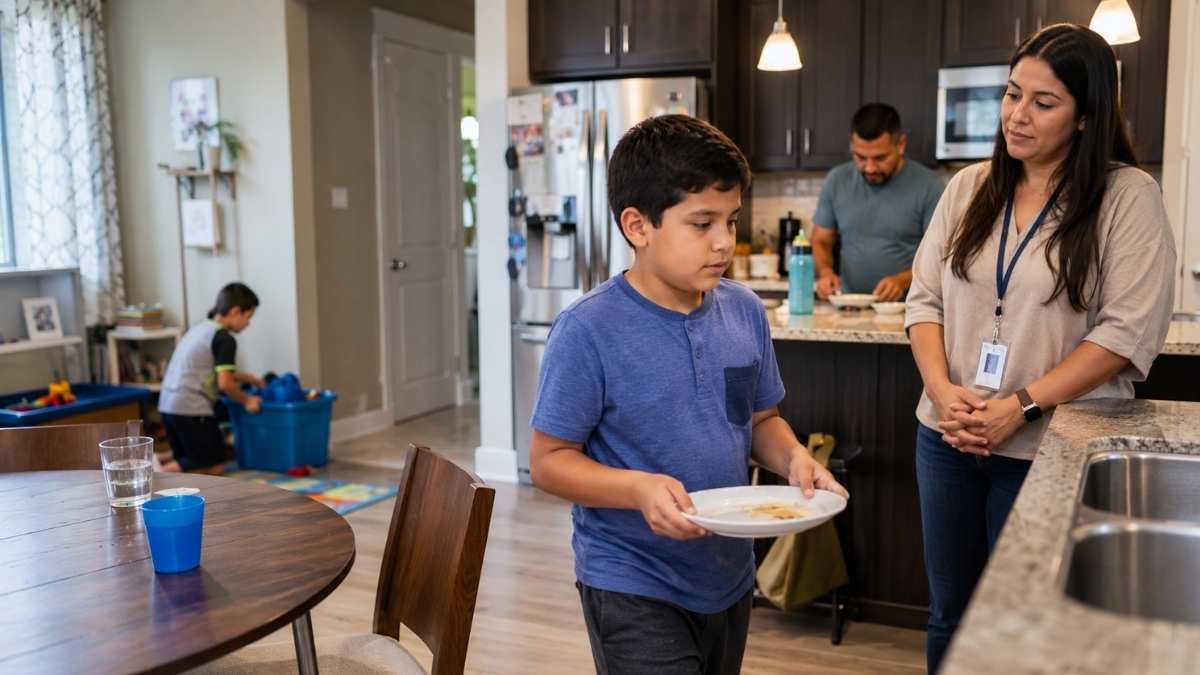
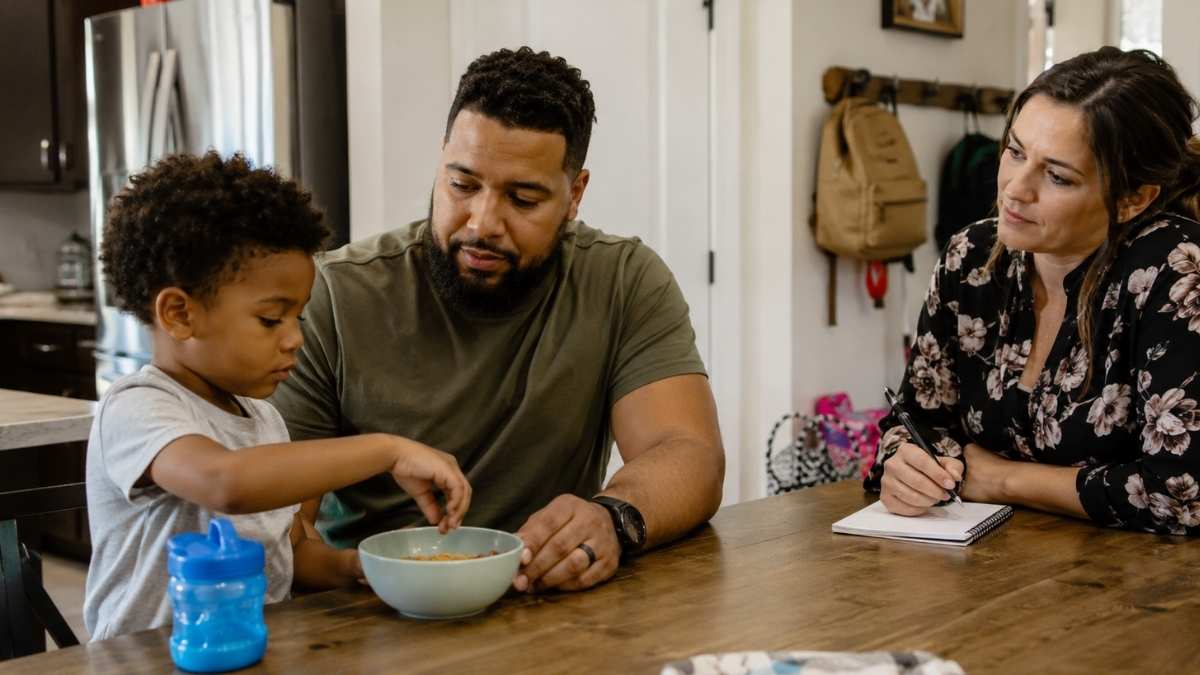
- Meals and snacks – handwashing, setting the table, trying new foods, clearing dishes
- Household chores – laundry steps, putting toys away, wiping counters, making the bed
- Community outings from home – short grocery trips, mailbox walks, or play at the local park
Evidence supports building skills where they are used. A large scoping review of 34 caregiver-training studies found that 91% of interventions happened at least partly in the family home, and almost all caregivers were taught to use reinforcement (99%) and prompting (90%).
In-home ABA typically weaves in:
- Task analysis – breaking complex routines like showering into smaller steps
- Prompting and fading – starting with more help, then gradually pulling back
- Reinforcement – pairing effort and independence with praise, access to preferred items, or other meaningful rewards
- Caregiver coaching – live modeling, feedback, and simple data tools during weekly or bi-weekly sessions with the behavioral technician
For families focused on “teaching independence ABA” in the spaces where skills happen, in-home sessions may feel practical and easier to carry over between visits.
How Clinic-Based ABA Supports Daily Living Skills Autism Needs
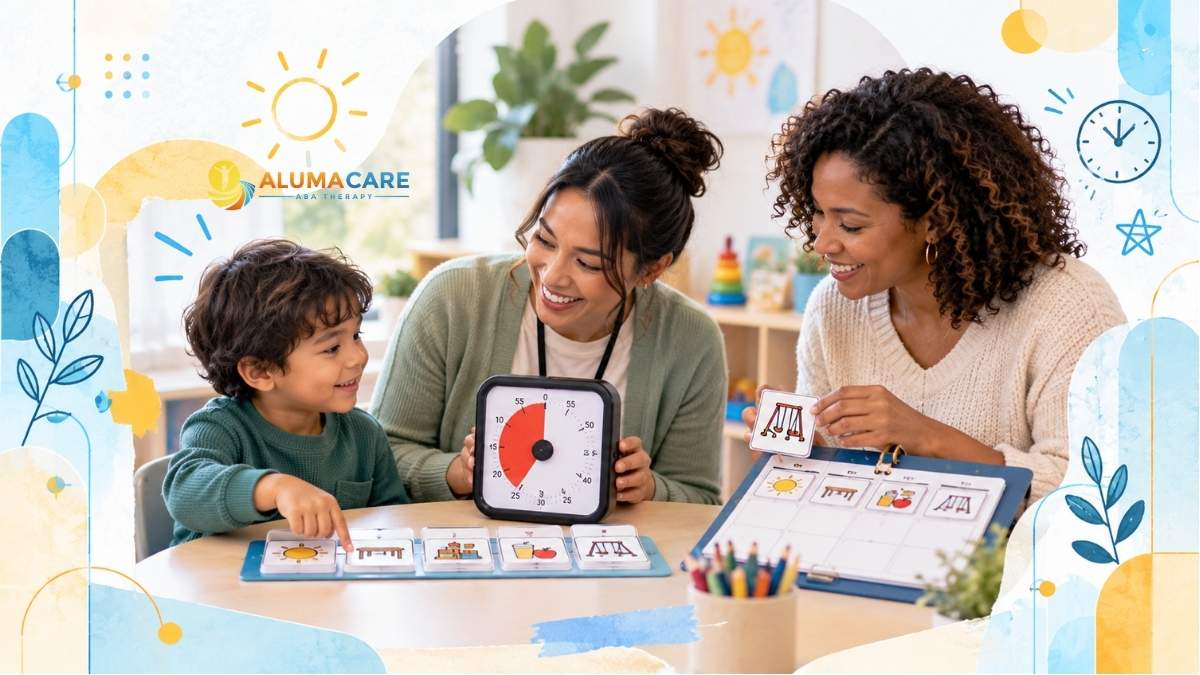
Clinic-based ABA takes place in a structured environment with materials and setups designed to support learning and cognitive skill development. The setting feels more controlled: consistent lighting, fewer distractions, and furniture arranged for specific goals. This can help some children learn new routines before they are moved into busy home or community settings.
In clinics, behavioral technicians often:
- Use simulated kitchens, bathrooms, or laundry areas for step-by-step practice
- Run repeated trials of tricky skills like toothbrushing, buttoning, or zippering
- Practice waiting, turn-taking, and group instructions that feel more like school
- Introduce community skills in a staged way, such as mock checkouts or role-play with pretend money
Clinic programs can still target core daily living skills autism goals. One randomized clinical trial tested a daily living skills program for autistic adolescents called Surviving and Thriving in the Real World. Teens in the program gained about 4–7 years of daily living skills over the course of treatment and moved into the average range on a standard adaptive behavior measure.
Clinic settings may be especially helpful when your child:
- Needs intensive practice with fewer sensory distractions
- Benefits from clear physical boundaries and visual supports
- Works on goals that match school or work expectations
Even in clinic-based care, a behavioral technician can film routines, send home visuals, and use caregiver meetings to plan how skills will transfer into your kitchen, bathroom, bedroom, and neighborhood.
Home or Clinic: Which Setting Fits Your Life Skills Goals?
Both settings use ABA methods. The main difference lies in where and how those methods appear. When you are weighing options for life skills autism goals, it helps to think through a few concrete questions.
Questions about your child:
- Where does your child currently succeed more: familiar home spaces or new places?
- Does your child learn better when routines match school-like structure or when practice happens in real-time moments at home?
- Are sensory needs easier to manage in a clinic or in your own space?
Questions about your family:
- Do caregivers have time and energy to join in-home sessions and practice between visits?
- Is your home setup safe and workable for cooking, laundry, or personal care?
- Is travel to a clinic realistic several times per week, or would virtual-based ABA therapy be easier to manage?
Research suggests that adaptive functioning tends to stay below age expectations without targeted support, and the gap between skills and age can widen over time. That makes it important to choose the format where your child is most likely to attend regularly and practice consistently.
Some families choose clinic sessions first to establish a routine, then add or switch to in-home ABA once skills start to appear. Others begin at home to address urgent routines such as toileting, dressing, and hygiene, and later add clinic groups that feel more like school.

Can a Hybrid ABA Plan Help Build Independence?
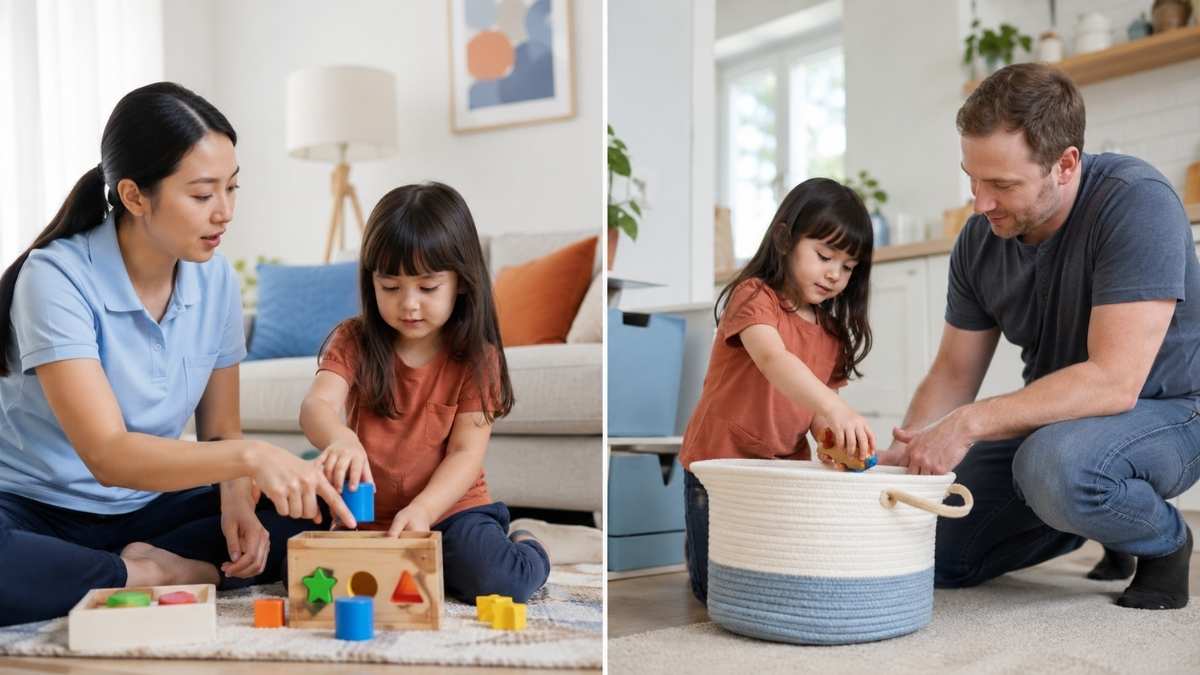
A mix of home and clinic sessions can provide structure and real-world practice. Many caregivers find that evidence-based ABA therapy feels helpful when goals stretch across personal care, school participation, and community access.
A hybrid approach may:
- Use clinic time for intensive teaching of new or complex routines
- Use home sessions to test those routines during actual mornings, evenings, and weekends
- Include community-based outings to generalize skills to stores, parks, or other public places
Studies that track adaptive functioning show how important it is to keep building skills over the years, not just during early childhood. One large study found that about 21% of autistic children showed low adaptive functioning early on, but patterns shifted over time depending on support and experiences.
With a hybrid plan, caregivers stay in regular contact with the behavioral technician during training sessions. These meetings are a good place to:
- Review what worked in the clinic versus at home
- Adjust goals or behavior support plans if routines are too hard or too easy
- Learn new prompting, visual supports, and reinforcement strategies for upcoming life changes
When teams treat the setting as flexible and the ABA methods as consistent, children may have more chances to use new skills in both structured and natural settings.

FAQs About Life Skills Autism
What are life skills for autism?
Life skills for autism include everyday tasks such as hygiene, dressing, eating, toileting, cleaning, and using money and transportation. These skills support independence and help autistic individuals succeed at home, in school, and in the community. Strong life skills are linked to better adult outcomes in work, education, and relationships.
What are 7 examples of life skills?
Seven examples of life skills are personal hygiene, dressing, meal preparation, cleaning, laundry, money management, and community safety. These skills form the foundation of daily independence and are key goals in ABA programs for autistic individuals, supporting success in home, school, and community settings.
Do autistic people struggle with life skills?
Yes, autistic people often struggle with life skills. Research shows that daily living skills often fall 1–2 standard deviations below average, even when IQ is average or higher, and this gap often widens over time.
Choose ABA Support That Builds Everyday Independence
Teaching life skills through ABA is not just about checking off steps in a routine. The goal is to help your child use those skills at home in the bathroom, at school in the cafeteria, at the grocery store, and in every place that matters in daily life.
Both home-based and clinic-based programs can support that growth when sessions are consistent, data are reviewed, and goals stay tied to real situations. Families who want ABA therapy services in New Hampshire and Kansas can look for programs that target practical life skills and keep clear communication with the behavioral technician about progress and next steps.
At Aluma Care, we focus on building those everyday abilities while giving caregivers simple tools they can use between visits. If you are ready to look more closely at home, clinic, or hybrid ABA options for your child’s life skills, get in touch with us. Let’s talk about your goals and see what kind of plan can support more independent days over time.
────────
EDITOR’S NOTE: Content written by an outsourced marketing team. Information is for educational purposes only and does not replace professional clinical or medical advice.






.png)


.png)