


Key Points:
- Preparing your child for an ABA assessment works best with a simple, calm conversation before the visit.
- Tell them where they're going, who they'll meet, and that you'll stay with them, avoiding pressure-filled language like "be good" or treating it like a test.
- Bringing comfort items and sharing sensory preferences helps the day feel manageable.
A first ABA assessment can feel new for both you and your child. You may wonder how much to explain, when to bring it up, and how to keep the visit from feeling stressful.
A long explanation may not always be needed. A short, calm, and honest conversation often helps more. Many caregivers find that simple words and a steady tone can make the day feel more familiar.
Some families call it an assessment visit, while others call it an evaluation. The name may change, but the goal stays the same, and that is to help your child feel supported and know what may happen during the visit.

A Simple Talk Can Help Before the First Visit
A new place, new adults, and a different routine can feel like a lot for some children on the spectrum. A short talk before the visit can help your child know the basic plan without making the day feel too big.
The goal is not to get your child to “do well” or say the right thing. The goal is to help your child feel safe and supported and a little more prepared for what may happen.
Early evaluation comes up in many homes for a reason. The CDC reported that about 1 in 31 8-year-old children were identified with autism spectrum disorder in 2022. That helps explain why screening and evaluation come up so often in caregiver conversations.
The American Academy of Pediatrics recommends autism-specific screening at 18 and 24 months, along with general developmental screening at 9, 18, and 30 months. That can help caregivers see a first visit as a common source of support, not something a child needs to be scared of.
What to Tell Your Child Before the Visit
Most children do not need a long talk before the first visit. A few clear, calm lines are often enough.
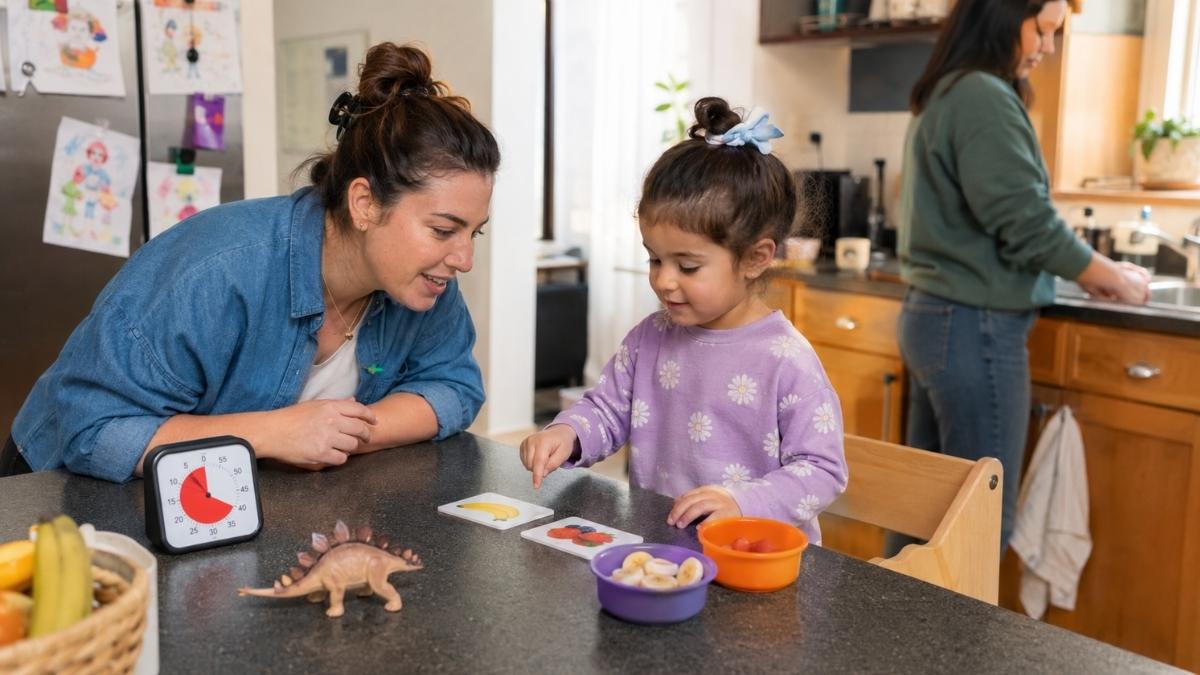
Simple words are usually easier to take in. You can tell your child where you are going, who they may meet, and what they might do during the first intake visit. That often helps more than building the visit up into something big.
Helpful examples may include:
- “We’re going to meet people who want to get to know you and help.”
- “You may play, talk, or do a few activities.”
- “I’ll be with you.”
- “You do not have to get everything right.”
- “You can tell us if you want a break.”
That kind of language can ease some of the pressure. It also helps your child hear that the visit is about learning and support, not passing or failing.
How to Help Your Child Feel More Comfortable
What you say at home is only one part of the visit. A few familiar things can help too. NICHD says autism can sometimes be detected by 18 months, and that by age 2, a diagnosis from an experienced professional can often be considered reliable. That helps explain why families may be referred early and why a calm first step can help.
A few child comfort strategies may help lower stress:
- Bring a favorite item
- Pack water or a familiar snack if allowed
- Share sensory preferences before the visit
- Tell the team what waiting is like for your child
- Bring any communication tools your child already uses
- Keep the morning routine as normal as possible
Small details can help more than they seem. A comfort toy, a familiar object, or a quick note about noise, waiting, or transitions can help the team start with a better understanding of your child.
What Not to Say Before the Visit
Some well-meant phrases can add pressure without meaning to.
A first visit can feel harder when a child hears things like “Be good” or “You have to answer everything right.” That can make the appointment sound like a test. A calmer, simpler message is easier for a child to hold onto.
Skip phrases like:
- “Be good.”
- “You have to get everything right.”
- “Don’t worry, it will be fast.”
- “We’re not going to talk about it until we get there.”
Try gentler options like:
- “We’re going to meet and learn.”
- “I’ll tell you what I know.”
- “I’ll stay with you.”
- “We can take this step by step.”
A surprise visit can be tough for kids who need preparation. But too much buildup can make the day feel bigger than it is. A calm middle ground usually works best.
How to Make Assessment Day Easier
The conversation at home leads into the visit itself. A few simple assessment day tips can help the first visit feel more manageable while also reducing anxiety.
A short checklist:
- Confirm the time and address the day before
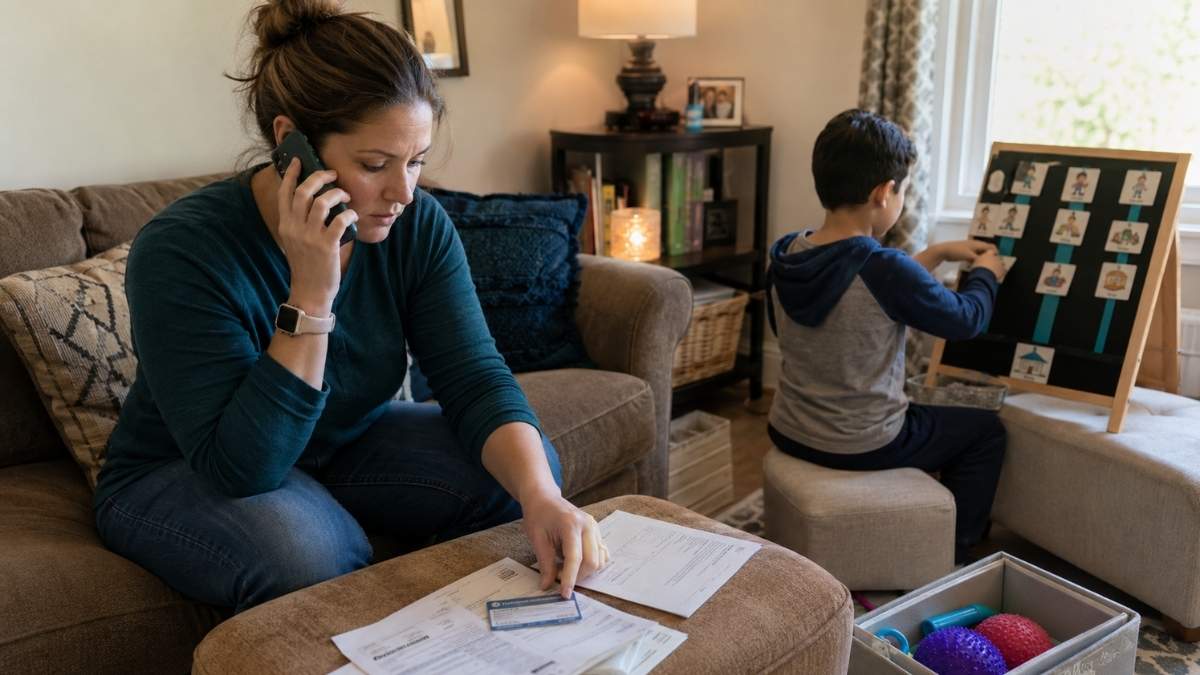
- Bring forms, insurance cards, and prior reports if asked
- Pack comfort items
- Leave extra time for parking or check-in
- Share notes about sleep, food, schedule, or transitions if they affect the day
- Keep your own language calm and brief
Kids pick up on tone fast. A steady voice, simple directions, and a little extra time can help the visit start on a calmer note.

What Happens at the Visit and What Comes Next
Many caregivers want to know what happens once they arrive. The format varies by provider, but the visit usually includes:
- Caregiver questions
- Observation
- Play-based interaction
- Skills and preference assessments
- Discussion of daily routines
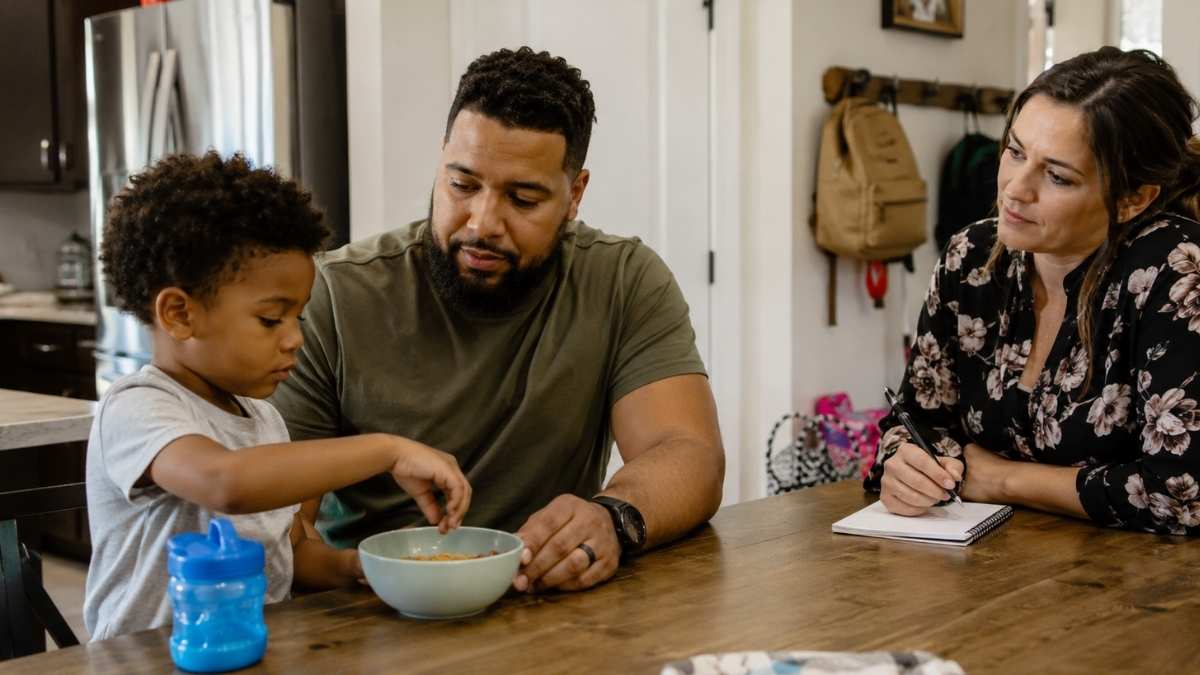
The team may ask what your child enjoys, what daily routines at home look like, and what concerns brought you in. Your child may play, do simple activities, or interact with materials. In most cases, it feels more like a guided observation than a formal test.
After the visit, the team may:
- Discuss next steps
- Share initial thoughts
- Talk about whether services are recommended
Ongoing questions are often covered during caregiver training sessions led by a BCBA, which might happen weekly or every other week, depending on the provider. If services begin later, caregivers may also learn more about behavioral technicians and how they support the care team.

FAQs About a First ABA Assessment
How much should I tell my child before a first ABA assessment?
Keep it short and simple. Most kids do better when you say where you're going, who they'll meet, and that they may play, talk, or do activities. A long explanation can add pressure instead of helping.
Should I tell my child the visit is a test?
No. It's better to explain it as a visit where the team wants to learn about your child. That lowers the pressure. "Test" sounds like something to pass, but an evaluation is really just observation, play, questions, and conversation.
What should I bring to a first ABA assessment?
The visit usually goes smoother when you bring:
- Insurance cards
- Intake forms
- Prior reports, if requested
- A comfort item
- Notes about routines or communication needs
- Water and a snack if allowed
- Any communication tools your child already uses
Help Your Child Feel More Ready for the First Visit
A child usually does not need a perfect speech before a first ABA assessment. A short, honest explanation can help the day feel easier and less stressful.
At Aluma Care, we support families in Kansas and New Hampshire with clear communication and caregiver support before ABA services begin. Our team can talk with you about what a first assessment may include, what to bring, and how caregiver training with a BCBA may help you feel more prepared for what comes next.
Reach out to us to ask questions, talk about your child, and learn how our team can support your family.
────────
EDITOR’S NOTE: Content written by an outsourced marketing team. Information is for educational purposes only and does not replace professional clinical or medical advice.











.png)


.png)