


Key Points:
- A morning routine for children with autism can become unpredictable due to sleep issues, hunger, or small changes in plans.
- Sharing brief details about wake-up time, breakfast, and which transition felt hardest helps ABA teams understand the context before sessions start.
- Simple tools like visual schedules may reduce transition time and challenging behavior.
A rough start can really weigh on the whole morning. Your child might wake up exhausted, push away breakfast, get stuck on getting dressed, or have a big reaction over a tiny change in routine. But here's the thing: a tough morning doesn't mean the rest of the day is doomed.
Sharing small details from home can give the ABA team helpful context before the session starts. In many families, a morning routine for children with autism does not look the same every day. Sleep, hunger, noise, waiting, or a change in plans can all affect how the morning goes.
This article explains what you may want to share with the ABA team and what may fit better into caregiver coaching.

Why Morning Details Can Help Before An ABA Session Starts
Morning information helps the team understand how the day started before morning ABA sessions begin. That does not mean caregivers need to give a long report. A short update is often enough.
A child may come into the session after:
- Poor sleep
- Waking up late
- Missing breakfast
- A change in transportation
- Waiting by the door for a long time
- A routine step that felt harder than usual
That kind of context can help the behavioral technician respond in a calmer, more informed way. It is less about explaining everything and more about sharing what happened that day.
Many families deal with this. CDC data shows that about 1 in 31 children aged 8 in the United States has been identified with autism, so many caregivers are working hard to build daily routines that work better at home.
What Changes in the Morning Can Affect the Rest of the Session
Some morning problems may look small from the outside, but they can still affect how ready a child feels. A change does not have to be big to shape the next hour.
Common examples include:
- Waking up later than usual
- Struggling to get from bed to bathroom
- Clothing that feels uncomfortable
- A different breakfast or no breakfast at all
- A sibling getting in the way
- Being dropped off by someone different
- Rushing through the morning routine like it's a school day, even when it's not
Sleep is one of the clearest examples. A 2024 review found that sleep problems may affect over 80% of people on the autism spectrum, and those sleep issues can influence behavior, mood, and attention the next day.
That doesn't mean every difficult morning comes from sleep. It does mean sleep habits may be helpful to share with your child's care team when they show up.
Morning Details Worth Mentioning To The ABA Team
The most helpful update is often the simplest one. A short note about what happened can help more than a long explanation about why it happened.
Good details to share in under 30 seconds:
- Wake-up time
- Whether breakfast happened
- Any change in the routine
- Which step felt hardest
- What helped even a little
- Whether waiting was hard
- Whether noise, clothing, or a transition seemed to bother the child
Plain language often works best:
- "He woke up early and seemed tired."
- "The hardest part was getting dressed."
- "Breakfast was lighter than usual."
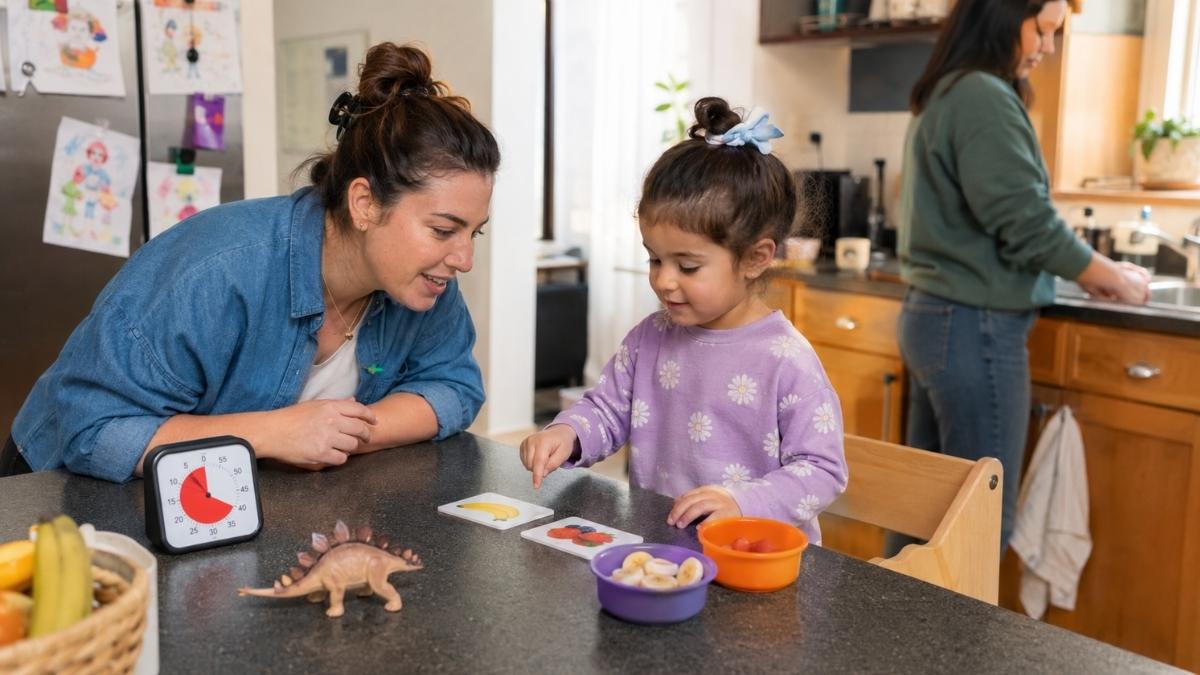
- "The timer helped a little."
- "The wait by the door was hard today."
This kind of update can give the team a clearer picture of the morning without turning the moment into a full problem-solving meeting. For many caregivers, simple notes like these are also a good starting point for later conversations about transition strategies and a structured daily routine.
Helpful Details to Share With the BCBA During Caregiver Training
Same-day updates help the session start. Bigger patterns often fit better in a longer talk with the BCBA.
Those conversations can be a good place to bring up:
- The same morning problem happening again and again
- One step that keeps breaking down
- Home supports that seem to help
- Changes in appetite or sleep
- What you want the morning to look like over time
This kind of review can help separate a one-time rough start from a pattern that may need more support.
Research also backs the value of parent and caregiver involvement. A 2026 systematic review found that 22 of 24 studies reported positive effects from training programs on knowledge, child behavior, and social communication skills.
At Aluma Care, we build collaboration into the process. Families gain helpful strategies to support progress and create consistency at home.

Simple Tools That May Support Smoother Morning Transitions
Some families may find that one small support helps the morning move along with less stress. No single tool works for every child, so the better approach is to identify what helps and share that information with the ABA team.
Tools families may ask about:
- Visual schedules
- First-then reminders
- Short countdowns
- Clothes set out the night before
- A small waiting activity
- A more predictable order of steps
- Fewer last-minute changes
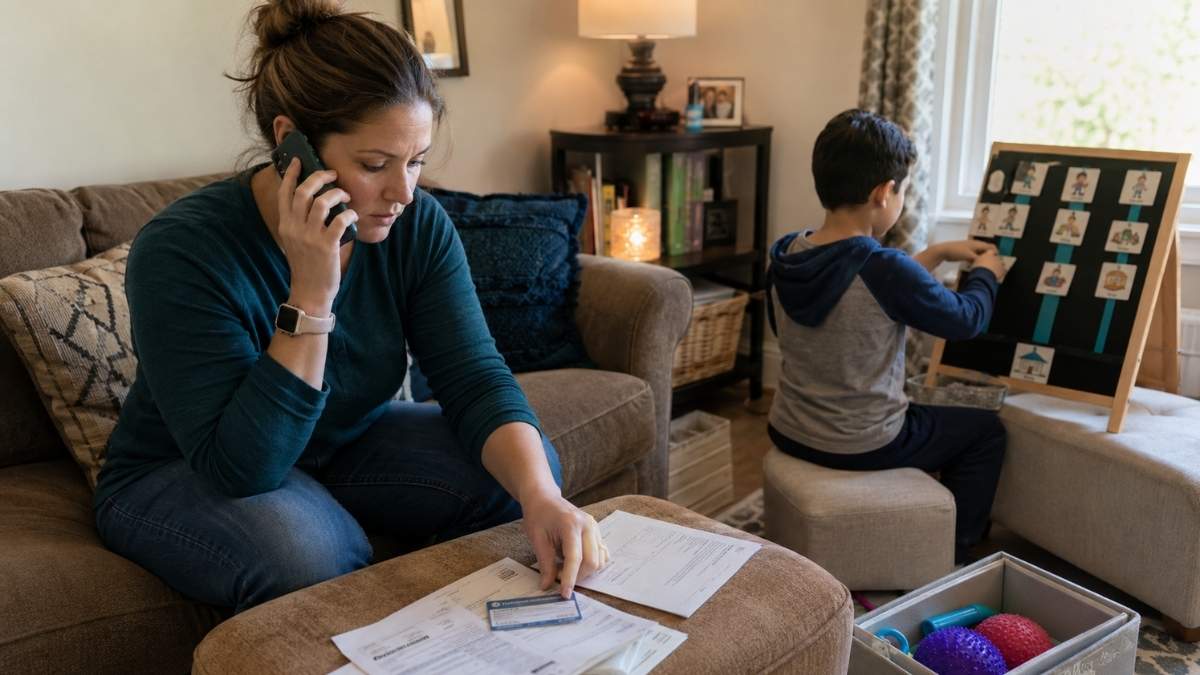
A visual support may help because it shows what comes next. Consistent visual schedules may support smoother transitions by showing the order of activities and making the routine feel more predictable. Research also suggests that visual schedules may reduce transition time and challenging behavior during transitions.
When To Seek A Doctor’s Help
Some concerns may need more than a session update. A pattern of hard mornings may be worth bringing up with your child’s physician, especially if the change is new, keeps happening, or seems more intense than usual.
Examples include:
- Ongoing sleep trouble
- Pain
- Signs of illness
- Big appetite changes
- New medication effects
- A sudden change in energy
ABA teams can help with routines, transitions, and skills that carry into home, school, and community. Medical concerns are usually better discussed with your child’s doctor. That can help families get support from the right place without feeling like they have to sort everything out on their own.

FAQs About Morning Transitions Before ABA Sessions
What should caregivers tell the ABA team before a hard morning session?
Caregivers can share short details about sleep, meals, routine changes, and which part of the morning felt hardest. Brief notes are often more helpful than a long explanation. It may help to mention what time the child woke up, whether breakfast happened, and which step of the routine was most difficult.
How can visual schedules help with morning transitions?
Visual schedules show what comes next in the routine. That added predictability may help lower stress during transitions and make the morning feel easier to follow. Research suggests that visual supports can reduce transition time and challenging behavior for some children with autism.
When should caregivers talk to the BCBA about repeated morning struggles?
It may be helpful to bring it up when the same problem keeps happening, when one part of the routine often breaks down, or when supports at home no longer seem to help. A longer conversation with the BCBA is often a better place for that bigger pattern discussion.
Share the Small Details That Can Shape a Better Start
Small details from home can give the ABA team a better sense of how the day began. A note about sleep, breakfast, timing, waiting, or a rough handoff can help turn a hard start into a more informed session.
At Aluma Care, we provide ABA services for children in Kansas and New Hampshire, and we believe communication is an important part of steady support at home.
When mornings before the session feel hard to sort out, our team can help you talk through what you're seeing, bring those patterns into your collaboration meetings, and find practical ways to make the start of the day feel more manageable. Reach out to us to learn how our team can support your child and your household.
────────
EDITOR’S NOTE: Content written by an outsourced marketing team. Information is for educational purposes only and does not replace professional clinical or medical advice.











.png)


.png)