

Key Points:
- Bullying and autism often overlap, with autistic children facing significantly higher risks.
- Communication challenges and sensory traits can mask signs of bullying, which may show through shutdowns, routines, or school refusal.
- Caregivers can protect their child by tracking behavior, involving ABA therapy, and coordinating support with schools to reduce harm.
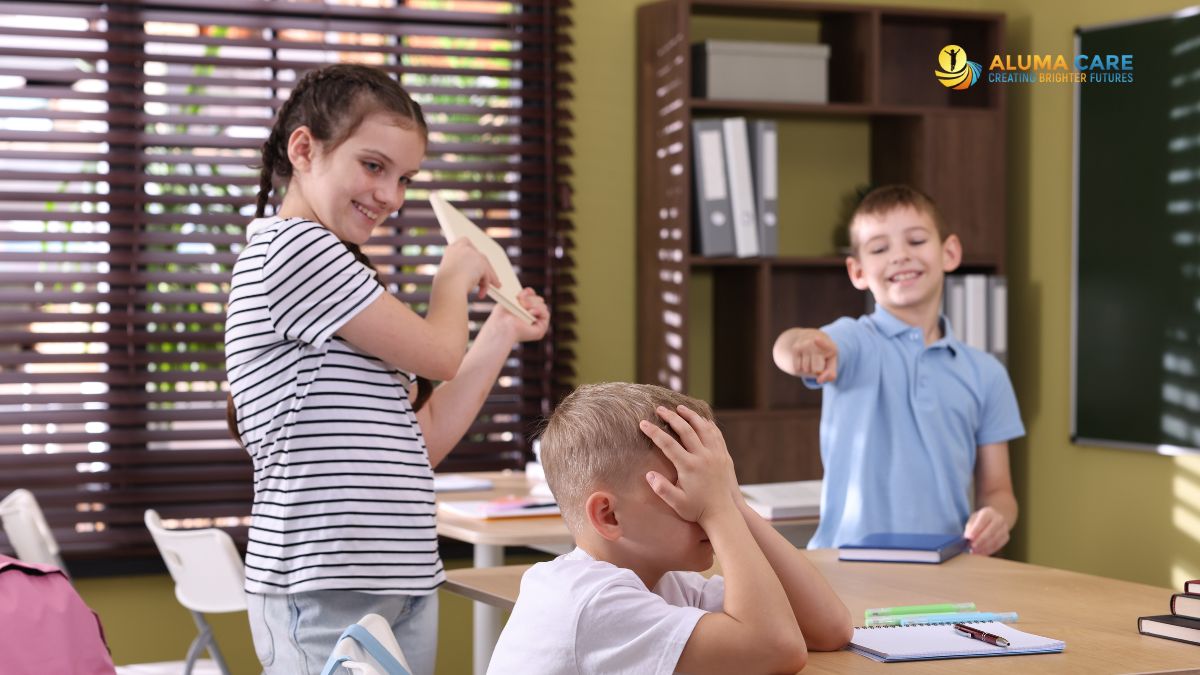
Adults supporting autistic children may hear “It is just teasing” while watching their child shut down, cling to routines, or refuse school. Social rules already feel confusing for many autistic kids, and bullying in person or online can add more stress than they can explain.
Bullying can be harder to spot in autism because communication differences, sensory needs, or repetitive behaviors already draw attention. A child may not have the words to describe what is happening or may believe that bullying is a normal part of friendship.
Learning how autism and bullying interact gives you clearer clues about when to step in and what to ask for from schools and providers.

How Common Is Autism and Bullying Today?
Autism and bullying are tightly linked in many school environments. A national fact sheet from the U.S. government estimates that about 19% of high school students were bullied on school property and about 16% were electronically bullied, such as by text or social media, in the previous 12 months.
Autistic students face an even higher risk. Earlier work cited in a large national analysis estimated that about 67% of autistic school-age youth had experienced bullying. The same national analysis using the U.S. National Survey of Children’s Health found that around 69% of autistic girls and 64% of autistic boys had experienced bullying, which was about 40% higher than rates reported for their non-autistic peers.
Families who understand how common autism and bullying are can bring specific concerns to school meetings instead of waiting to see if things “get better on their own.” They can ask about supervision in hallways and buses, clear anti-bullying procedures, and coordination with ABA therapy services that already support their child’s communication and coping skills.
What Bullying Signs in Autism Should You Watch For?
Bullying signs autism caregivers notice often show up as behavior changes rather than clear reports. An autistic child being bullied might say “School is bad” without details or may say nothing at all and show stress through routines, scripts, or shutdowns.
Common warning signs include:
- Sudden school refusal or strong distress on school mornings that was not present before
- More nurse visits, calls to be picked up, or vague physical complaints such as headaches or stomachaches
- Unexplained bruises, scratches, damaged clothing, or missing items such as lunch, money, or favorite objects
Risk factors for school bullying of autistic students include:
- Visible differences in speech, such as echolalia, very formal language, or limited back-and-forth conversation
- Strong sensory reactions to noise or touch in cafeterias, hallways, or buses
- Difficulty telling the difference between a joke and a threat
Families who see these patterns can bring examples to caregiver training sessions and talk directly with their ABA team. Together, you can track times, locations, and peers involved, then build ABA goals around asking for help, moving toward safe adults, and using simple scripts such as “Stop” or “I need help” instead of freezing or hitting back.
How Does Cyberbullying Affect Children With Autism?
Cyberbullying autism concerns grow as schoolwork, gaming, and friendships move to phones and tablets. Cyberbullying can involve repeated mean messages, spreading rumors, sharing photos or videos without consent, exclusion from online groups, or impersonation in chats and games.
Recent research on U.S. teens found that more than half had experienced some form of cyberbullying and that these experiences were linked with symptoms similar to other serious childhood traumas.
Signs that cyberbullying may be happening include:
- Sudden fear or refusal to check messages, join games, or log into usual platforms
- Secretive device use, such as changing screens or deleting chats when adults enter the room
- Strong emotional reactions to being removed from group chats, gaming parties, or online calls, or statements like “Everyone hates me online.”
ABA strategies can help a child respond more safely. Behavioral technicians can:
- Create visual rules about what to share online, what to keep private, and when to save messages as evidence
- Role-play common online situations, including how to block users, leave group chats, or bring an adult into the conversation
- Practice saving screenshots and rehearsing simple reporting scripts so the child brings problems to caregivers instead of hiding them
Families using virtual ABA therapy can also practice safer online behavior live on screen, with the behavioral technician modeling how to adjust privacy settings or respond to harmful messages.

How to Protect Your Autistic Child at School With ABA-Based Support
Bullying prevention in autism planning works best when school staff, caregivers, and ABA providers focus on the same skills and use similar responses.
Caregivers who want to know how to protect an autistic child at school can start with simple documentation:
- Keep a log of dates, times, and locations of suspected bullying incidents
- Write down which peers or adults were present and how they responded
- Save or photograph physical evidence such as torn clothes, broken items, or damaged devices
With this information, caregivers can request a meeting with teachers, case managers, and administrators. During the meeting, it often helps to:
- Share specific examples instead of general statements like “Kids are mean.”
- Ask how the school’s anti-bullying policy applies when disability is involved.
- Request practical changes such as different seating, added supervision in hot spots, or bus route adjustments.
ABA treatment plans can then support the school plan. Functional assessment helps the team understand when bullying happens and what the child does before and after. Social safety goals can focus on recognizing “red flag” behaviors, identifying safe adults, and using clear scripts to ask for help.
Providers who follow an integrated ABA approach often coordinate with schools so the same strategies appear in behavior plans, classroom supports, and home practice.

Frequently Asked Questions
Can an autistic child be both bullied and bully others?
Yes, an autistic child can be both bullied and bully others. They may misread cues, imitate aggression, or react impulsively under stress. Research shows some autistic adolescents fall into “perpetrator-victim” roles and face higher risks of depression, anxiety, and suicidal tendencies than peers not involved in bullying.
How does bullying affect school performance for autistic students?
Bullying negatively affects school performance for autistic students by increasing fear, withdrawal, and absenteeism. A 2024 case study in Zambia found that bullied autistic students became more withdrawn, missed more school, and showed lower academic performance after bullying incidents.
How can caregivers prepare an autistic child to report bullying?
Caregivers can prepare an autistic child to report bullying by teaching specific actions, like using simple scripts (“I need help”) and visual cards showing safe adults. Practicing these steps with a behavioral technician builds confidence and helps the child act quickly during real situations.
Get Support to Address Bullying and Cyberbullying
Bullying, cyberbullying, and autism create a mix of stress and fear that no child should carry alone. When caregivers learn the signs, document patterns, and partner with schools and ABA providers, bullying becomes a problem adults address together instead of a secret the child carries alone.
Families seeking ABA therapy services in Kansas and New Hampshire can look for providers who include school collaboration, bullying prevention goals, and regular caregiver training as part of each child’s plan. At Aluma Care, we focus on the everyday settings where bullying often occurs, from hallways and buses to group chats and games.
If you are ready to move from worrying about bullying to building a clear safety plan, we invite you to reach out, share your child’s story, and discuss how focused ABA support can help protect both their mental health and their sense of belonging.
────────
EDITOR"S NOTE: Content written by an outsourced marketing team. Information is for educational purposes only and does not replace professional clinical or medical advice.














.png)


.png)