

Key Points:
- In-home ABA therapy supports independence by turning daily routines into structured practice for communication, waiting, transitions, and self-care.
- BCBAs set one clear routine goal, then technicians use prompting, reinforcement, task analysis, and data.
- Caregiver coaching helps families keep strategies consistent across home routines.
Does your morning routine often leave you out of breath and at a loss for words? In-home ABA therapy can support independence by helping children practice small routine steps in the exact places they happen. This means practicing directly in the kitchen or the bathroom. Everyday moments like brushing teeth can turn into clear opportunities for growth. Your child practices in the room where they use that skill.
This article explains how daily routines become natural learning moments. We will look at how ABA therapy services focus on independence, communication, waiting, transitions, and daily living skills. Active caregiver coaching is a built-in requirement for this process, helping the whole family find a steady rhythm.
In-Home ABA Therapy Uses Real Routines as Practice Opportunities
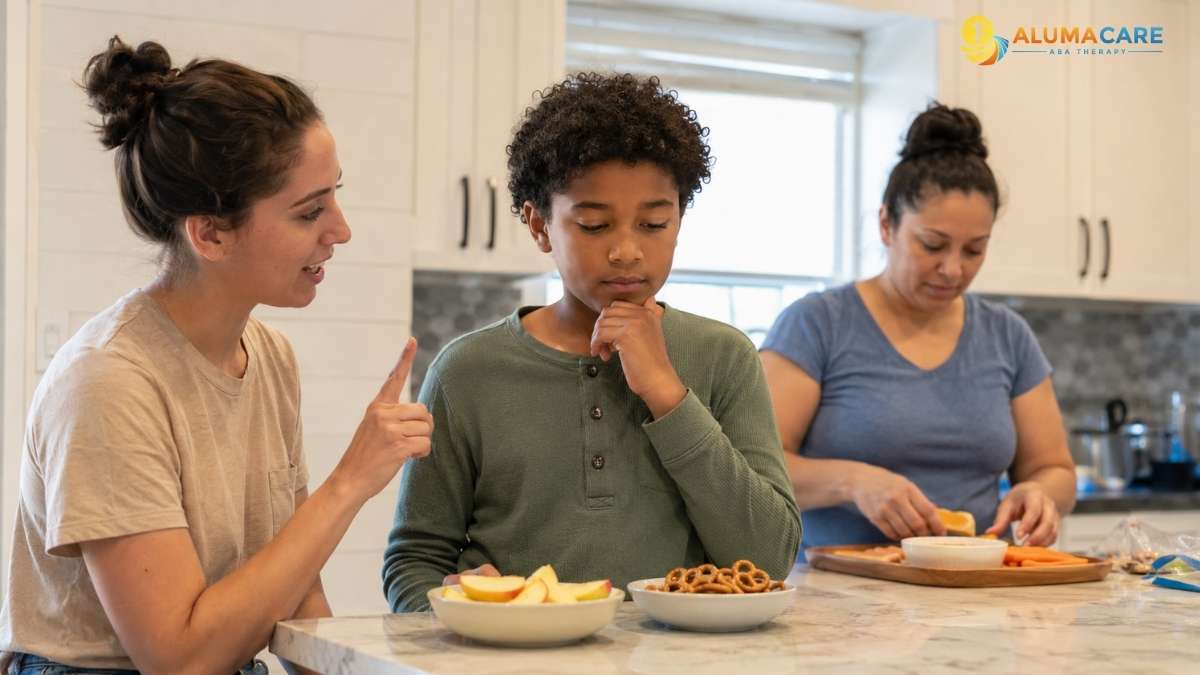
Practicing skills at home gives the ABA team a distinct advantage. Your home provides the exact materials, real-time settings, natural distractions, and family patterns your child encounters every day.
A behavioral technician does not just sit with your child at a table to work on flashcards. Instead, they practice skills during natural moments throughout the day. Your Board Certified Behavior Analyst (BCBA) evaluates your household patterns to decide which routine steps fit the child's plan. A systematic review found that prompting, reinforcement, and task analysis were common daily living skill methods. It also found that 86% of high-quality experiments showed improvement.
Real-life practice moments can include:
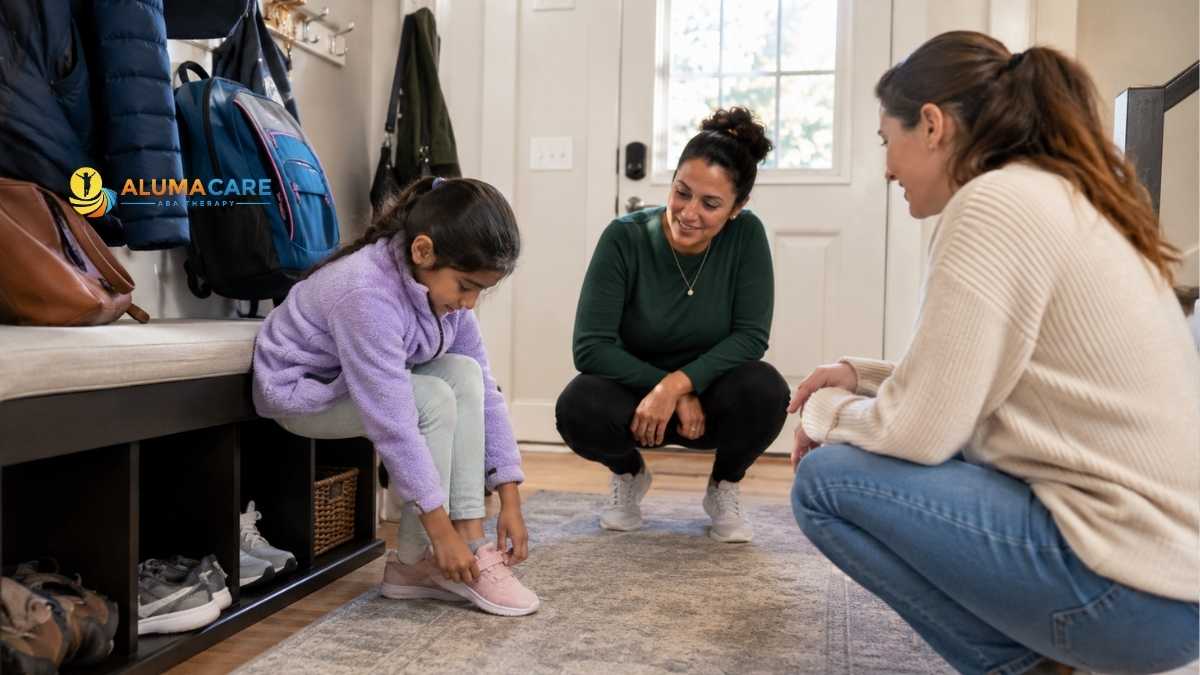
- Asking for help when a zipper gets stuck on a jacket.
- Waiting calmly while food is prepared on the kitchen counter.
- Washing hands after using the bathroom.
- Cleaning up toys before moving to another activity.
- Moving from playtime to the dinner table without distress.
Everyday Routines Can Become Small ABA Practice Points
Daily routines are easier to practice when the goal is specific. The goal may be one step inside one routine.
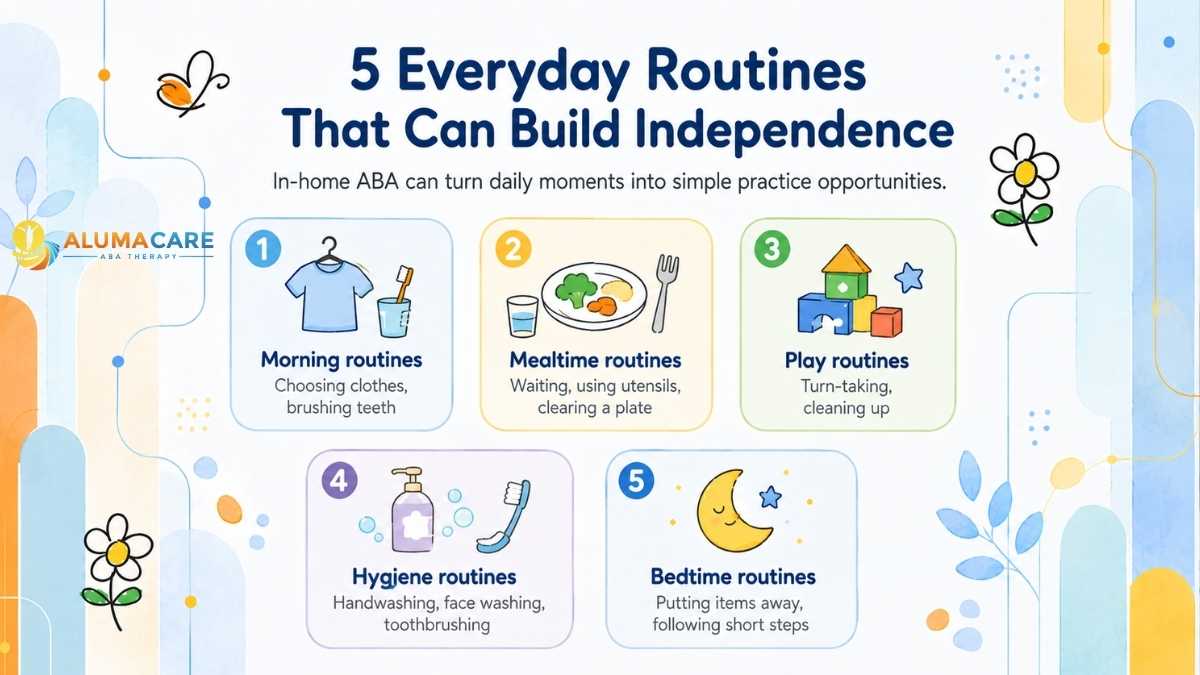
Common routine areas may include:
- Morning routines: Choosing clothes, brushing teeth, moving from bedroom to breakfast
- Mealtime routines: Sitting, waiting, requesting help, using utensils, clearing a plate
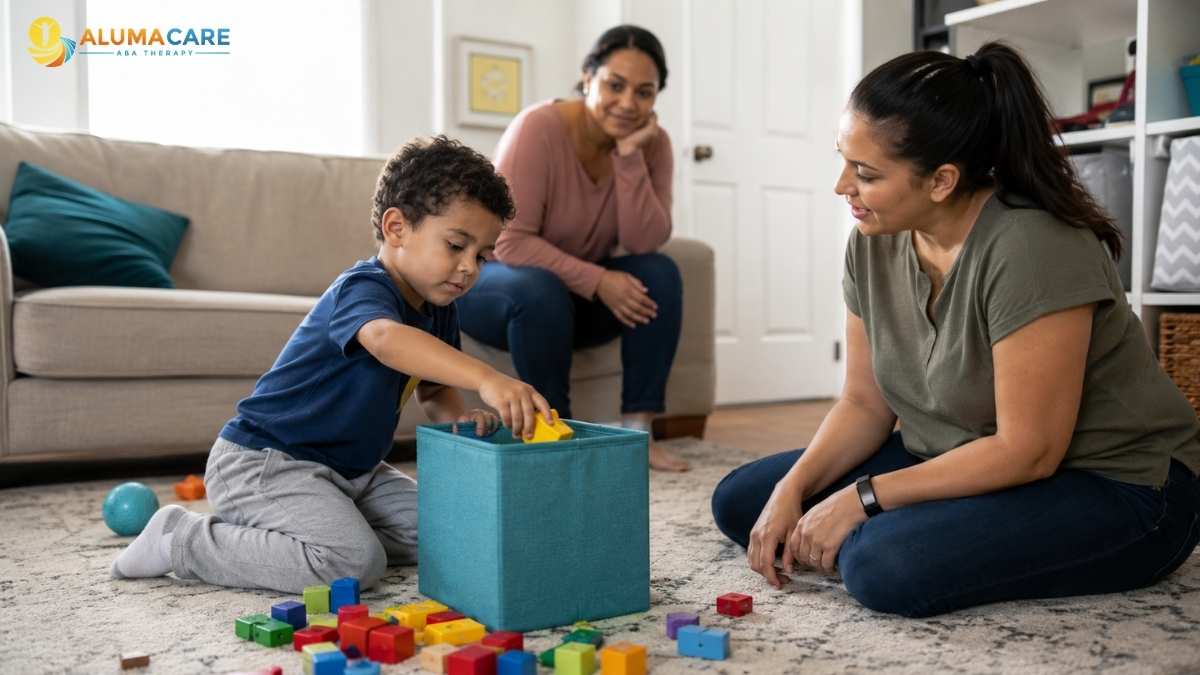
- Play routines: Turn-taking, cleaning up, asking for more time
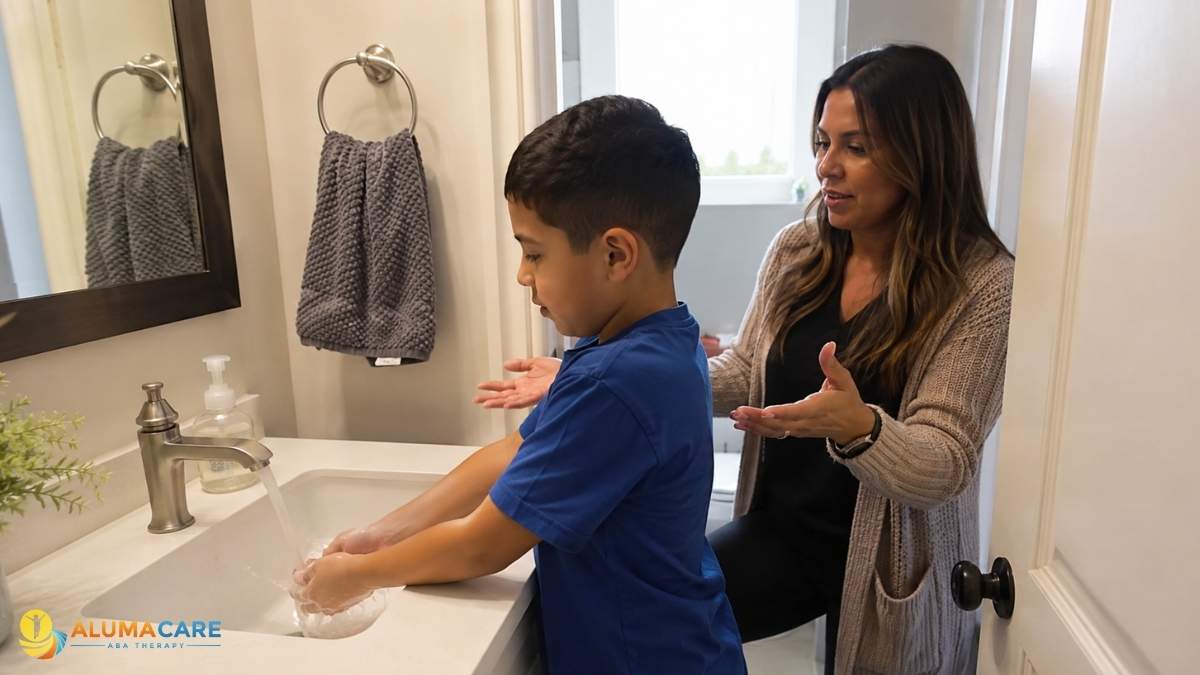
- Hygiene routines: Handwashing, face washing, toothbrushing steps
- Bedtime routines: Putting items away, following a short order of steps, requesting comfort items
ABA techniques may include task analysis, prompting, reinforcement, and prompt fading, based on ABA assessment insights and the child’s plan. Task analysis breaks a routine into smaller steps. Prompt fading may reduce support when the child is ready.
ABA Session Planning Connects One Routine to One Clear Goal
ABA session planning keeps routine practice from becoming random. The BCBA reviews caregiver concerns and observes the routine when possible. The team may then choose one routine, or one part of a routine, that lines up with the child’s current goals.
Here’s what that means for your schedule. A whole morning routine may be too much to target at once. The BCBA may start with walking to the bathroom, choosing between two shirts, or asking for help with a hard step.
The behavioral technician practices those steps during sessions. Data helps the BCBA adjust prompts, timing, or goals. Clear planning also protects the family routine.
What In-Home ABA Therapy May Look Like in a Mealtime Routine
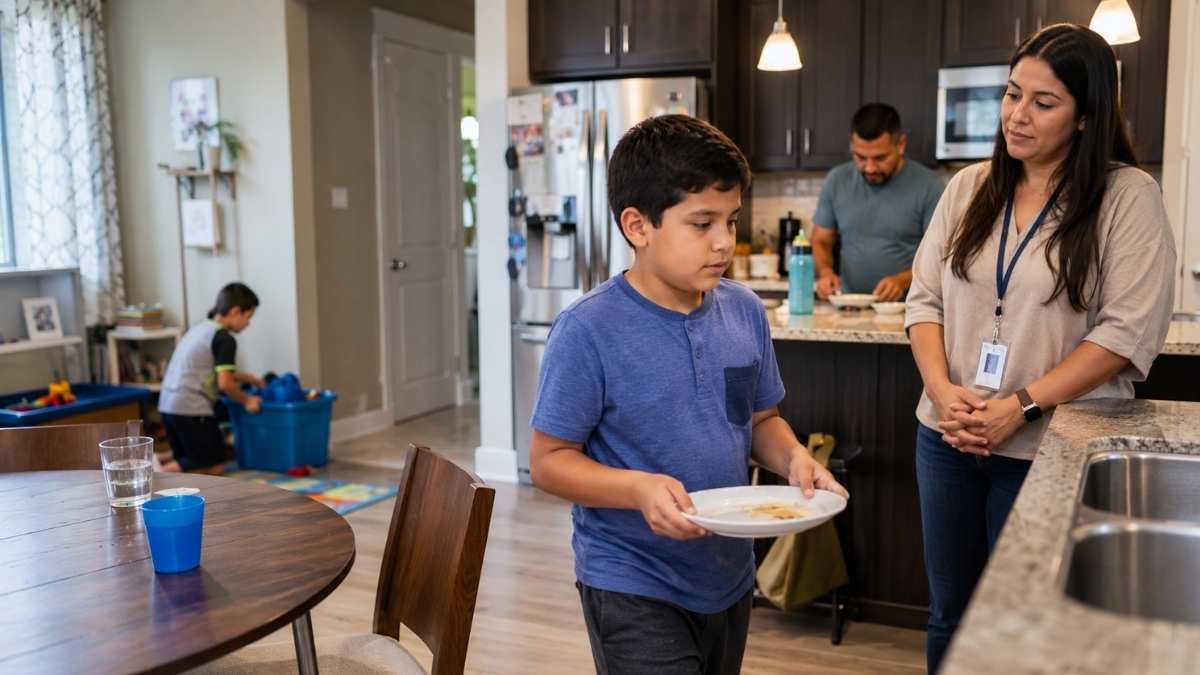
Let us look at how in-home ABA therapy works during lunch or dinner. A child may practice waiting for a snack, requesting "help" with a tight lid, choosing between two foods, or carrying a plate to the sink. A perfect meal is not the priority. Instead, the focus rests on using a small skill with less adult support over time.
Research published in the Journal of Applied Behavior Analysis shows that breaking down self-care skills during family routines helps children build lasting independence.
Talk Through Routine Goals With Our Team
At Aluma Care, we talk with caregivers about the routines that feel hardest at home, then connect those concerns to ABA goals that can be practiced during sessions. Our team supports children in Kansas and New Hampshire through ABA services, including caregiver coaching. Reach out to our team to discuss which everyday routines align with your child’s care plan.
Caregivers Stay Involved Through Coaching
Many caregivers wonder how close they should be during sessions. You do not need to run the session. You do need to take part in caregiver coaching because your role stays active across settings.
Caregiver coaching often happens weekly or biweekly. Those meetings are the best time to ask the BCBA about progress, routine goals, and support strategies. During sessions, the caregiver may observe, share updates, or step back based on the BCBA’s direction.
You can maximize this collaboration with these steps:
- Share which specific routine feels hardest this week.
- Ask which words or gestures the team uses during sessions.
- Ask what specific actions to take between sessions.
- Save bigger behavior pattern questions for scheduled caregiver coaching.
- Tell the BCBA immediately when a routine changes at home.
Progress Often Starts Before the Full Routine Is Independent
Independence may start as one small step. A child may not complete a full hygiene routine alone yet, but they may begin by turning on the water with fewer prompts. Another child may still need help at dinner, but they may start asking for a utensil before becoming upset.
This type of skill development ABA approach focuses on small, usable changes in daily life. Progress may look like clearer communication, shorter waiting times, smoother transitions, or less adult help during a single step. Every family experiences a different pace, and these small steps build long-term confidence.
A Routine May Need a Different Goal When It Keeps Breaking Down
Sometimes a planned routine stops working. If a routine keeps breaking down, you should bring your observations directly to your BCBA during your next training session instead of changing the plan on your own.
Look for these signs that a routine needs a review:
- The child avoids the same step every day.
- The routine takes much longer than usual to complete.
- A new safety concern appears during the task.
- Sleep, appetite, pain, or temporary illness affects your child's behavior.
- You feel unsure about which prompt to use at home.
Medical concerns should always go to your child's physician. The ABA team focuses on supporting behavior, routines, communication, and skill practice within their professional scope.
FAQs About In-Home ABA Therapy and Daily Routines
Can a behavioral technician work on more than one routine in the same session?
Yes. The BCBA decides which goals fit the session plan. Some sessions touch several routines, while others focus on a single step because the child needs more practice or less support.
What if my child only completes the routine with one adult?
The BCBA can adjust the plan. Your child will practice the skill with different caregivers or materials. This helps your child use the skill outside of one exact setup.
Can older children and teens work on independence through in-home ABA?
Yes. Older children and teens often work on routines tied to hygiene, simple chores, communication, waiting, or daily responsibilities. Goals always match the child's current skills, safety needs, and family routines.
Build Daily Routines With Support That Fits Real Life
Daily independence can start with one routine, one step, and one clear plan. In-home ABA can help caregivers see which parts of the day may become useful practice without turning the whole home into a session.
At Aluma Care, we support children in Kansas and New Hampshire through ABA services that include caregiver coaching and skill practice built into daily routines. Call Kansas at +1 913 232 2003 or New Hampshire at +1 603 903 1003 today, or send a message through our contact page. Our team will ask about your child’s current routines, service needs, and next steps for getting started.
────────
EDITOR’S NOTE: Content written by an outsourced marketing team. Information is for educational purposes only and does not replace professional clinical or medical advice.

.jpg)
.jpg)
.jpg)
.jpg)
.jpg)
.jpg)
.jpg)
%20(1).jpg)
%20(1).jpg)
.jpg)
.jpg)





.png)


.png)