


Key Points:
- An ABA therapy team typically includes a BCBA, behavioral technician or RBT, and caregivers who share information and support the care plan.
- The BCBA oversees clinical decisions, while technicians provide direct care under supervision.
- Caregiver coaching helps families ask questions, share observations, follow strategies at home, and lays the groundwork for sustained, long-term success.
An ABA therapy team usually includes a Board Certified Behavior Analyst (BCBA), behavioral technicians, and the caregiver. Each person handles a different part of care, so knowing who does what can help you send questions to the right person and understand who makes clinical decisions.
At Aluma Care, our BCBAs and behavioral technicians work with caregivers through in-home and in-clinic ABA programs. Active caregiver coaching is part of the program across settings and is also required by insurance.
The sections below explain who oversees the care plan, who provides direct support, what RBT certification means, and when to speak with the BCBA.

Who Has Which Role on an ABA Therapy Team?
Different staff members may work with your child during the week. The ABA therapy staff roles become easier to follow when you know who owns each part of the program:
- Board Certified Behavior Analyst (BCBA): Oversees the behavior-analytic program, reviews clinical information, and makes clinical decisions.
- Behavioral technician: Provides direct care according to the assigned program and the BCBA's supervision.
- Registered Behavior Technician (RBT): Works in a direct-care role and holds the RBT certification from the Behavior Analyst Certification Board (BACB).
- Caregiver: This is you. A caregiver takes part in coaching and support, shares observations, asks questions, and helps the team understand what happens outside scheduled sessions
The Behavior Analyst Certification Board (BACB) certificant data record shows 85,587 BCBAs and 260,174 RBTs as of July 1, 2026. These figures describe the BACB-certified workforce. They do not tell you how many people will work with one child.
We also hear how valuable good communication can feel to a family. A former Aluma Care caregiver said our communication kept her informed and involved in her child's progress. That experience shows why caregivers should know who handles each kind of question from the beginning.
What the BCBA Role in ABA May Include
The BCBA role in ABA may include the following:
- Reviewing assessment results
- Developing or updating the clinical program
- Choosing skill-based targets
- Reviewing data
- Supervising direct-care staff
BACB describes BCBAs as graduate-level independent practitioners who can provide behavior-analytic services and supervise RBTs and other professionals who implement behavior-analytic interventions. In our programs, the BCBA is the person to bring most of the clinical questions to.
Questions to Bring to Your BCBA
- What is this skill-based target meant to support?
- What progress patterns are showing up in the data?
- We noticed a new pattern at home. Does the plan need a review?
- Which home observations would help you understand what we are seeing?
- What should we practice together during caregiver coaching?
What a Behavioral Technician in ABA May Do During Sessions
A behavioral technician in ABA may spend much of the direct session working with your child on assigned goals. During our in-home or in-clinic sessions, behavioral technicians may do the following:
- Follow the care plan
- Work on skill-based targets
- Collect session data
- Share relevant observations with the supervising BCBA
Our behavioral technicians follow BCBA direction rather than making independent clinical changes. They may answer appropriate questions about what happened during a session, while the BCBA handles larger questions about goals, progress, or care-plan changes.
RBT vs BCBA: What the Credential Difference Means
The BACB sets different requirements for BCBA and RBT certification. It defines the RBT as a paraprofessional certification. RBTs assist with behavior-analytic services under the direction and close supervision of a qualified supervisor. A BCBA can practice independently and may supervise RBTs and other direct-care professionals.
Direct-care staff can share what they see during sessions, while the BCBA reviews the broader clinical information and oversees the plan.
Talk With Aluma Care About Your Care Team
Contact our team to ask who will serve as your child's BCBA, how behavioral technicians work under supervision, and when caregiver coaching sessions happen. We can explain these roles before services begin.
How Your ABA Therapy Team Handles Questions and ABA Caregiver Coaching
Active caregiver participation stays part of the program whether your child receives services at home or in a clinic. Our ABA caregiver coaching sessions often happen weekly or biweekly. These meetings give you direct time with the BCBA to review progress, share home observations, and learn the support strategies your BCBA includes in your child's care plan.
A 2024 scoping review published in Behavior Analysis in Practice included 34 studies involving 85 families. It examined caregiver training within behavioral interventions for children with autism who displayed challenging behavior. Our BCBA directs your child’s clinical plan and explains which strategies caregivers may practice.
Consistent approaches across daily routines can also give your child more chances to practice skills outside scheduled sessions. Those approaches follow the care plan and the BCBA's direction. Caregivers support the program through participation and feedback.
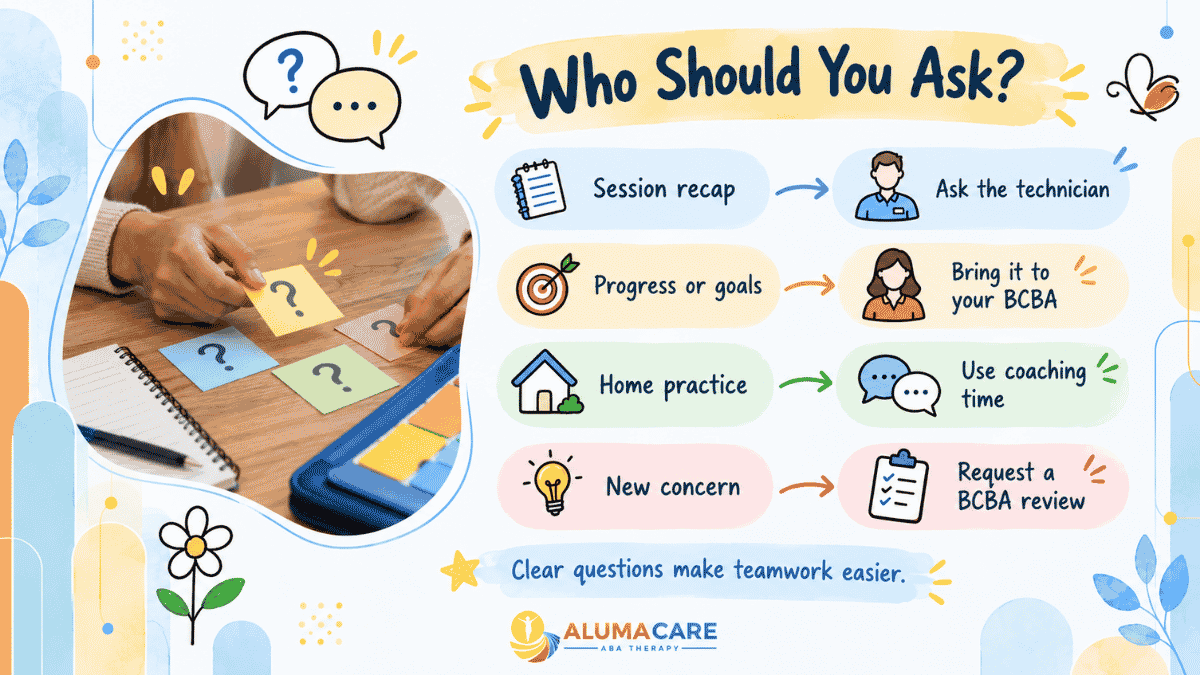
How Your ABA Therapy Team Handles a New Question
A simple question-routing process can help you contact the right team member:
- Same-day session details: Ask the behavioral technician for appropriate observations from that session.
- Repeated patterns or progress questions: Bring the question to your BCBA during caregiver coaching.
- Possible care-plan changes: The BCBA reviews data, observations, and caregiver input before deciding whether the plan needs an update.
- Home follow-through: Discuss the care plan with your BCBA and follow the directions set for your child's program.
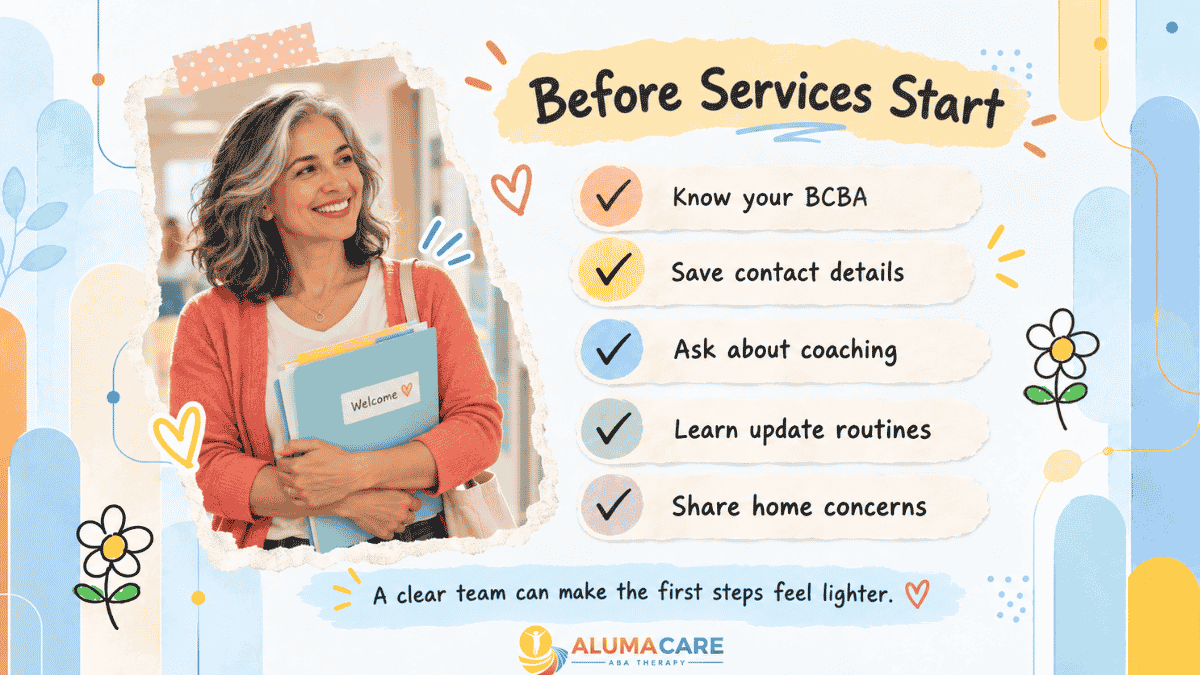
What to Confirm About the Team Before Services Begin
You don’t need to memorize every credential rule. However, you do need to know who oversees the program, how staff communicate, and where your questions should go.
Caregiver Team Checklist
- Name of your assigned BCBA
- Best way to contact the BCBA
- Role of your behavioral technician
- Whether a direct-care team member holds RBT certification
- Expected caregiver-coaching schedule
- How the team shares progress updates
- Process for raising new home observations or concerns
- How the BCBA supervises direct-care staff
Our BCBAs oversee behavior-analytic services, while direct-care staff carry out assigned programs. Asking these questions early can help you understand how the team will communicate before regular sessions begin.
FAQs About the ABA Therapy Team
Does every behavioral technician have to be an RBT?
No. RBT is a specific certification from the BACB. At Aluma Care, we use the term behavioral technician because our direct-care team may include RBTs and other behavioral technicians working toward certification. Caregivers can ask what credential an assigned team member holds and who provides clinical supervision.
What should I do if I don't know who my child's BCBA is?
Ask our intake or care team to identify the supervising BCBA and explain how to contact that person. The BCBA can answer your questions about the care plan, progress patterns, and clinical changes.
Can more than one caregiver take part in coaching?
Yes. More than one caregiver may join when the care team allows it. Shared coaching can help household caregivers hear the same BCBA-directed information and understand the same care-plan expectations. Your BCBA can explain who should attend and how coaching will work for your family.
Get to Know Your Child’s ABA Team
An ABA therapy team shares responsibilities: the BCBA oversees clinical decisions, behavioral technicians provide direct support under supervision, and caregivers contribute observations through regular coaching. Knowing each person’s role can help you direct questions about sessions, progress, and care-plan changes.
Our team supports families in Kansas and New Hampshire through ABA services and active caregiver coaching. Contact our team to learn who oversees your child’s care, how supervision works, and what to expect from coaching. Kansas caregivers can call +1 913-232-2003, and New Hampshire caregivers can call +1 603-903-1003.
────────
EDITOR’S NOTE: Content was written by an outsourced marketing team and reviewed by Aluma Care’s clinical leadership for accuracy and service alignment. It is for educational purposes and does not replace individualized medical or clinical advice.




.jpg)
.jpg)
.jpg)
.jpg)
.jpg)
.jpg)
.jpg)
%20(1).jpg)





.png)


.png)