Helping Children Succeed with Structured, Professional ABA Support
Experience clinic-based ABA therapy in a structured, supportive environment. Our center-based ABA programs use evidence-based strategies to help children develop communication, social, and daily living skills.
Children thrive in our clinics through hands-on learning, peer interaction, ABA, and guidance from licensed professionals. Families can find our clinics in Colorado, Missouri, New Hampshire (Manchester, Nashua, Concord, Dover, Rochester), and South Carolina.
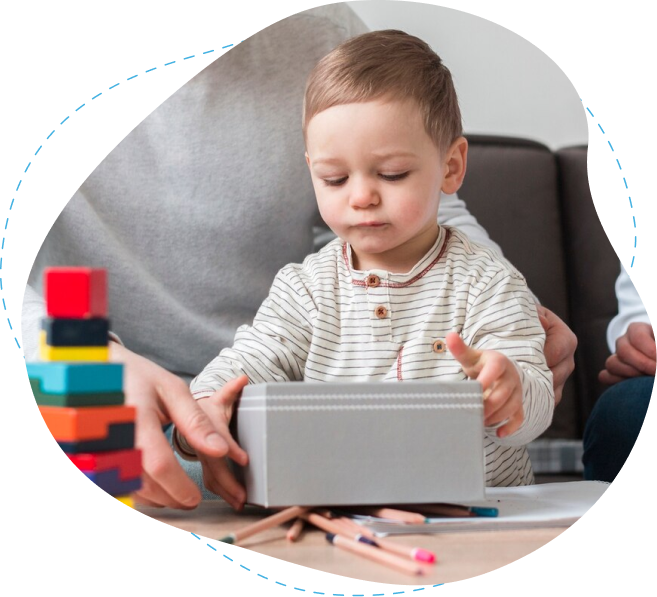


In-clinic ABA therapy, also called center-based ABA, is a highly structured, one-on-one and group-based treatment for autism and developmental disorders delivered in a professional, controlled setting.
Our in-clinic ABA services use data-driven interventions to teach communication, social, and life skills while minimizing distractions, allowing for intensive skill acquisition and peer interaction.

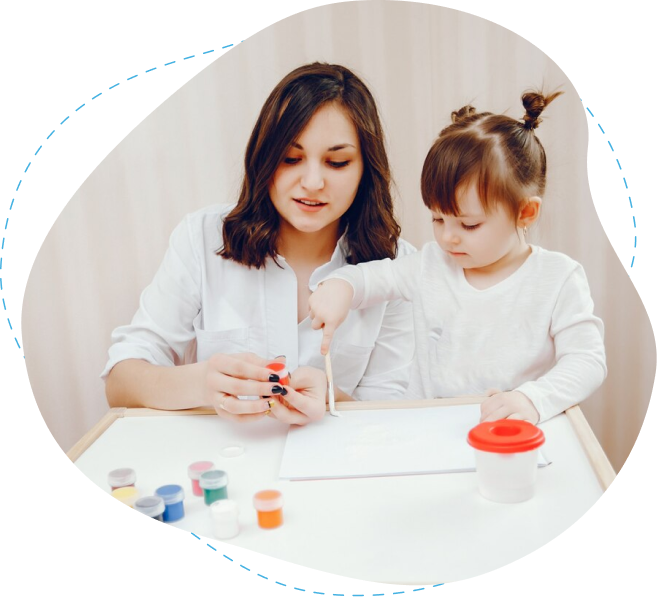



Structured ABA Environment
Clinics minimize distractions and provide a predictable setting to help children focus and engage.

Intensive Learning & Resources
Our ABA therapy clinic includes specialized equipment, sensory tools, and educational materials, often using strategies like Discrete Trial Training (DTT) to teach skills in small, manageable steps.

Socialization Opportunities
Peer interaction and group activities allow children to practice social skills in a safe, supportive setting.

Professional Oversight
Programs are guided by Board Certified Behavior Analysts (BCBAs) and delivered by Registered Behavior Technicians (RBTs), often within a multidisciplinary team approach.

Focus on Function:
Therapy targets communication, social skills, self-care, and behavioral goals, preparing children for school and daily life.

.png)
Families often search for: “Is in-clinic ABA right for my child?”
Families often search for: “Is in-clinic ABA right for my child?”
Key Candidates

Children Needing Focused Support: Kids who require a distraction-free environment to improve attention, communication, and behavioral skills.
Children Who Benefit from Peer Exposure: Children thrive in supervised social interactions and group activities.
School Preparation: Developing pre-academic skills such as early math, reading, and following classroom routines.
Families Seeking Consistency: Reliable, scheduled therapy with immediate access to professional guidance.
Targeted Behavioral Support: Children needing intensive interventions to manage challenging behaviors or learn self-care skills.
Our clinics provide structured ABA care with interactive learning spaces designed to maximize developmental progress through individualized, data-driven treatment plans.
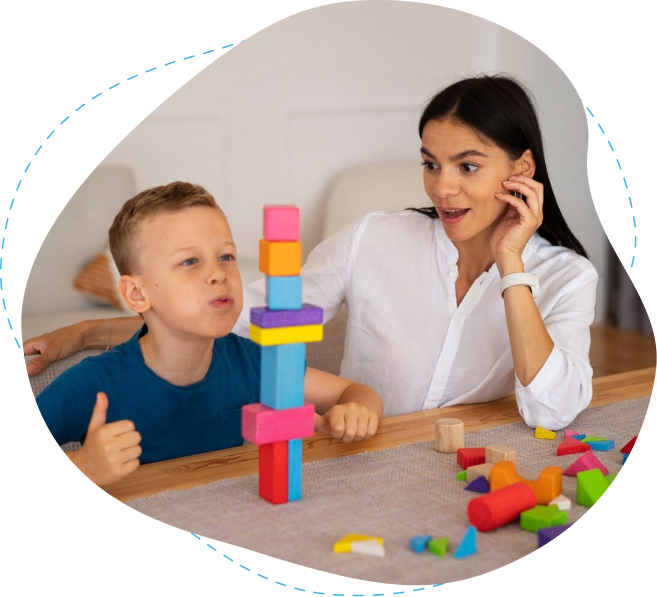
Our ABA therapy clinics are safe, structured, and engaging environments where children learn and grow through skill stations and expert guidance.

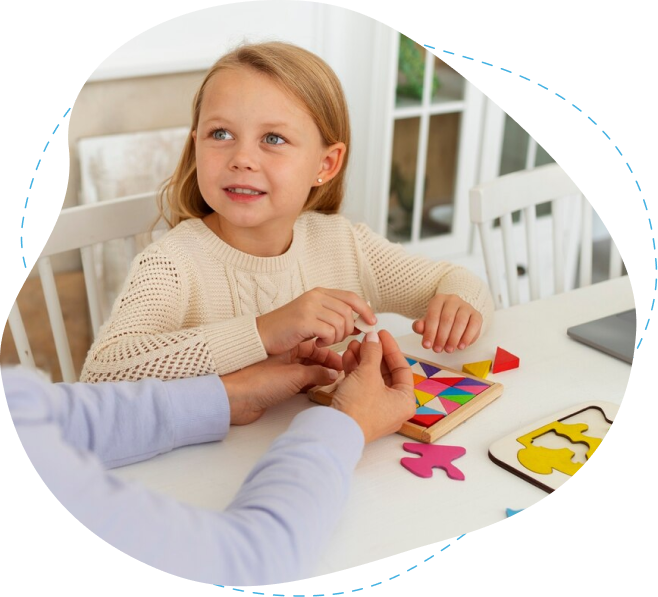


Structured Layout: Distinct zones for focused learning, play, and social skill development.
Sensory-Friendly Design: Quiet areas, appropriate lighting, and self-regulation tools for children with sensory sensitivities.
Individual & Group Spaces: Private treatment rooms for one-on-one learning and shared spaces for peer interaction.
Safety & Organization: Child-safe design with clearly labeled materials for efficient, distraction-free sessions.
Warm-Up: Rapport-building and transitions into the clinic setting.
Skill Stations: Targeted, structured learning using DTT, NET, and functional skills practice.
Social & Peer Activities: Group play and peer-mediated learning for communication and social development.
Cool-Down & Parent Debrief: Calm, structured ending with progress feedback for home reinforcement.

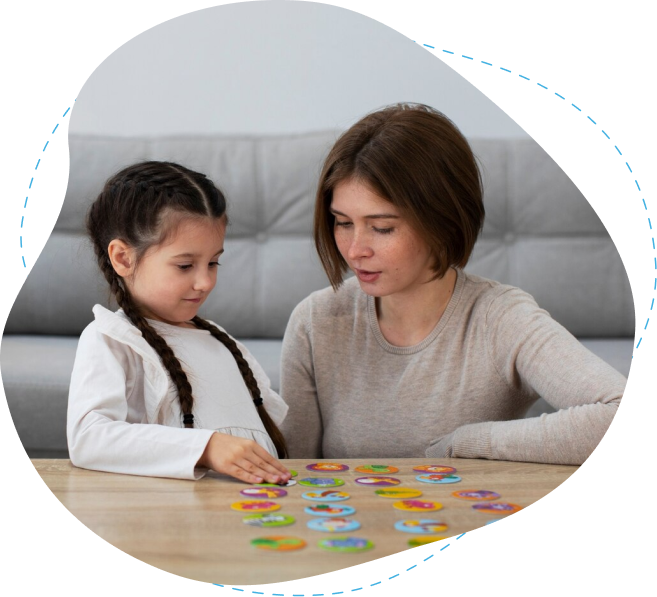
DTT & NET: Teaching skills in small, manageable steps within natural settings.
Functional Communication: Using picture cards, gestures, or assistive technology.
Data Tracking: Continuous monitoring of skill performance, behaviors, and progress to guide therapy decisions.
Our structured ABA care combines focused instruction with peer exposure, helping children build communication, social, and functional skills efficiently.

.png)
Parents often ask: Why choose in-clinic ABA?
Our clinic-based ABA advantages offer structured, professional support designed to promote measurable progress:
These benefits of in-clinic ABA make it ideal for families seeking structured learning and consistent, measurable progress.
.png)
Minimizes distractions and supports focus, routine, and engagement.

.png)
Children practice communication, cooperation, and social skills in safe, supportive group settings.
.png)
Simulates classroom routines, teaching children to follow instructions, participate in group activities, and manage schedules.
.png)

Sensory tools, educational materials, and targeted resources enhance learning and skill acquisition.
.png)
BCBAs provide immediate feedback, program adjustments, and continuous monitoring.
.png)
Predictable, distraction-free environments accelerate learning and reinforce positive behaviors compared to home settings.
Our center-based ABA therapy provides structured, intensive opportunities for children to develop social, emotional, and functional skills through peer interaction, ABA, and group learning in school-like settings.
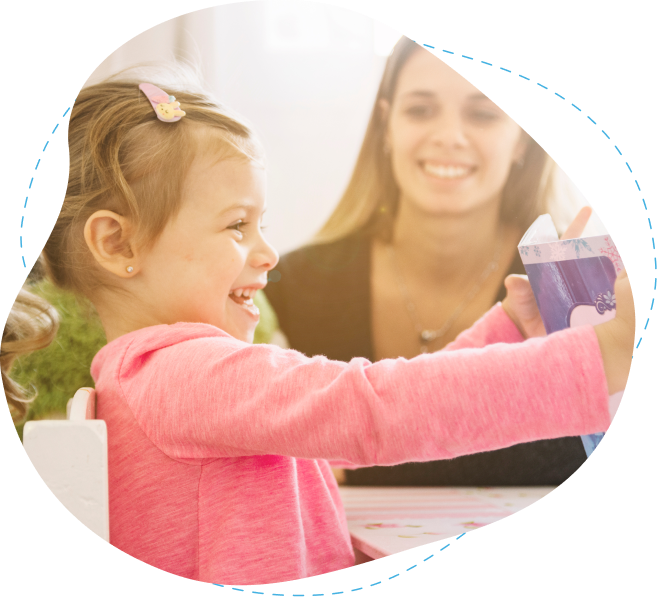
Structured Playgroups: Small, supervised groups practice sharing, turn-taking, and cooperation.
Peer-Mediated Interventions: Trained peers model social behaviors for children on the spectrum.
Naturalistic Environment Training (NET): Child-led, play-based activities encourage spontaneous social interactions.
Role-Playing & Social Stories: Children practice greetings, conflict resolution, and social norms in a controlled environment.
Group Activities: Circle time, arts and crafts, and collaborative projects support communication, focus, and rule-following.
Social Communication: Initiating, maintaining, and ending conversations while reading nonverbal cues.
Emotional Regulation: Practicing coping strategies in low-stress settings to manage frustration and anxiety.
Independent Life Skills: Daily routines, self-care, and school readiness skills.
Collaboration: Learning teamwork, cooperation, and shared problem-solving.


Professional Supervision: RBTs and BCBAs provide real-time guidance, feedback, and reinforcement.
Specialized Facilities: Sensory-friendly areas, gyms, and playrooms encourage skill practice and social engagement.
Parent Involvement: Families receive training to reinforce skills at home.
Our BCBA-led ABA therapy ensures high-quality, evidence-based care through expert supervision and continuous data tracking.

Supervision Requirements: BCBAs provide ongoing oversight to maintain treatment fidelity.
Direct Observation & Feedback: Supervisors observe sessions and give real-time corrections and coaching.
Program Development: BCBAs develop and update individualized plans based on data trends.
Staff Training & Support: Continuous mentoring, training, and performance evaluations enhance quality.
.png)
Data Tracking: RBTs record detailed session data on skill acquisition, behavior frequency, and duration.
Visual Analysis: Graphs and charts allow BCBAs to monitor trends and adjust interventions.
Standardized Assessments: Tools like VB-MAPP and ABLLS-R benchmark progress.
Regular Reviews: Treatment plans are reviewed regularly to ensure skill development
and growth.
.png)
Controlled Environment: Structured, distraction-free settings enable more accurate data tracking.
Immediate Supervision: On-site BCBAs provide instant guidance and support.
Specialized Resources: Access to sensory and educational tools enhances consistency.
Our team helps families navigate ABA clinic insurance, verifying coverage and authorizations so children can start therapy without delay.










Discuss your child’s needs and therapy goals.


Verify coverage for clinic-based ABA therapy and manage prior authorizations.

A BCBA conducts a comprehensive assessment and develops a structured treatment plan.
Start one-on-one and group sessions in a safe, engaging clinic environment.


Get the structure, support, and care your child deserves—reach out now.
.png)
.png)

.png)
Kansas: +1 913-232-2003
Virginia: +1 703-637-9003
New Hampshire: +1 603-903-1003

Ready to help your child thrive? Start in-clinic ABA therapy today and watch them build skills, confidence, and independence. Schedule your clinic ABA session now and get started on a path to measurable progress.
.jpeg)
X
We’re excited to welcome new families to our brand-new ABA therapy center in Lawrence, Kansas. Enrollment is now open—secure your child’s spot today!

At Aluma Care, we're empowering young minds one step at a time with personalized ABA therapy. Get started today to give your child the best care.


.png)
.png)