

Key Points:
- In-home ABA therapy in Kansas helps children practice skills inside daily routines.
- BCBAs and behavioral technicians connect goals to communication, hygiene, play, transitions, and family activities using structured session plans.
- Caregiver coaching helps skills carry over when providers are not present.
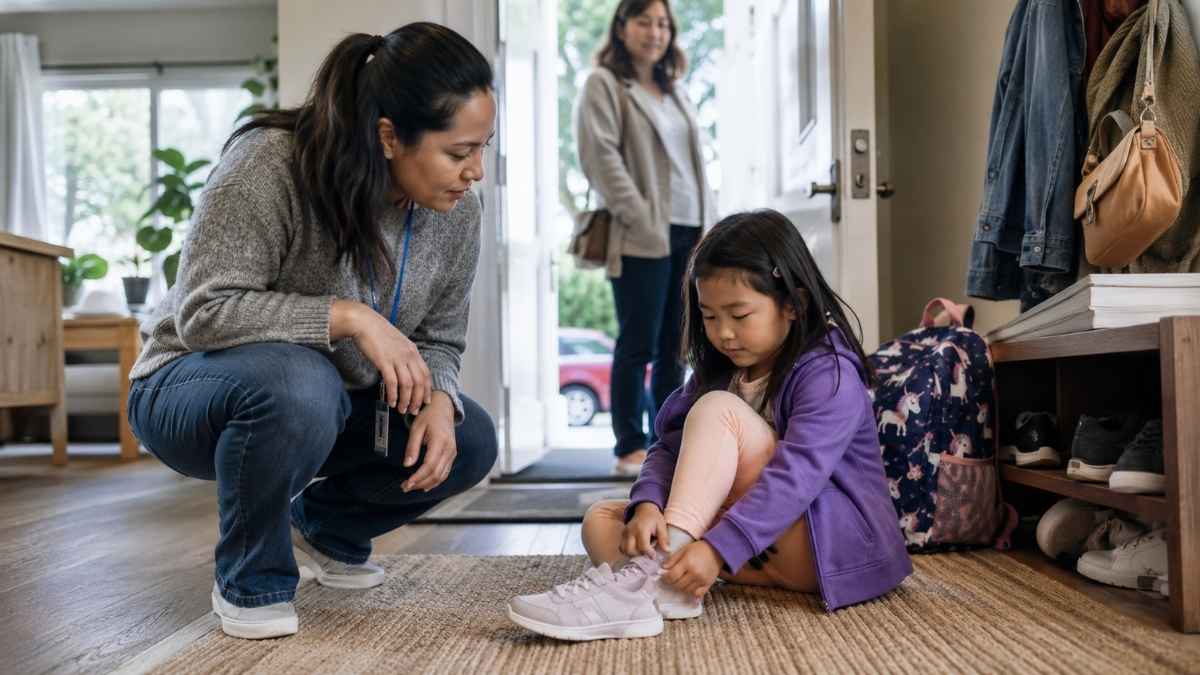
Choosing support for your child means finding tools that work in real life. Receiving in-home ABA therapy in Kansas helps children with special needs practice critical skills. This practice happens inside the exact routines where those behaviors matter. In Kansas homes, the setup feels natural. Your child might practice a request during snack time. They might complete a hygiene step in your bathroom. Sometimes it means practicing a transition step before an appointment in Lawrence or Wichita.
This guide covers how home sessions, structured ABA session planning, and caregiver coaching help behaviors move into daily family routines. Caregivers play a major role here. Regular coaching with a Board Certified Behavior Analyst (BCBA) gives you the tools to support your child when providers are not there.
Why In-Home ABA Therapy in Kansas Focuses on Daily Skill Use
Why look at the home environment first? The main goal of home ABA programs is helping children use what they learn throughout the entire day. In Applied Behavior Analysis (ABA), practitioners call this process generalization. It means a child can use a new skill with different people. They can use it with different materials or in new rooms.
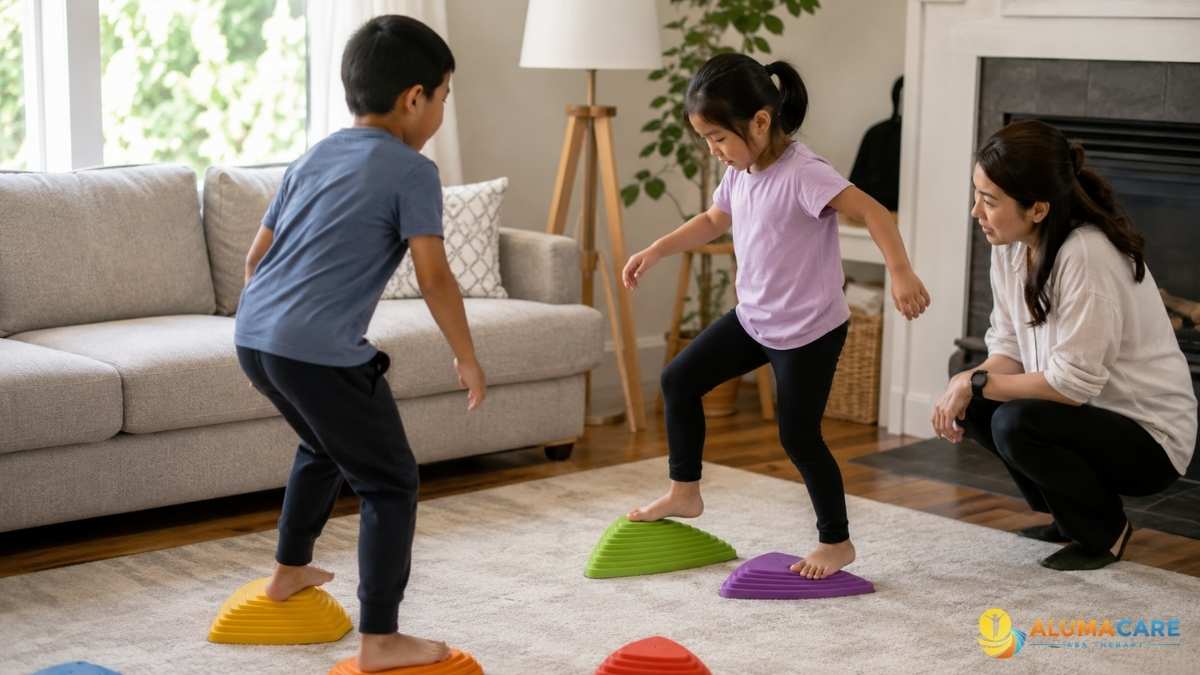
Instead of practicing tasks only at a staged table, behavior therapy at home uses your normal living space. This setup allows a behavioral technician to target communication goals during everyday moments. They can also focus on daily living, safety, or play goals where they naturally happen.
The Council of Autism Service Providers (CASP) guidelines state that programming for generalization outside the session is critical, and ABA can be delivered across settings to support maintenance of treatment gains.
How Home Routines Give Behavioral Technicians Useful Teaching Moments
Have you wondered how a living room turns into a learning space? Home routines create natural practice opportunities. This means you do not have to disrupt your normal day. Providing in-home ABA therapy means learning happens during normal daily tasks.
A behavioral technician builds child development ABA goals directly into your existing schedule. CASP lists adaptive and self-care skills, communication, play, safety, independence, and community participation as possible ABA treatment areas. In child development ABA, the goal may be small at first.
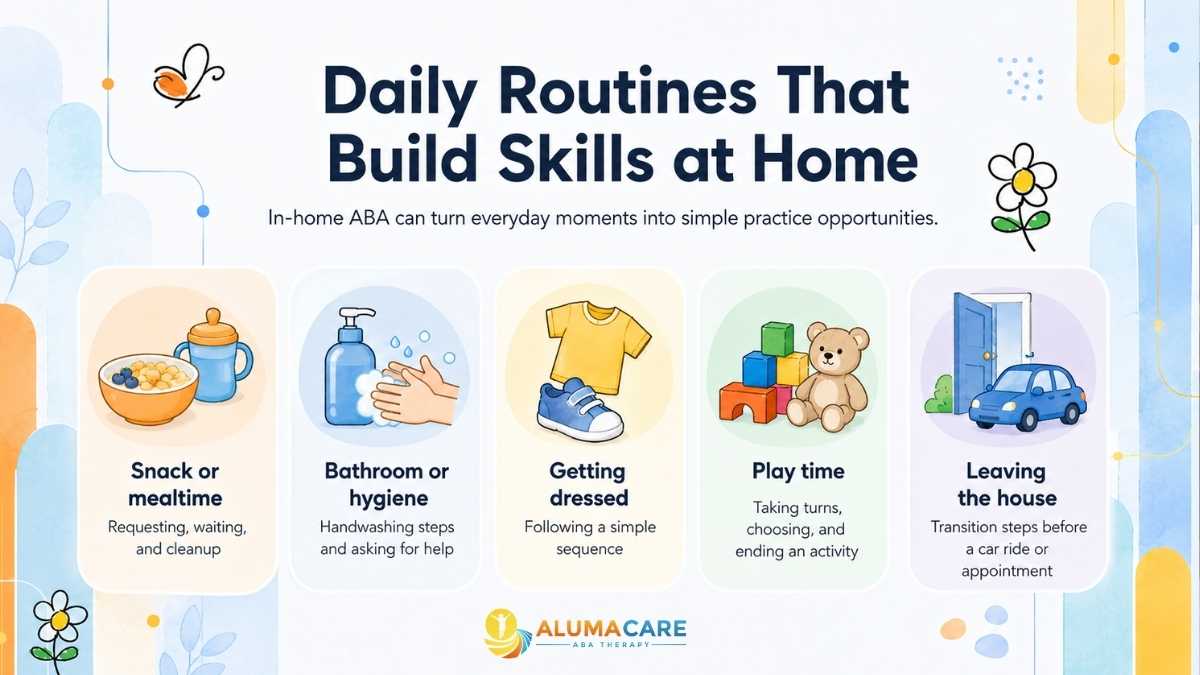
Examples may include:
- Snack or mealtime: Requesting, waiting, and cleanup.
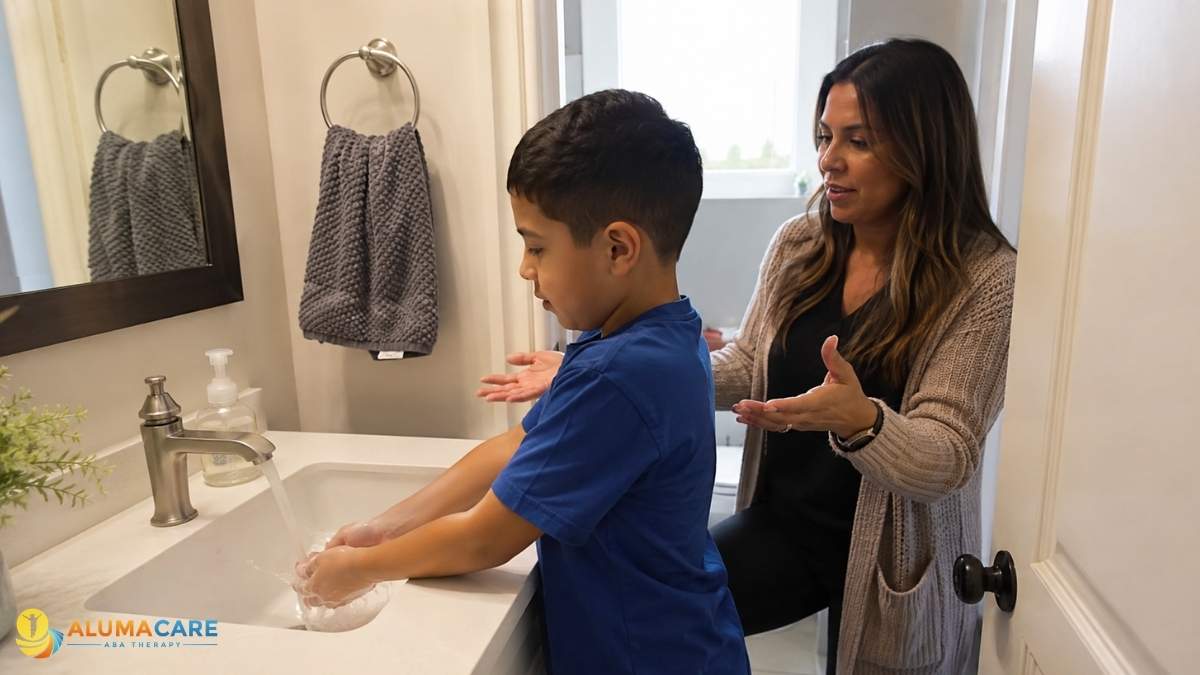
- Bathroom or hygiene routine: Handwashing steps and asking for help.
- Getting dressed: Following a simple sequence.
- Play time: Taking turns, choosing, and ending an activity.
- Leaving the house: Transition steps before a car ride or appointment.
How ABA Session Planning Connects One Skill to More Than One Routine
How do individual moments turn into a systematic plan? That is where structured ABA session planning comes into play. A BCBA selects a starting skill after completing an ABA therapy assessment and gathering your input. The behavioral technician then uses specific ABA techniques to teach that skill during sessions.
The National Academies reports that ABA is a group of learning-based practices. This design allows the same skill to show up across multiple daily routines when clinically appropriate.
What ABA Session Planning Looks Like in In-Home ABA Therapy Kansas
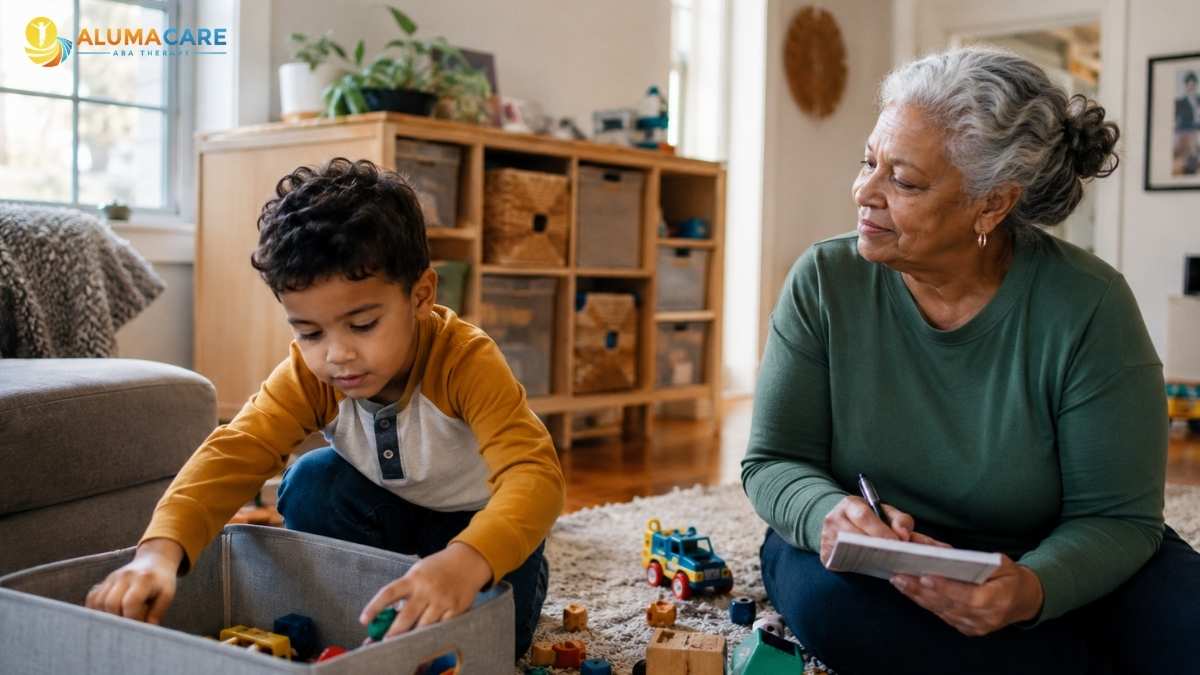
The BCBA may choose a starting skill after assessment and caregiver input. The behavioral technician follows the plan during sessions.
A simple planning cycle may include:
- Identify the routine and the current support level.
- Choose the target skill.
- Decide what prompts, reinforcement, and materials may be used.
- Practice with the behavioral technician.
- Review data and caregiver feedback with the BCBA.
Why Caregiver Coaching Turns Session Skills Into Home Use
Do you worry that your child will only use a skill with their technician? Many caregivers express this exact concern during initial consultations. The solution lies in active family guidance ABA sessions. Caregiver coaching requires active participation. It is not a passive observation hour.
These meetings are perfect for progress updates, questions, and learning support strategies. Your BCBA may model a technique, let you practice it, and help you plan for household routines. The CASP guidelines emphasize that caregiver training supports generalization and maintenance. Your active participation is required by both providers and insurance companies. Skills must work for your family long after the technician leaves.
Ask for Help Connecting Skills to Your Home Routine
At Aluma Care, our team can help caregivers understand how in-home ABA may work with daily routines. During caregiver coaching, you can ask what skill is being practiced, what progress looks like, and which routine to discuss next. Contact us today to find out more.
What Skill Generalization in ABA May Look Like at Home
So what does successful carryover look like in your living room? Caregivers often search online for autism therapy at home, but effective home programs focus on practical support for children with special needs and distinct behavioral needs. True success means a child uses skills naturally without a provider present.
A study in Behavior Analysis in Practice found that caregivers successfully learn teaching steps for daily activities through real-time feedback. Combined with the CASP guidelines on generalization, this research shows how structured support alters daily life.
Here are examples of skill generalization in ABA at home:
- Requesting help from a caregiver instead of only responding to the technician.
- Following a hygiene routine in their usual bathroom.
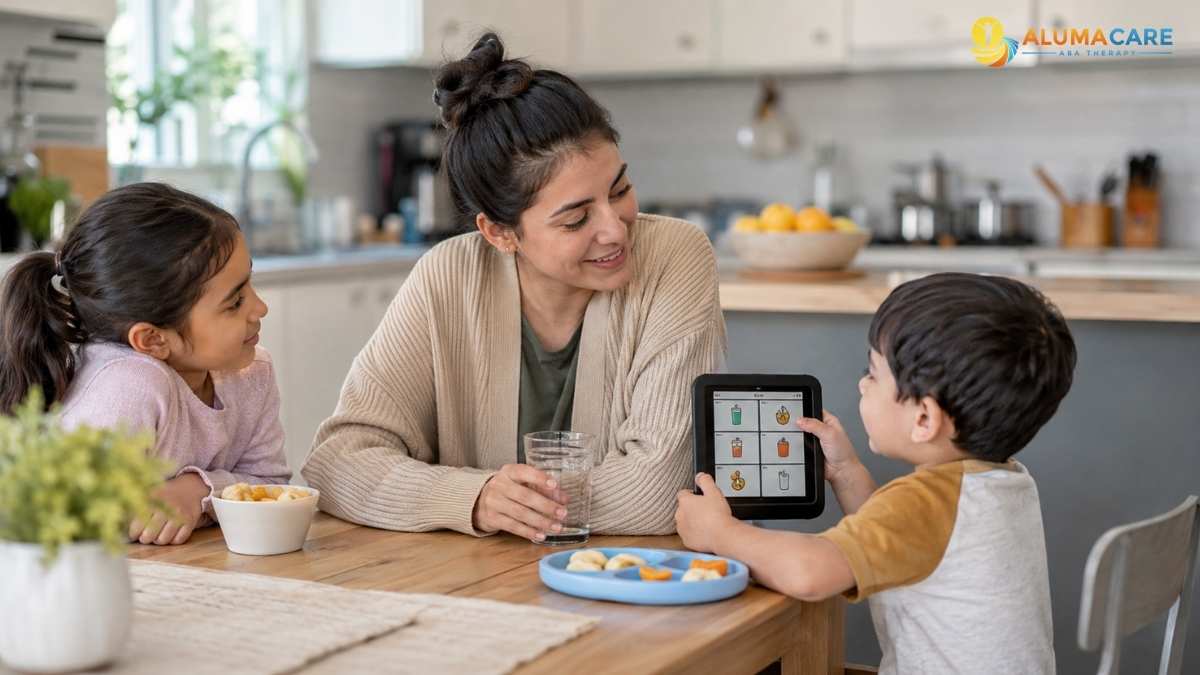
- Using a communication tool during family snack time.
- Completing transition steps before leaving for a Wichita ABA therapy appointment or a Lawrence appointment.
- Using a turn-taking skill with a sibling during play.
How Kansas Caregivers Can Read Progress Without Looking for Instant Change
ABA therapy outcomes may show up as smaller steps before full independence. ABA skill mastery may mean the child uses the skill with less prompting, in more routines, or with more people.
Early intervention ABA may focus on foundational routines. Older children can still work on current functional goals. The National Academies notes that service levels and caregiver involvement should match the child’s needs and the family’s capacity to participate.
Progress reviews should include data and caregiver reports from daily life. Your notes can show whether the skill appeared during breakfast, bath time, errands, or a weekend visit with relatives.
Progress may look like:
- Less prompting during a routine.
- More independent requests.
- More consistent use with caregivers.
- Better tolerance for one step in a routine.
- Clearer data on what needs to change next.
FAQs About In-Home ABA Therapy in Kansas
Can in-home ABA help if my child uses a skill only during sessions?
Yes, it can help when your BCBA plans specifically for generalization. The plan includes practicing with different people, materials, and settings. Caregiver coaching sessions are the ideal place to learn how to support that specific skill outside direct session time.
Do caregivers need to stay in the room for the whole session?
Caregivers do not always need to stay in the room. The BCBA may guide when the caregiver should observe, practice, or give the child space. Active participation still happens through regular coaching and agreed routines.
Can non-vocal children work on daily routines during home ABA?
Yes, non-vocal children may work on routines using functional communication supports such as signs, pictures, gestures, or speech devices. The goal may include both completing part of the routine and communicating needs during that routine.
Start Building Daily Skills Where Your Child Uses Them
Daily routines can show whether a skill is usable outside session practice. In-home ABA can help connect goals to communication, daily living, play, and transitions in the places your child already knows.
At Aluma Care, we support children with special needs through in-home ABA in Kansas, including Lawrence, Wichita, and nearby communities. Call Kansas at +1 913-232-2003 or New Hampshire at +1 603-903-1003, or use our contact form today. Our team is ready to review your child's needs, discuss scheduling options, and explain the assessment process.
────────
EDITOR’S NOTE: Content written by an outsourced marketing team. Information is for educational purposes only and does not replace professional clinical or medical advice.


.jpg)
.jpg)
.jpg)
.jpg)
.jpg)
.jpg)
.jpg)
%20(1).jpg)
%20(1).jpg)





.png)


.png)