

Key Points:
- Starting in-home ABA therapy in New Hampshire usually begins with pairing, observation, and simple skill targets based on the child’s care plan.
- Caregiver coaching and data collection help the BCBA review progress and adjust goals.
- By weeks three and four, sessions often develop a more familiar rhythm.
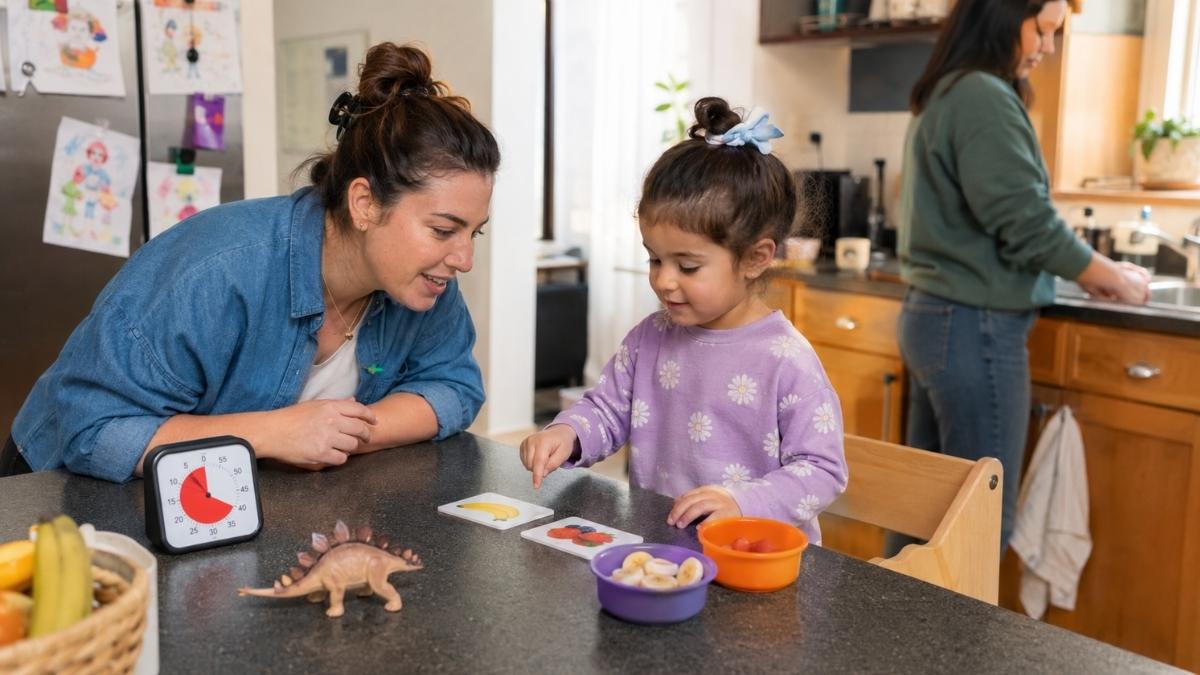
Starting in-home ABA therapy in New Hampshire may feel less structured during the first few sessions than you expected. Across the Seacoast and Lakes Region, a behavioral technician may spend that time learning your child’s interests, communication, and home routine.
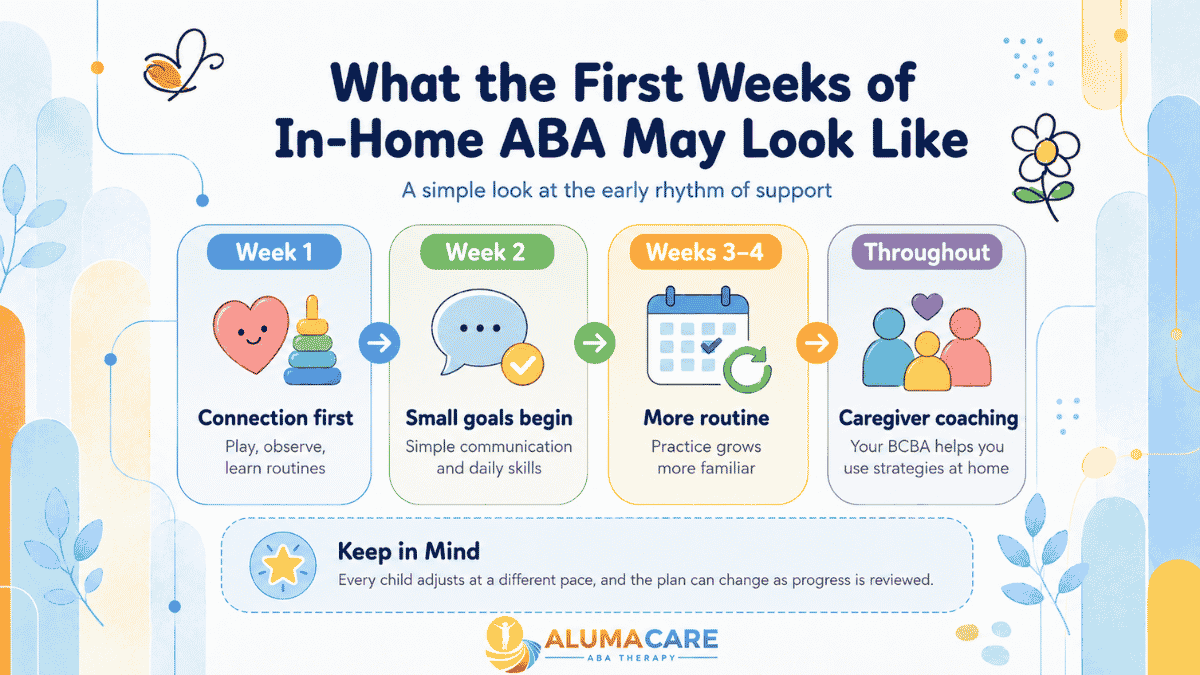
This overview of ABA therapy for beginners in New Hampshire begins after the assessment and care plan are complete. Early weeks may include relationship building, gradual skill-based targets, data, Board Certified Behavior Analyst (BCBA) observations, caregiver coaching, and routine adjustment. The BCBA’s care plan guides the schedule, so no exact weekly timeline applies to every child.
What Starting ABA Therapy in New Hampshire May Look Like During Week One
The first week serves as an introduction rather than a test for your child. During your first ABA therapy session, a behavioral technician focuses on building trust and learning your household rhythm.
In week one, the behavioral technician may:
- Follow your child's lead during play
- Discover which activities hold their interest
- Observe how your child communicates wants and needs
- Introduce brief, positive interactions
- Record baseline information for the care plan
- Learn how ordinary daily routines unfold
Practitioners call this initial stage pairing. Pairing means joining preferred activities so your child connects the technician with safe, positive experiences.
Caregivers sometimes wonder if progress happens when sessions look like play. Relationship building forms the foundation of an ABA program, helping the technician introduce goals without rushing. Your child does not need to perform during the first ABA therapy session in New Hampshire.
Our teams find that early sessions feel natural, like showing a visitor a favorite toy. Research shows play-based interaction allows connection and learning to develop together naturally.
Week Two May Introduce More Familiar Routines and Initial Skill Targets
By week two, sessions shift gently toward initial skill-based targets in your child's approved care plan. The behavioral technician weaves learning opportunities into preferred activities.
During week two, sessions may include:
- Practicing age-appropriate communication
- Following directions without challenging behavior
- Transitioning between scheduled activities
- Participating in daily living or group routines
- Practicing waiting or adaptive self-help skills
Behavioral technicians track communication attempts, participation, and responses in the moment. Early data helps the BCBA see whether starting targets match your child's current abilities.
With families we support across Portsmouth and the Seacoast, caregivers notice week two still varies day to day. That variation reflects your child's energy and comfort level with the new routine.
Caregiver Coaching Begins Alongside the Child’s Sessions
Caregiver participation is a required part of our services and insurance guidelines. Active coaching gives you tools to support your child between visits.
Coaching sessions with your BCBA often include:
- Reviewing observations from direct sessions
- Discussing changes you notice between visits
- Learning why skill-based targets were chosen
- Watching the BCBA model a strategy
- Practicing an approved approach with feedback
- Discussing strategies for home routines
- Reviewing when program steps might adjust
Caregiver coaching meetings occur weekly or biweekly based on your plan.
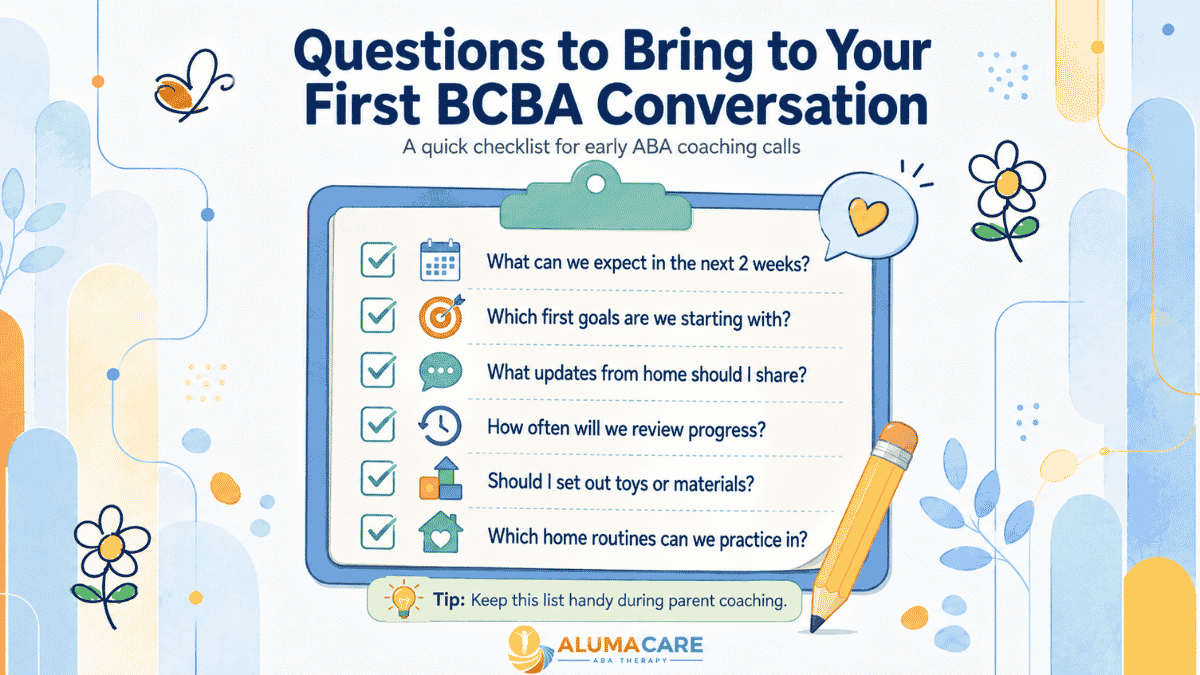
Questions to Ask When Starting ABA Therapy in New Hampshire
To guide early conversations with your BCBA, consider asking:
- What should I expect during the next two weeks?
- Which skill-based targets are introduced first?
- What information should I share from home?
- How often will we review progress data together?
- Should specific toys or items be prepared?
- Which strategies can we practice during family routines?
If you wonder about materials, ask your BCBA. First sessions almost always require a special setup with preferred items ready.
Know Who Answers Your Questions Before Sessions Begin
At Aluma Care, our BCBAs and behavioral technicians keep caregivers involved through regular communication and coaching. For families preparing for in-home ABA services in New Hampshire, contact our team to discuss scheduling, caregiver participation, and what the first weeks may involve.
Weeks Three and Four May Develop a More Familiar Session Rhythm
By weeks three and four, sessions feel more predictable as your child grows comfortable with the behavioral technician and in-home ABA therapy schedule.
During weeks three and four, your child's care plan may involve:
- Participating in selected activities for longer periods
- Additional practice with initial skill-based targets
- Short transitions between preferred and less preferred tasks
- Practicing skills during ordinary home routines
- Continued access to breaks and favorite items
- Ongoing data collection and periodic BCBA supervision
Each child moves at an individual pace, so reaching these steps within four weeks is not a rigid deadline. Behavioral technicians adjust pacing based on how your child feels each day. Your BCBA reviews data regularly to adjust targets when appropriate.
Families in the Lakes Region often share changes that data cannot capture alone, like a child walking toward the session area willingly. Those details belong in your next coaching call.
The Adjustment Period May Look Different for Each Child
Adjusting to a new home routine takes time, and there is no set timeline for comfort. Some children greet the behavioral technician eagerly on day one, while others need multiple visits before participating comfortably.
During early visits, a child may:
- Stay close to a caregiver or familiar adults
- Show initial hesitancy around the behavioral technician
- Watch activities from a distance before joining
- Stick strictly to familiar items and activities
- Participate in short bursts
- Show varying comfort levels on different days
These natural responses reflect an adjustment period, not failure.
Bring repeated concerns to your BCBA during coaching. Useful details include what happened before the session and how your child communicated. Caregivers deserve clear explanations about what the team is doing and why. A vague response to give it more time is never enough when you have specific concerns while starting ABA therapy in New Hampshire.
What Families Have Shared About Working With Aluma Care
Caregivers who have worked with Aluma Care describe patient team members, thoughtful care plans, and steady support for communication and daily routines. Their experiences across New Hampshire communities from Manchester to Concord highlight progress over time, though every child's timeline remains unique.
Here, our early in-home sessions focus on learning how your child communicates, what activities feel familiar, and how care-plan targets match your household routine. Caregiver coaching stays active because the more we embed consistent approaches into everyday life (per the care plan and guided by the BCBA), the better results your child can achieve when starting ABA therapy.

FAQs About Starting ABA Therapy in New Hampshire
Does my child need to use spoken words before ABA therapy begins?
No. Children communicate through spoken words, picture systems, devices, gestures, signs, or behavior. Your BCBA designs communication goals around your child's current abilities. Non-vocal children receive support tailored directly to their preferred communication methods.
Can siblings be home during an in-home ABA session?
Yes. Siblings can be present in the home during sessions. Their involvement depends on the care plan, household space, and goals. Your BCBA will advise whether siblings may join selected play activities or if a quieter space works best.
What happens if my child and the behavioral technician do not seem like a good match?
Share your observations directly with your BCBA. The BCBA can observe a session, coach the technician, adjust interaction strategies, or arrange a staffing change if necessary. Caregivers deserve prompt, direct solutions rather than waiting with unresolved concerns.
Begin In-Home ABA Support With a Team That Keeps You Involved
The first few weeks of ABA therapy focus on building relationships, introducing skill-based targets gradually, gathering data, and participating in caregiver coaching. Children adjust at their own speed without rigid expectations. Regular BCBA conversations help you understand what you see during visits and what comes next.
At Aluma Care, our team provides in-home ABA therapy for children with special needs across New Hampshire and Kansas. Caregivers take an active role through ongoing coaching and direct communication with the BCBA. Families can call New Hampshire at +1 603-903-1003 or Kansas at +1 913-232-2003. Our intake team will discuss your child's needs, confirm service availability, explain next steps, and schedule your consultation.
────────
EDITOR’S NOTE: Content was written by an outsourced marketing team and reviewed by Aluma Care’s clinical leadership for accuracy and service alignment. It is for educational purposes and does not replace individualized medical or clinical advice.





.png)


.png)