

Key Points:
- Consistent ABA therapy at home helps children practice new skills inside daily routines.
- Caregiver coaching, BCBA review, and repeated practice connect session goals to snack time, play, cleanup, hygiene, and transitions.
- Progress appears when skills need fewer prompts, happen in more routines, or carry over to caregivers.
Learning does not end when a session stops. This is the main reason why consistent ABA therapy can help children practice skills. In home-based ABA care, the behavioral technician and Board Certified Behavior Analyst can connect goals to daily routines, while caregivers learn how to support practice through regular coaching.
You don’t have to act like a clinician yourself. Instead, you build small practice moments into your normal day. These steady routines help children with special needs generalize what they learn, making those skills regular parts of their lives.

Why Consistent ABA Therapy Supports Practice Between Sessions
Applied Behavior Analysis programs encourage desired behaviors and track progress systematically. When a child receives consistent ABA therapy, the team uses structured procedures like reinforcement, prompting, and shaping to build skills. These clinical methods follow clear practice guidelines to keep support steady across settings. Daily routines like snack time or play provide natural opportunities to practice these skills.
Consistent practice may help the team see:
- Which supports the child responds to
- Which routines need more practice
- Which reinforcers still work
- Which goals may need adjustment
Children with special needs benefit when expectations remain clear and repeatable across their daily schedule.
How Home Routines Give New Skills More Places to Show Up
Home routines can give new skills more chances to appear outside structured activities. Snack, play, cleanup, hygiene, and short transitions can all become practice moments when they match the child’s care plan.
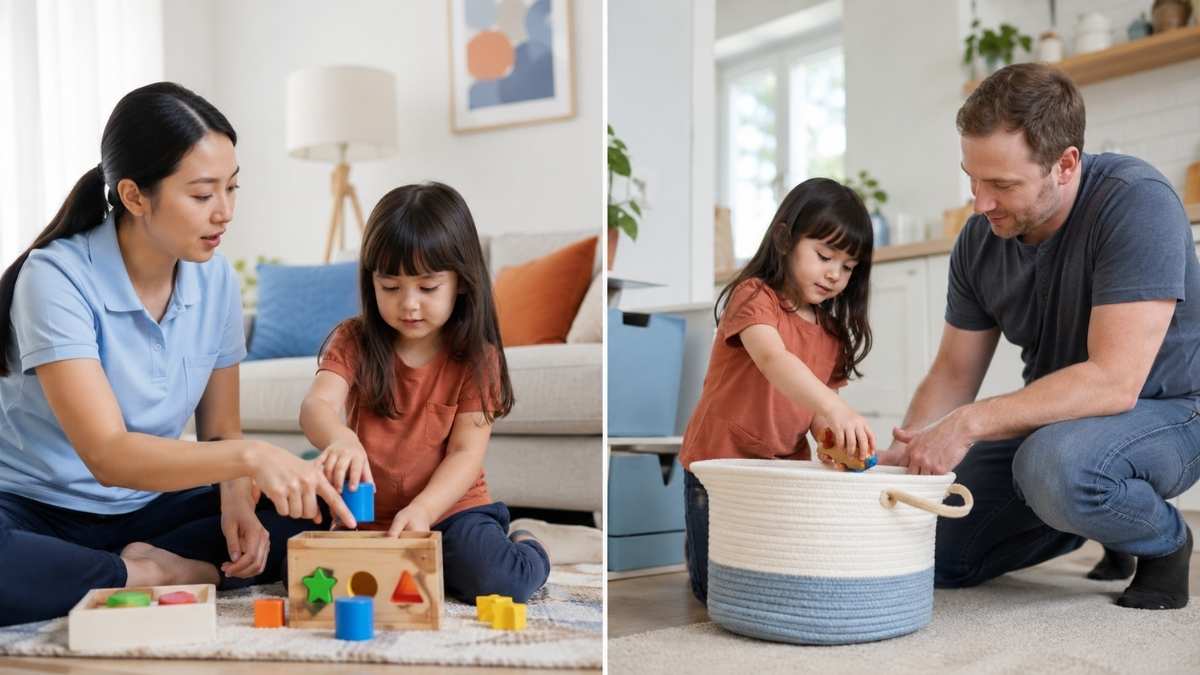
Using home ABA reinforcement with caregiver coaching makes trying new skills feel natural. A child may practice requesting help during snack. Another child may practice waiting before a preferred toy. A behavioral technician may support a self-care step during a familiar routine. This focus directly assists skill acquisition ABA plans.

What Caregiver Participation Looks Like During In-Home Sessions
Caregiver participation should feel active and guided. During in-home ABA in Kansas, a caregiver may observe, ask questions, share what happened earlier, practice one step with coaching, or review what to watch before the next session.
Some caregivers worry they are being judged. Good coaching should make the plan clearer. It should not make the caregiver feel tested.
In many pediatric ABA programs, caregiver participation is part of the care plan. Your BCBA can explain any participation expectations tied to treatment authorization. The caregiver is not expected to run the full program.
So what does that look like at home?
- A caregiver might watch how the behavioral technician prompts a request.
- The BCBA may coach the caregiver through the same step during a routine.
- Caregiver training may include structured education, hands-on coaching, and practice during play, mealtime, and social interaction.
Why Weekly or Biweekly BCBA Coaching Keeps the Plan Clear
Direct communication with your BCBA keeps your family aligned. These caregiver training sessions occur weekly or biweekly. The frequency depends on your insurance authorization. This dedicated time is the best place to review ABA assessment data, discuss progress, and learn new support strategies.
Consistent ABA Therapy Questions to Bring to Your BCBA
Having specific questions ready focuses your conversation on ABA session planning and the ABA session structure.
Caregivers can ask:
- Which skill should we watch for this week?
- What should we do if the skill only happens during sessions?
- Which prompt level is the team using?
- How do we share what worked during daily routines?
- What does progress look like before a goal changes?
Why Practice Needs to Be Repeated, Not Perfect
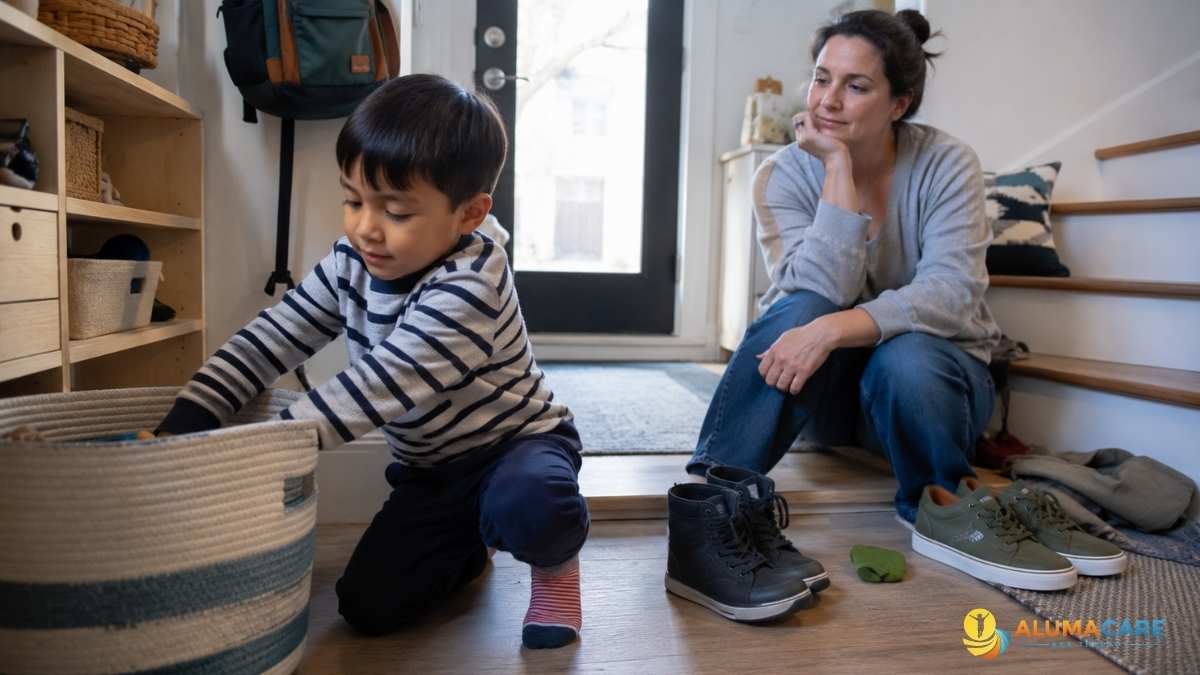
A child might use a new skill during a session. However, they may need weeks of repetition before using it with family. Practice does not need to look flawless. Regular repetition helps a skill become familiar to children with special needs.
Progress may look small at first. The child may need a shorter prompt, try more often, or stay with a routine longer. The child may also make more independent requests.
A 2025 review on caregiver-implemented daily living skill interventions found that 86% of high-quality experiments showed improved daily living skills, with some studies showing generalization and maintenance.
Which Skills Often Benefit From Steady Home Practice
An ABA plan focuses on self-care skills and other functional skills that improve daily life. A behavioral technician may practice these goals during play, and the BCBA may adjust the strategies over time. Many families notice that specific daily skills improve faster with steady home practice.
According to the American Academy of Pediatrics, effective early intervention ABA models build caregiver roles into everyday activities to support generalization beyond therapy.
Common ABA therapy techniques used in child behavior therapy help children practice:
- Requesting help or preferred items
- Following simple directions
- Waiting during short routines
- Starting or finishing a daily living step
- Cleaning up after play
- Using a communication method
- Practicing safer replacement responses

Keep Home Practice Connected to the Care Plan
At Aluma Care, we help caregivers connect session goals to daily routines through in-home ABA and regular caregiver coaching. Our team serves families in Kansas and New Hampshire with plans led by BCBAs and supported by behavioral technicians. If home practice feels unclear, contact our team. We can help you understand what your child is working on and what your role can look like between sessions.
Ultimately, blending steady strategies into your family's daily schedule makes a meaningful difference. When these everyday approaches follow the formal care plan and are guided by a BCBA, the child has a much stronger foundation for success.
Start Building Practice Into the Routines Your Child Already Knows
Start building practice into the routines your child already knows to help new skills move naturally from therapy sessions into everyday family life. Regular caregiver coaching provides a clear space to ask questions, review data, and see how the plan carries into your household.
At Aluma Care, we provide ABA services for children in Kansas and New Hampshire through BCBA-led planning, behavioral technician support, and regular caregiver coaching. Call Kansas at +1 913-232-2003 or New Hampshire at +1 603-903-1003, or use our online contact form to share your family's needs. Our team will guide you through the next steps for intake, insurance benefits review, and clinician scheduling to make starting care as simple as possible.
────────
EDITOR’S NOTE: Content written by an outsourced marketing team. Information is for educational purposes only and does not replace professional clinical or medical advice.
_20250709_220455_0013%5B1%5D.jpg)
_20250709_220455_0011%5B1%5D.jpg)

_20250709_220455_0005%5B1%5D.jpg)
_20250709_220455_0003.jpg)









.png)


.png)