


Key Points:
- A physician referral can begin intake, but it does not guarantee insurance approval or a service start date.
- Kansas and New Hampshire have different coverage and documentation requirements.
- After submission, the ABA provider may contact the caregiver, review insurance, and arrange next steps.
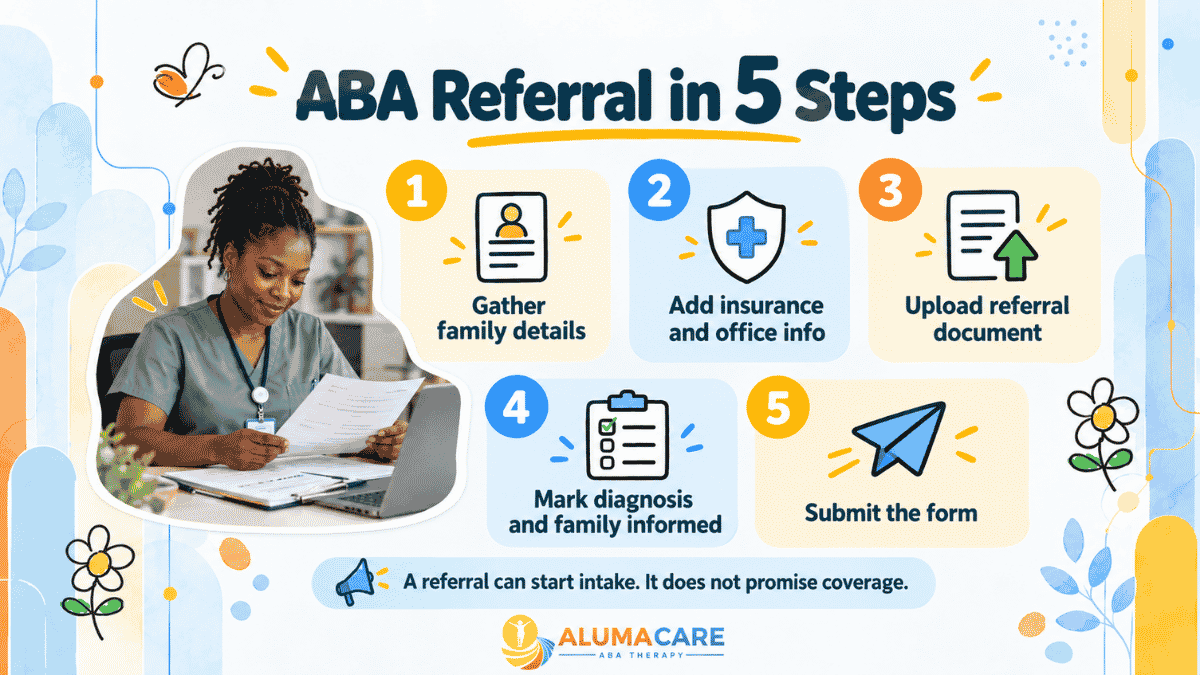
A physician can start an ABA therapy referral to Aluma Care by sending the child and caregiver details through our Doctor Referral Form. The medical office should also provide insurance and referring-provider information, upload the available referral document, and confirm that the caregiver knows about the referral.
We accept physician referrals for children seeking ABA services in Kansas and New Hampshire. Our form keeps the main referral details in one place, while our team can follow up with the caregiver about intake. Here is what your office should prepare and what may come next.
Confirm the Caregiver Knows About the Referral Before You Submit It
Before your office sends the referral, a few simple checks can help the caregiver understand what comes next.
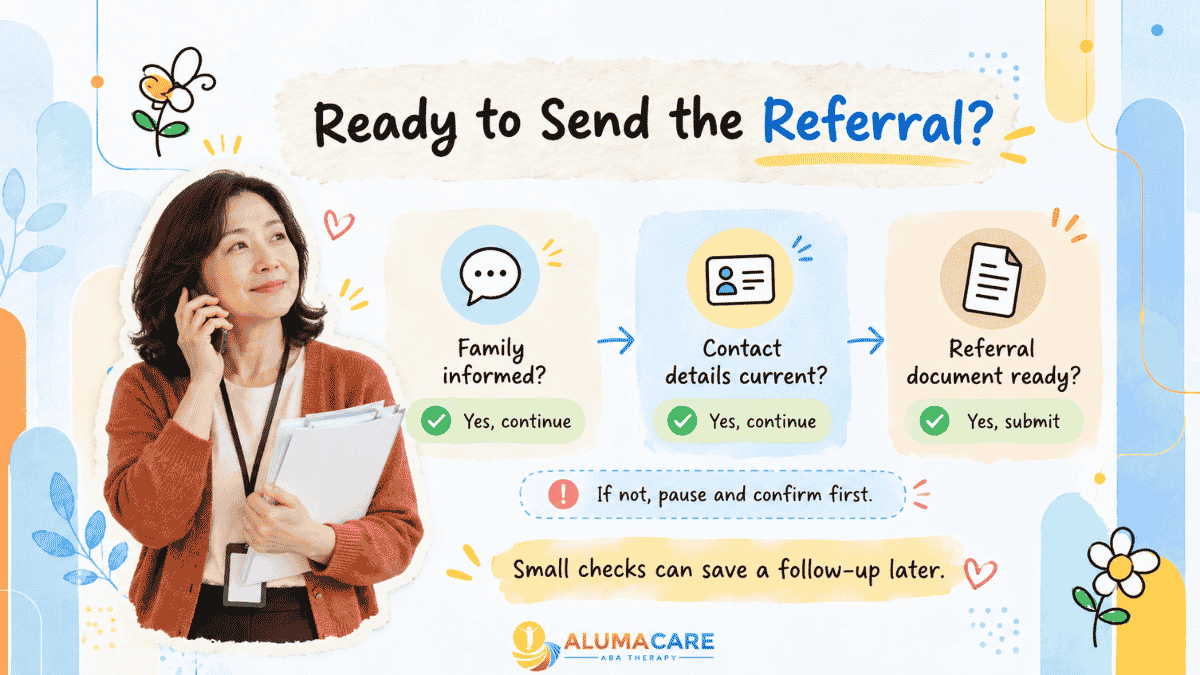
- Confirm that the caregiver knows about the referral. Our form asks whether the family has been informed, so check this before submission.
- Verify the caregiver’s contact details. Confirm that their current phone number and email address are correct so our team can reach them about intake.
- Explain what may happen next. Let the caregiver know that Aluma Care may contact them after receiving the referral. A referral does not guarantee insurance approval or a specific start date.
The Centers for Disease Control and Prevention reports that about 1 in 6 children ages 3 to 17 in the United States have one or more developmental disabilities. Identifying a concern is one part of the process. A completed referral can help connect the caregiver with the next source of support.
How the ABA Therapy Referral Process Works at Aluma Care
Our Doctor Referral Form asks for a defined set of details. Having them ready can save your office from looking up basic information during submission.
Step 1. Gather the Child and Caregiver Details
The form asks for:
- Caregiver first and last name
- Current phone number and email address
- Child’s first and last name
- Child’s date of birth
- State and city of residence
Step 2. Add Insurance and Referring-Office Information
The form asks for the child’s insurance provider, the referring provider office, and the referring physician. These details identify the medical office connected with the physician ABA referral. Our insurance support team can help families understand coverage requirements.
Step 3. Upload the Available Referral Document
You’ll find a field for uploading a referral document in our form. Your office should attach the available referral document that supports the submission. The insurer may request other records later.
Step 4. Record Diagnosis Status and Caregiver Awareness
The form asks:
- Does the child have an autism diagnosis?
- Has the family been informed of the referral?
Your office can answer Yes or No to each question. Accurate answers tell our team what information is available when your office sends the referral.
Step 5. Submit the Form
After completing the required fields, submit the form to Aluma Care. For practices learning how to refer a patient for ABA therapy, the form provides one place to send the referral information our team requests.
What Kansas Physicians Should Know About an ABA Therapy Referral
Kansas autism coverage law requires certain health plans to cover autism diagnosis and treatment, including ABA therapy. Coverage and diagnostic evaluation requirements vary by plan and may change. Families and referring physicians should check the insurer’s current requirements before scheduling an evaluation.
Our team reviews the child’s insurance information during intake. Families who are unsure whether an existing evaluation meets their plan’s requirements can contact us for help.
Kansas medical offices can prepare by checking these items:
- Send current caregiver contact details.
- Identify the referring office and physician.
- Upload the available referral document.
- Provide current insurance information.
- Avoid promising coverage before the insurer confirms plan requirements.
A 2026 systematic review in Pediatrics examined 38 U.S. studies on referrals. In studies without extra referral support, providers referred only 20% to 58.4% of children who showed signs that they may need an autism evaluation or early intervention. This shows that identifying a concern does not always lead to a referral for further evaluation or early intervention.

What New Hampshire Physicians Should Know About the Referral
New Hampshire Medicaid’s April 2026 ABA authorization notice requires a signed diagnostic evaluation from a qualified health professional confirming autism or another developmental disability. It also requires a qualified health professional’s signed order or referral for ABA therapy in New Hampshire.
For ABA authorization, the ABA provider must also submit supporting documents, which may include:
- An individualized treatment plan
- The rationale for medically necessary ABA services
- Documentation supporting the requested service amount
- The signed diagnostic evaluation
- The signed order or referral
The referring clinician supplies the records and referral within the clinician’s role. Our ABA team handles the ABA assessment, care planning, and authorization documents when the child proceeds through intake.
New Hampshire RSA 417-E:2 also allows certain commercial insurers to request a signed treatment plan from specified qualified clinicians.
What Happens After We Receive the Physician Referral
What an ABA Therapy Referral Can Start
Our team reviews the referral and insurance information to confirm whether the child has met the insurer’s evaluation requirements for authorization. We may contact the referring provider or family about additional psychological or diagnostic evaluations the child needs. These requirements must be met before we can proceed with an ABA assessment or treatment. The next steps may include an ABA assessment and an individualized care plan led by a BCBA.
Next steps may include:
- Reviewing the referral information
- Contacting the caregiver
- Reviewing insurance and authorization requirements
- Arranging an ABA assessment when appropriate
- Developing individualized skill-based targets if services begin
Caregivers take an active role in caregiver coaching whether sessions occur at home or in a clinic. Aluma Care and insurance requirements call for active caregiver participation in coaching.
Contact Aluma Care before submitting if your office wants to confirm what the form asks for or discuss the information you plan to send. Our team can answer referral questions before your office submits the form.
Double-Check These Details Before Sending the Referral
A final review can reduce avoidable follow-up. When completing a pediatrician ABA referral, check that your office has included:
- Correct caregiver name
- Current caregiver phone number and email
- Child’s full name and date of birth
- Kansas or New Hampshire residence information
- Current insurance provider
- Referring office and physician
- Available referral document
- Accurate diagnosis status
- Confirmation that the caregiver knows about the referral
Accurate contact details help our team continue that communication from the first follow-up.
FAQs About ABA Therapy Referral
Can a physician submit a referral if the child does not have an autism diagnosis yet?
Yes. Aluma Care’s referral form lets the referring office answer Yes or No when asked whether the child has an autism diagnosis. Insurance coverage has separate requirements. New Hampshire Medicaid, for example, requires a signed diagnostic evaluation confirming autism or another developmental disability before it covers ABA services.
Does a physician have to choose home or clinic services when making the referral?
No. The current physician referral form does not ask the medical office to choose a service setting. Our team can discuss available options with the caregiver during intake. We offer in-home ABA and clinic-based services where available.
What happens if the insurance plan asks for additional records?
Our intake team can review the plan requirements and tell the caregiver what additional records the insurer requests for authorization. Our team can explain what the caregiver or referring office needs to provide.
Send Your Patient’s Referral for ABA Therapy
A physician referral brings together the child’s details, caregiver contact information, insurance information, and available referral document. Accurate information and caregiver awareness help our team begin intake, while the insurer’s requirements determine which evaluations and authorization records are needed.
Physicians and referral coordinators supporting children in Kansas or New Hampshire can complete our Doctor Referral Form. Our team can review the submission and contact the caregiver about intake. Offices with questions before submitting can call Kansas at +1 913-232-2003 or New Hampshire at +1 603-903-1003.
────────
EDITOR’S NOTE: Content was written by an outsourced marketing team and reviewed by Aluma Care’s clinical leadership for accuracy and service alignment. It is for educational purposes and does not replace individualized medical or clinical advice.