


Key Points:
- ABA therapy social skills teach children how to greet others, share, take turns, join play, and respond to social cues.
- Sessions often use play, prompts, reinforcement, and measured goals in home, clinic, or community settings.
- Caregiver training helps families practice these skills during daily routines.
Watching a child stand on the edge of a playground can be tough. You might notice they want to join the group or greet another child, but the moment passes before they can act. Learning these connection steps takes time. For children with special needs, ABA therapy social skills support can make a big difference.
Progress often starts small. A child might practice one greeting or a single response before building up to longer play dates. Families across Kansas and New Hampshire often find that breaking these actions down helps children feel more comfortable.

What ABA Therapy Social Skills May Include
ABA therapy for social skills can cover greeting peers, taking turns, sharing items, and joining group play. It also teaches kids to read social cues and practice short back-and-forth conversations. These specific goals depend on what the child needs, what parents care about, and what the Board Certified Behavior Analyst (BCBA) finds during the assessment.
ABA therapy services focus on how behavior works and how the environment affects learning. For social goals, that often includes things like:
- Greeting a peer or adult during a planned routine
- Taking turns during a game or activity
- Sharing toys or materials for a short period
- Joining group play with a prompt or model
- Responding to social cues, such as waiting or looking toward a speaker
- Practicing peer interaction ABA during clinic-based or home-based activities
What Social Skill Practice Can Look Like During Sessions
Social communication and interaction can be difficult for children with autism, and examples can include not noticing other children or not joining them in play by age 3
How ABA Therapy Social Skills Are Practiced During Play
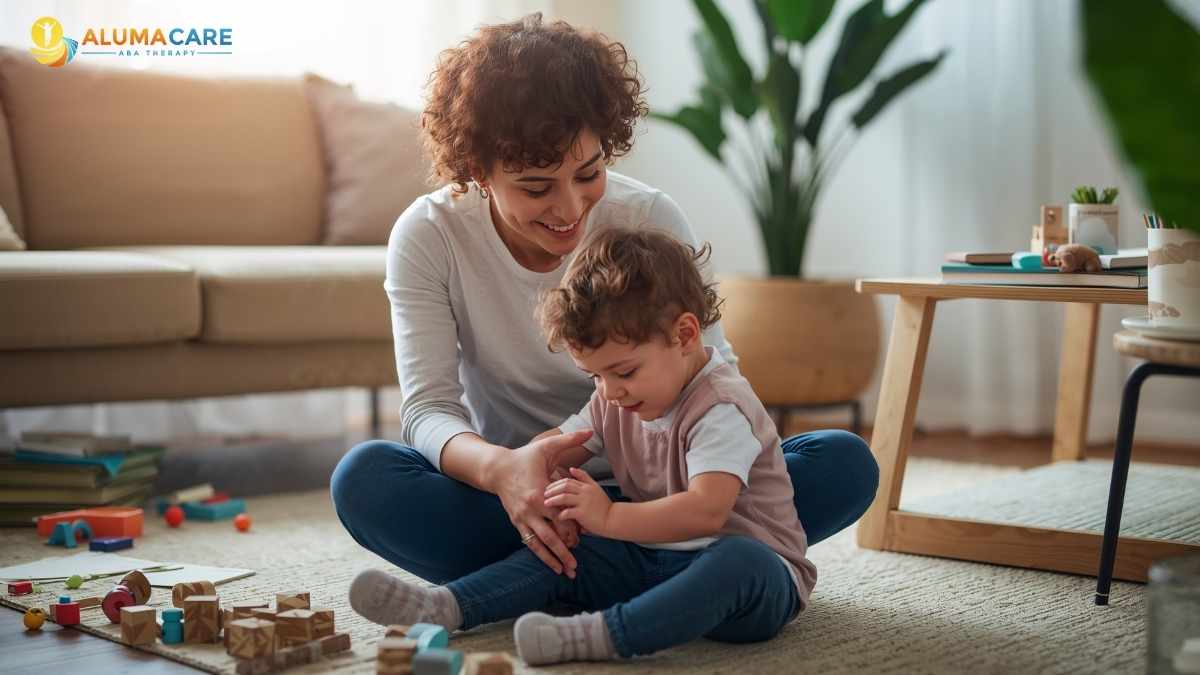
What does a typical session look like when a child is working on these goals? A behavioral technician works directly with your child using play to practice real-world connections. For example, they may model a friendly greeting right before a group activity starts.
Next, your child might practice turn-taking ABA therapy through a simple board game, a toy exchange, or a fun movement activity. When your child tries the target skill, they receive immediate prompts, praise, or another planned reward.
Over time, the behavioral technician slowly fades this support as your child builds more independence. The entire focus stays on peer-directed interaction rather than just naming objects or asking for items. This direct practice helps make social interactions feel more predictable and less stressful.
How Behavioral Technicians Work On Peer Interaction ABA Goals
Peer interaction ABA goals often start with clear actions that can be seen and measured. A goal may include standing near a peer, joining a shared activity, answering a peer, or staying with group play for a short time.
The team may track:
- How often the child tries the skill
- How much help the child needs
- Whether the skill appears in more than one setting
- Which activity makes the skill easier to practice
Not every child works on the same goal. Some children may begin with parallel play, where two children play near each other. Other children may work on short conversation turns or shared games. Social goals should support access and participation. They should not train a child to ignore or hide discomfort.
How Caregivers Hear About Progress During BCBA Training
Staying in regular touch keeps everyone on the same page. These BCBA sessions give you a dedicated space to ask questions about specific social goals. You can find out exactly what data the team tracks during therapy. It also helps you learn the best ways to respond to your child at home. This structured caregiver training support helps you bring these skills into daily life.
During these regular meetings, you can expect to review:
- What skill the child is practicing
- What prompts the team uses
- What progress data shows
- What caregivers can try during play, meals, errands, or family visits
- What to share when a goal seems too hard or too easy
Wondering what social skill goals are right for your child? During caregiver training, we can walk through your child’s current goals, what the data shows, and what practice may look like at home.

Where Social Skills Can Be Practiced In Home And Clinic Settings
Social skill practice can happen in different environments depending on your child's specific program. In-home ABA therapy allows skills to develop in a familiar space, while clinic settings offer structured opportunities for direct peer play.
How Long Social Skill Progress May Take
Kids all learn at their own speed. Because of that, you won't find a set timeline for seeing real progress. It really just comes down to where your child is starting out and how motivated they feel. Some children show early gains in one routine before they can use the skill somewhere else.
Data helps the team see if a goal needs more prompting, a different setup, or a smaller step. Caregivers should bring questions to weekly or biweekly BCBA training when progress feels unclear.
For context, research shows that about 1 in 31 children aged 8 has been identified with autism spectrum disorder. This means many families are exploring social skills training ABA options to support their children's development.
FAQs About ABA Therapy Social Skills
What is social skills training ABA?
Social skills training involves structured practice to help your child work on everyday social behaviors. It focuses on things like greetings, sharing, taking turns, and responding to peers. The BCBA sets these goals based on assessment results, caregiver input, and your child's current skill level.
Can ABA therapy help my child make friends?
The therapy builds specific skills that support making friends. Your child can practice joining play, responding to peers, and taking turns. While making friends is never guaranteed, learning these skills makes peer interactions much easier during familiar daily routines.
At what age should social skills therapy start?
Children can start these programs as soon as they have goals related to play or peer interaction. The right timing depends entirely on individual needs and family priorities. Starting early simply helps children practice these skills in small, manageable steps.
Ask About Social Skill Goals That Match Your Child
Social skill growth often starts with small, visible moments: one greeting, one shared toy, one turn, or one peer response. Those moments can become easier to practice when caregivers understand the goal, the support being used, and the next step.
At Aluma Care, we support children and caregivers across Kansas and New Hampshire through in-home and in-clinic ABA therapy. Call 913-232-2003 for Kansas, 603-903-1003 for New Hampshire, or email info@alumacare.com to ask about starting services.
────────
EDITOR’S NOTE: Content written by an outsourced marketing team. Information is for educational purposes only and does not replace professional clinical or medical advice.





.png)


.png)